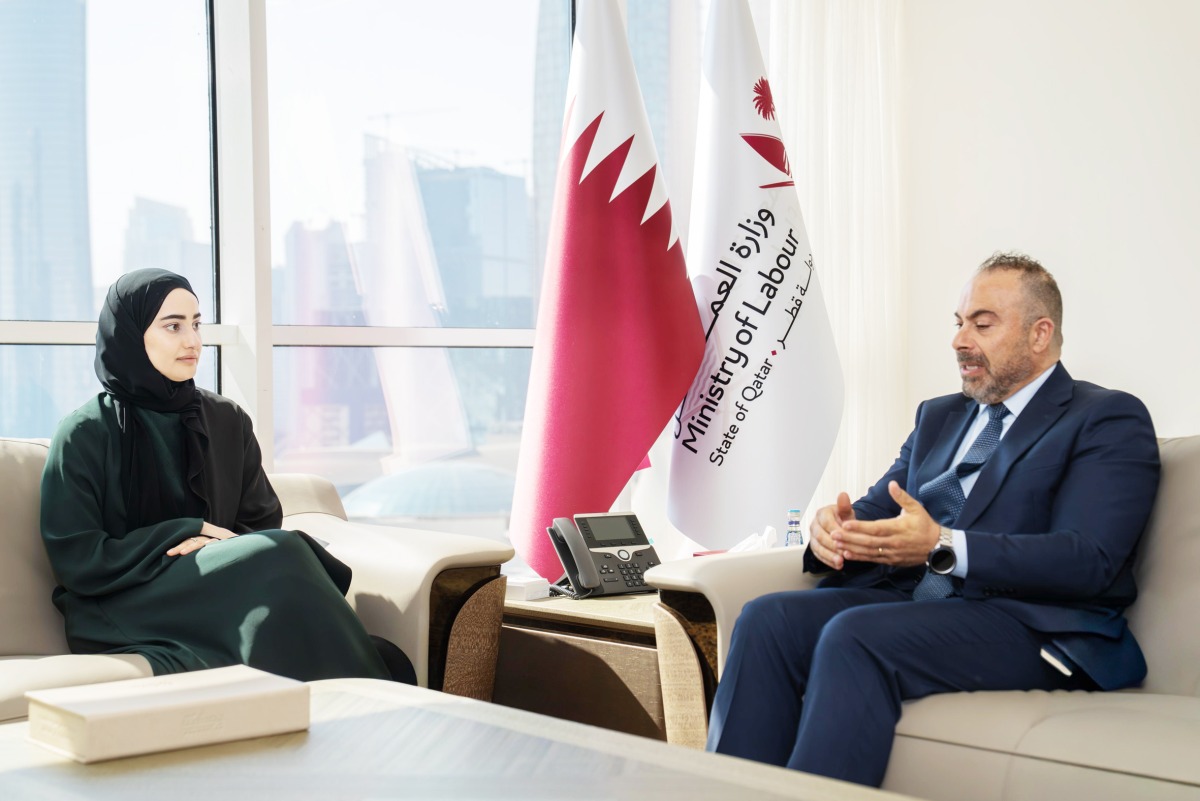

Qatar and the International Organization for Migration (IOM) are strengthening their labor cooperation, officials announced this week. Undersecretary of the Ministry of Labour, H.E. Sheikha Najwa bint Abdulrahman Al-Thani, met with IOM Head of Mission Firas Adel Al-Budairi to discuss expanding joint initiatives. The meeting, held yesterday, focused on enhancing collaboration in areas related to migrant worker welfare and rights within Qatar’s evolving labor market.
The discussions took place at the Ministry of Labour in Doha, Qatar. Both parties expressed a commitment to building upon existing partnerships and identifying new opportunities for collaboration. This comes as Qatar continues to implement reforms aimed at improving conditions for its substantial foreign workforce, a key component of the nation’s economic development.
Strengthening Qatar’s Labor Cooperation with the IOM
The meeting signals a continued focus by Qatar on international partnerships to address challenges and promote best practices in labor cooperation. According to a statement from the Ministry of Labour, the conversation centered on ways to bolster existing programs and develop new strategies to protect migrant workers. This includes initiatives related to recruitment, employment conditions, and access to justice.
Recent Labor Reforms in Qatar
Qatar has undertaken significant labor reforms in recent years, particularly in advance of and following the 2022 FIFA World Cup. These changes include the abolition of the *kafala* system, the introduction of a minimum wage, and enhanced mechanisms for resolving labor disputes. However, challenges remain in fully implementing these reforms and ensuring consistent enforcement across all sectors.
The IOM has been a key partner in supporting these reforms, providing technical assistance and expertise to the Qatari government. The organization’s work focuses on promoting safe, orderly, and regular migration, and protecting the rights of migrants regardless of their status. Additionally, the IOM offers support to vulnerable migrant workers, including those experiencing exploitation or abuse.
Meanwhile, the focus on ethical recruitment practices is gaining momentum. Qatar is working to establish bilateral agreements with labor-sending countries to ensure fair and transparent recruitment processes, reducing the risk of exploitation and debt bondage. The Ministry of Labour has also been increasing inspections of workplaces to identify and address violations of labor laws.
In contrast to previous years, Qatar is now actively seeking to position itself as a regional leader in migrant worker protection. This shift is driven by both international scrutiny and a growing recognition of the economic and social benefits of a well-protected and productive workforce. The country’s National Vision 2030 emphasizes human development and social justice, aligning with the goals of promoting decent work for all.
Areas for Future Collaboration
The Ministry of Labour indicated that discussions also touched upon potential collaboration in areas such as data collection and analysis related to migrant labor. Improved data can help inform policy decisions and track the effectiveness of interventions. Furthermore, the IOM and the Ministry are exploring opportunities to enhance training programs for labor inspectors and other officials involved in protecting worker rights.
The meeting also addressed the importance of addressing human trafficking and forced labor. Qatar has enacted legislation criminalizing these practices, but ongoing efforts are needed to strengthen law enforcement and provide support to victims. The IOM provides specialized assistance to victims of trafficking, including shelter, counseling, and legal aid.
The outcome of the meeting suggests a continued commitment to strengthening the framework for worker welfare in Qatar. The Ministry of Labour has not yet announced specific timelines for the implementation of new initiatives resulting from the discussions. However, officials stated that a follow-up meeting will be scheduled in the coming weeks to develop a detailed action plan.
Looking ahead, the success of this collaboration will depend on sustained political will, adequate resources, and effective coordination between the Qatari government, the IOM, and other stakeholders. Observers will be watching for concrete steps to address remaining challenges in the enforcement of labor laws and the protection of migrant worker rights, particularly as Qatar prepares for future major events and continues its economic diversification efforts.