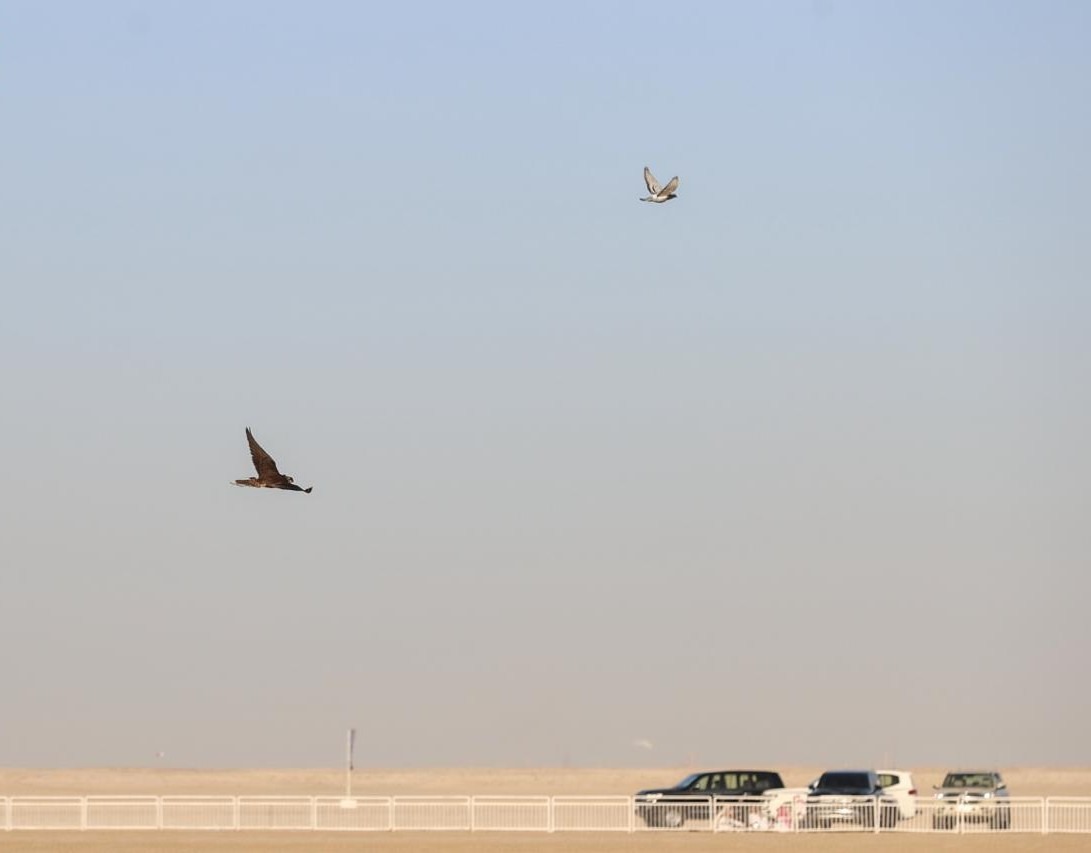

Doha, Qatar – Homing pigeons have once again triumphed over falcons in the Haddad Al Tahadi Championship, part of the 17th Qatar International Falcons and Hunting Festival (Marmi) 2026. For the second day running, falconers were unable to successfully capture the pigeons released in competition. The festival, a significant event in preserving Qatari heritage, is currently underway at Sabkhat Marmi in Sealine and will continue until January 24th.
The competition, held under the patronage of His Excellency Sheikh Joaan bin Hamad Al-Thani and supported by the Social and Sport Contribution Fund (DAAM), saw all pigeons from the fifth group return safely to their home nests in Umm Abeiriyah. This continues a trend of the pigeons proving difficult opponents in this particular challenge.
The Haddad Al Tahadi Championship and the Future of Falconry
The Haddad Al Tahadi Championship specifically tests the skill of falcons against the speed and navigational abilities of homing pigeons. According to Shawi Al Kaabi, head of the Haddad Al Tahadi Committee, only eight falconers currently qualify for the final round, and that number has remained unchanged after two days of competition. The sixth group will compete Wednesday evening, providing another opportunity for falconers to advance.
Abdullah Fakhro, the owner of the successful homing pigeons, emphasized the importance of dedicated training and organization. He stated that his pigeons’ repeated success demonstrates that consistent effort is crucial in these demanding competitions. This underscores the level of expertise involved on both sides of the contest – in falcon breeding and training, as well as pigeon rearing and racing.
Preserving a Cultural Tradition
The Marmi Festival is not merely a sporting event; it’s a crucial component of Qatar’s efforts to safeguard falconry as a vital part of its cultural identity. Falconry holds deep historical roots in the Gulf region, traditionally utilized for hunting and as a symbol of status.
These efforts gained international recognition in 2011 when falconry was inscribed on the UNESCO’s Representative List of the Intangible Cultural Heritage of Humanity. This designation highlighted the significance of the practice, not just for Qatar and the Gulf states, but as a globally shared heritage needing protection. The festival serves as a focal point for recognizing and celebrating this heritage, fostering pride and continued participation.
Growing International Interest in Falconry
Since its inclusion on the UNESCO list, the Marmi Festival has grown in prominence, attracting attendees and competitors from around the world. While primarily featuring Qatari and Gulf region falconers, the event now draws participants from various Arab and foreign countries. This wider appeal illustrates the increasing global appreciation of falconry as both a sport and a cultural practice.
The festival encompasses a variety of competitions, including those focused on the speed of falcons (view competitions), beauty contests, and traditional hunting techniques. These diverse events cater to a broad spectrum of interests within the world of falconry and hunting. Competitions like the Haddad Al Tahadi attract specialist breeders and athletes focusing on specific challenges.
Furthermore, the festival plays a role in the sustainable practices of falcon breeding and conservation, raising awareness of the need to protect these magnificent birds of prey. This aspect of the event is increasingly important given the ongoing challenges facing raptor populations worldwide, from habitat loss to illegal hunting. The evolving rules and regulations of competitions are often aligned with conservation efforts.
The competition is expected to continue with the sixth group of falconers on Wednesday evening. Whether the falcons will adapt their strategies and alter the current winning streak of the homing pigeons remains to be seen. Observers will be watching closely to see if any falconers can break through and successfully capture the elusive birds. The final results and the overall impact of the 2026 festival on the global falcon community will be assessed after January 24th, with particular attention paid to any adjustments made to competition formats based on this year’s outcomes.
Related keywords include Qatari heritage, falcon breeding, and traditional hunting.