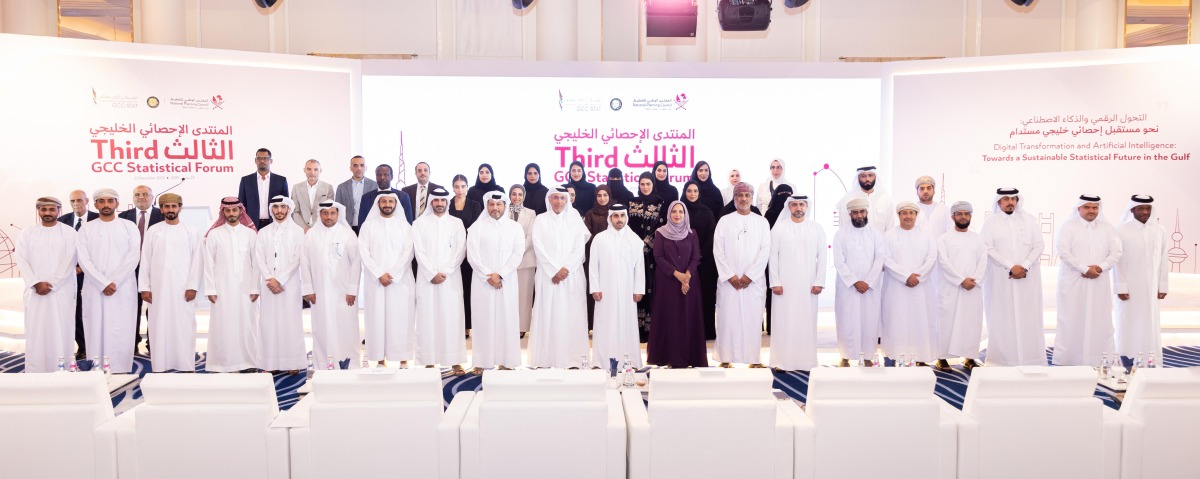

Doha, Qatar – The Third GCC Statistical Forum concluded yesterday, emphasizing the critical role of digital transformation and artificial intelligence in shaping a sustainable statistical future for the Gulf Cooperation Council (GCC) countries. The forum, hosted by Qatar’s National Planning Council (NPC) and the GCC Statistical Center (GCC-Stat), brought together officials and experts to discuss enhanced collaboration, data standardization, and the modernization of national statistical systems. This meeting underscores a growing regional focus on leveraging data for informed policy-making and economic development.
The two-day event, held in Doha, convened senior representatives from statistical agencies across the GCC member states – Bahrain, Kuwait, Oman, Qatar, Saudi Arabia, and the United Arab Emirates – alongside academics and industry professionals. Discussions centered on addressing the challenges and opportunities presented by rapidly evolving technologies and their impact on the production and analysis of official statistics.
Strengthening GCC Statistical Integration Through Digital Transformation
Ahmed Hassan Al-Obaidly, Director-General of the National Statistics Center at NPC, highlighted the forum’s objective as building an “advanced statistical ecosystem” by embracing digital transformation and integrating artificial intelligence. He stated that unified standards and platforms are essential for establishing a secure and integrated data environment within the region. This ecosystem is intended to bolster international reporting and accurately reflect the development progress of the GCC nations.
A key challenge identified during the forum was ensuring the privacy and security of sensitive data amidst increased digitization. A panel session dedicated to these technical issues explored best practices for data protection and compliance with relevant regulations. According to attendees, addressing these concerns is paramount to maintaining public trust in official statistics.
Focus on Capacity Building and Innovation
Participants underscored the need for ongoing investment in the skills of statistical professionals to effectively utilize new technologies. The forum acknowledged that a skilled workforce is fundamental to successfully implementing digital transformation initiatives. Further discussion focused on fostering innovation through the development and adoption of modern statistical tools and techniques.
To encourage talent within the region, Al-Obaidly announced a new data and artificial intelligence competition open to university students across the GCC. This initiative aims to stimulate creativity and accelerate the application of these technologies to statistical challenges. The competition is expected to generate novel solutions and contribute to a growing pool of data science experts in the Gulf.
Intisar bint Abdullah Al-Wahaibi, Director-General of GCC-Stat, emphasized the collective commitment of GCC countries to strengthening statistical integration. She noted that advancements in data and statistical systems are crucial for evidence-based policy decisions and the development of sustainable regional policies. The forum also discussed the importance of standardized statistical data collection methods.
The event highlighted the growing importance of utilizing big data analytics to supplement traditional statistical sources. While acknowledging the benefits of alternative data, participants also stressed the need for rigorous quality control and validation procedures to ensure the reliability of insights derived from these sources. This includes addressing potential biases and ensuring data representativeness.
Looking ahead, the GCC Statistical Center will be tasked with consolidating the recommendations from the forum and developing a detailed action plan for implementation. A timeline for the plan’s rollout has not yet been announced, but officials indicated that progress will be reviewed at the next GCC Ministerial Council meeting. The success of these initiatives will depend on sustained political will and continued financial support from member states, as well as addressing potential interoperability challenges between national statistical systems.