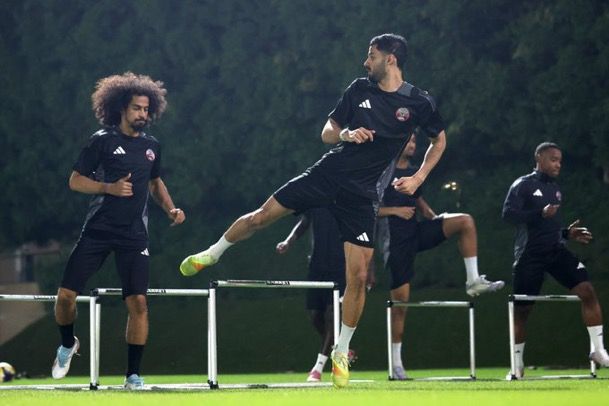

The Qatar national football team is preparing for its opening match of the FIFA Arab Cup Qatar 2025 against Palestine on Friday. The tournament, a significant event in the Arab football calendar, will see Qatar compete in Group A alongside Palestine, Syria, and Tunisia. This marks the latest chapter in Qatar’s ongoing commitment to hosting major sporting events and developing its national team.
The Group A matches will be held at two iconic stadiums: Al Bayt Stadium and Khalifa International Stadium. Qatar will begin its campaign at Al Bayt Stadium, followed by a match against Syria at Khalifa International Stadium, and concluding the group stage with another fixture at Al Bayt against Tunisia. The team aims to improve upon its third-place finish in the previous edition of the Arab Cup, which was also hosted in Qatar in 2021.
Qatar’s Preparation for the FIFA Arab Cup 2025
Qatar has been actively preparing for the tournament, utilizing both domestic and international training opportunities. The national team has been engaged in rigorous training sessions, focusing on tactical formations and player conditioning. This preparation is crucial as the Arab Cup serves as a valuable platform for assessing player performance and refining strategies ahead of future competitions, including potential World Cup qualifying matches.
The selection of Al Bayt Stadium and Khalifa International Stadium as venues highlights Qatar’s continued investment in world-class sporting infrastructure. Both stadiums were prominently featured during the FIFA World Cup 2022, demonstrating the nation’s capability to host large-scale international events. The familiarity with these facilities is expected to provide a slight advantage to the home team.
Group A Opponents
Palestine will present the initial challenge for Qatar, with a history of competitive matches between the two nations. Syria, a traditionally strong footballing nation in the region, is expected to offer a stern test of Qatar’s tactical flexibility. Tunisia, the highest-ranked team in Group A according to FIFA rankings, is considered a strong contender for the tournament title and will provide a significant benchmark for Qatar’s progress.
The FIFA Arab Cup is a tournament organized by the Arab Football Association (AFA) and features national teams from across the Arab world. It aims to promote football development and strengthen ties between Arab nations. The tournament also provides an opportunity for players to gain international experience and showcase their talents.
Qatar’s participation in the Arab Cup is part of a broader strategy to enhance its footballing prowess. The country has invested heavily in youth development programs and has attracted international coaching talent to improve the quality of its players. This commitment is evident in the national team’s consistent performance in regional competitions. FIFA has expressed satisfaction with Qatar’s preparations for the tournament.
Additionally, the tournament is expected to boost tourism and economic activity in Qatar. The influx of fans and media personnel will generate revenue for local businesses and contribute to the country’s overall economic growth. The event also serves as a platform to showcase Qatar’s cultural heritage and hospitality to a global audience.
However, the team faces challenges, including maintaining consistent form and adapting to different playing styles. The pressure of playing as hosts can also be a factor, potentially impacting player performance. Overcoming these hurdles will be crucial for Qatar to achieve its objectives in the Qatar 2025 tournament.
Meanwhile, the broader implications of the Arab Cup extend beyond the sporting arena. The tournament is seen as a symbol of unity and cooperation among Arab nations, fostering a sense of shared identity and purpose. The success of the event will further solidify Qatar’s position as a leading sports hub in the Middle East and a key player in the global football community. The competition for the Qatar national team will be fierce.
Looking ahead, the performance of the Qatari team in the group stage will determine its path in the knockout rounds. The team’s ability to adapt to the conditions and overcome its opponents will be closely watched by fans and analysts alike. The final schedule and broadcast details for the Qatar hosted event are expected to be released by the organizing committee in the coming weeks, with potential impacts from ongoing regional and international sporting calendars.
The outcome of the tournament remains uncertain, but Qatar is determined to make a strong showing and compete for the title. The team’s preparation, combined with the support of its home fans, will be key to its success in the Qatar 2025 Arab Cup. The Peninsula Qatar will continue to provide updates on the team’s progress.