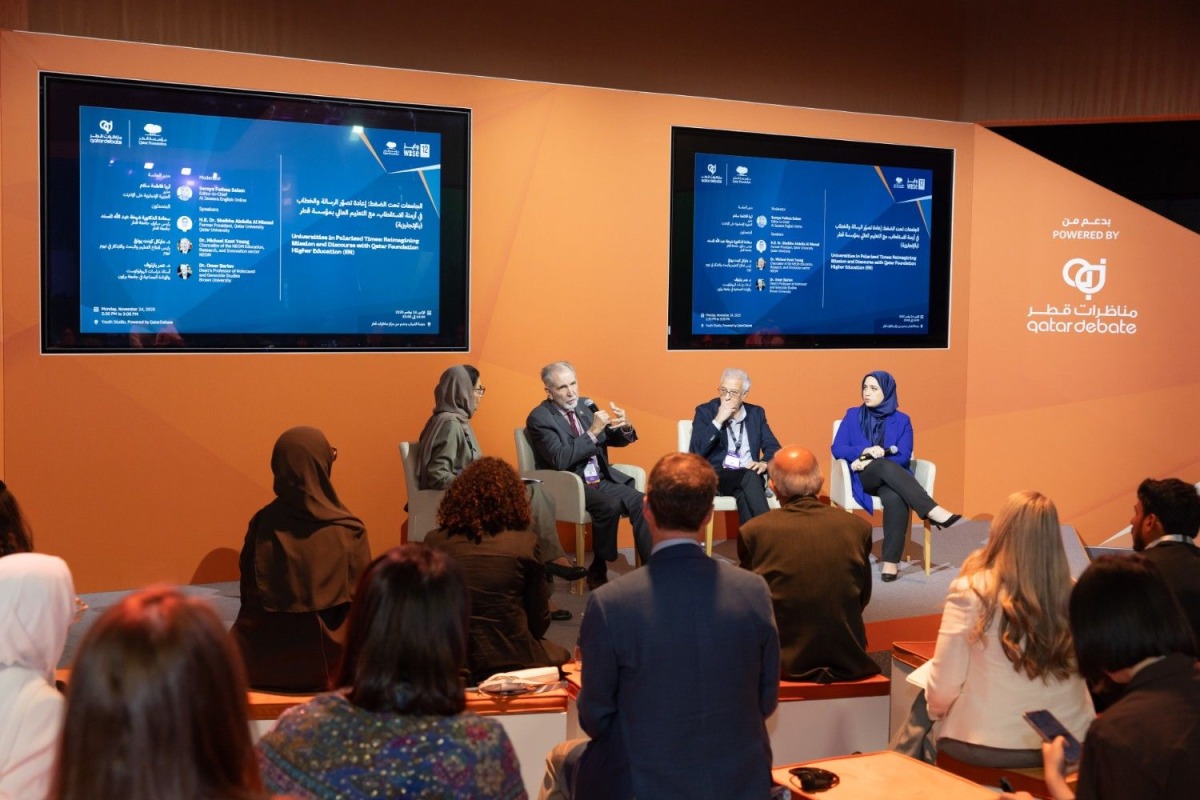

Doha, Qatar – Discussions on the future of higher education, encompassing global learning mobility, evolving credentialing, and the role of universities in navigating societal polarization, took center stage at the WISE 12 Summit, hosted by the Qatar Foundation (QF). International experts convened to address these critical challenges and explore innovative solutions for a rapidly changing educational landscape. The biennial summit, a prominent global gathering for education stakeholders, featured several sessions led by QF’s Higher Education division.
Held in Doha this week, WISE 12 brought together policymakers, educators, and thought leaders from around the world. Qatar Foundation’s participation highlighted its commitment to transforming education both within Qatar and internationally, with a key focus on preparing students for a complex and interconnected world. The conversations centered around building more inclusive, relevant, and resilient educational systems.
Rethinking Higher Education Mobility and Recognition
A central theme explored during the summit was the need to dismantle barriers to global learning. The traditional emphasis on prestige, rankings, and financial constraints often limits student access to diverse educational opportunities. Francisco Marmolejo, President of Higher Education and Education Advisor at QF, emphasized the importance of recognizing skills beyond academic programs.
QF is actively addressing this through initiatives like the Universal Skills Passport, designed to acknowledge the broader competencies students develop alongside their formal studies. This passport aims to highlight skills vital for responsible citizenship and future workforce needs. Additionally, speakers noted that valuable life experiences, often gained outside of formal education, are frequently overlooked in professional assessments.
The Value of Experiential Learning
Omar Alshogre, Director of the Syrian Emergency Task Force, argued for the inclusion of personal experiences in evaluating a student’s overall qualifications. He believes professional and academic systems should recognize the knowledge and skills acquired through lived realities, particularly for individuals who have faced significant challenges. This perspective advocates for a more holistic assessment of student potential, moving beyond traditional metrics.
Universities Navigating Polarization and Societal Change
The WISE 12 Summit also delved into the increasingly difficult position of universities in politically and socially polarized environments. Experts discussed the pressures institutions face to conform to specific ideologies, potentially compromising academic freedom and open inquiry. According to Dr. Omer Bartov, Dean’s Professor of Holocaust and Genocide Studies at Brown University, succumbing to “conformity” within universities can have a detrimental effect on society as a whole, stifling intellectual progress.
However, the role of universities in preparing students for the professional world and cultiviating critical thinking skills was also examined. Concerns were raised that many graduates feel unprepared to address fundamental questions about purpose and contribution within a rapidly evolving work landscape. Dr. Michael Kent Young, Chancellor of the NEOM Education, Research, and Innovation sector, pointed out that a significant percentage of students graduate feeling dissatisfied because universities have moved away from fostering debate and exploration of core values.
The discussion also touched on the need for universities to serve as spaces for open dialogue and the legitimate expression of diverse viewpoints. Restoring this central function, participants suggested, could help re-engage students with the fundamental purpose of higher education and equip them to navigate a complex world. QF’s Higher Education division further facilitated discussions on connecting education to societal values and encouraging cross-cultural community engagement within universities, reinforcing their role as centers for truth-seeking and civic action.
Looking ahead, QF is expected to further develop and refine initiatives like the Universal Skills Passport, with potential expansion to partner institutions globally. The impact of these discussions on policy changes within Qatar’s higher education system and beyond remains to be seen, but tracking the implementation of these ideas will be crucial. The ongoing challenge for universities worldwide is to balance the demands of preparing students for employment with the essential mission of fostering intellectual curiosity and critical discourse – a tension explored extensively at WISE 12.
Qatar Foundation continues to position itself as a central player in these global conversations.
WISE’s next major initiative is expected to be announced in the first quarter of 2024.