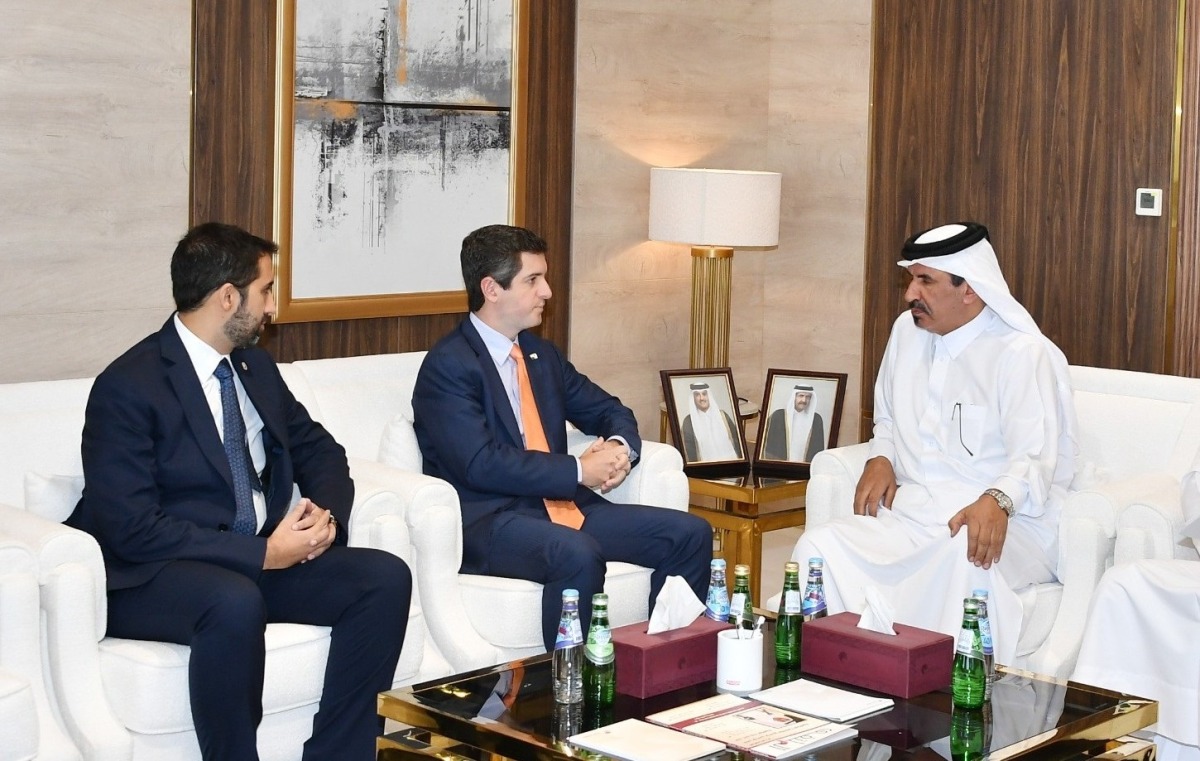

Qatar and Panama are actively seeking to strengthen their trade relations, with discussions focusing on investment opportunities and economic cooperation. Recent meetings between officials from both nations highlighted a mutual desire to expand partnerships and boost trade volume. The conversations come as Panama prepares to host a significant economic forum next year, aiming to attract international investment and foster regional collaboration.
The Qatar Chamber held discussions with a delegation led by Panamanian Vice Minister of Foreign Affairs and Minister of State, Carlos Arturo Hoyos, in Doha on Thursday. The meeting centered on ways to improve the business climate and facilitate increased participation from the private sectors in both countries. This follows a period of growing diplomatic ties and a recognition of shared economic interests.
Boosting Qatar-Panama Trade: Opportunities and Outlook
According to the Qatar Chamber, the potential for collaboration extends beyond traditional trade, encompassing investment in logistics, infrastructure, and finance. Panama’s strategic location, with its control over the vital Panama Canal, makes it an attractive partner for Qatar in facilitating global commerce. Both nations recognize the importance of diversifying their economies and exploring new avenues for growth.
Invitation to the International Economic Forum
A key outcome of the meeting was an official invitation extended to Qatar Chamber First Vice-Chairman Mohamed bin Ahmed bin Twar Al Kuwari, and a broader Qatari business delegation, to attend the Second International Economic Forum for Latin America and the Caribbean in Panama City, January 28-29, 2026. The forum is being organized under the auspices of the Latin American and Caribbean Development Bank (CAF).
Vice Minister Hoyos emphasized the forum’s role as a crucial platform for business leaders and government officials to exchange insights and reinforce international partnerships. He stated that the involvement of Qatar would significantly contribute to strengthening economic ties and exploring strategic cooperation opportunities. CAF has been a driving force in regional infrastructure development and economic integration.
Al Kuwari responded positively, affirming the Qatar Chamber’s unwavering support for initiatives aimed at bolstering trade and economic cooperation between the two countries. He noted that the Qatari private sector is keen to explore potential partnerships in Panama and leverage the country’s advantageous position in the region. Qatar’s Ministry of Commerce and Industry has also advocated for increased bilateral economic cooperation.
The discussions also touched on the potential for Panama to serve as a gateway for Qatari investment into Latin America. Panama offers a stable legal framework and a business-friendly environment, making it an ideal base for expanding into neighboring markets. However, challenges remain in streamlining bureaucratic processes and ensuring regulatory consistency.
While current trade volume between Qatar and Panama remains relatively modest, the potential for growth is considerable. The primary exports from Qatar to Panama include petrochemicals, while Panama’s exports to Qatar are largely focused on non-durable goods. Diversification of these export baskets is seen as a key priority.
The focus on expanding economic ties aligns with Qatar’s broader strategy to strengthen its partnerships with Latin American and Caribbean nations. This policy is aimed at diversifying Qatar’s economy away from its dependence on hydrocarbons and enhancing its global economic presence. Panama, in turn, views Qatar as a significant investor and a key partner in facilitating its own economic development.
Looking ahead, the successful participation of a Qatari delegation at the 2026 forum is expected to further cement the burgeoning relationship. Further analysis of specific investment opportunities and the negotiation of bilateral agreements will be critical steps. The long-term sustainability of this strengthened partnership will depend on continued dialogue, mutual commitment, and the ability to address potential roadblocks in both nations’ economic landscapes.
Specifically, stakeholders will be watching for concrete outcomes from the economic forum, including the identification of specific projects for potential Qatari investment. The development of clearer regulatory frameworks and the reduction of trade barriers will also be crucial to facilitating increased trade. The timing of any new bilateral agreements remains uncertain.