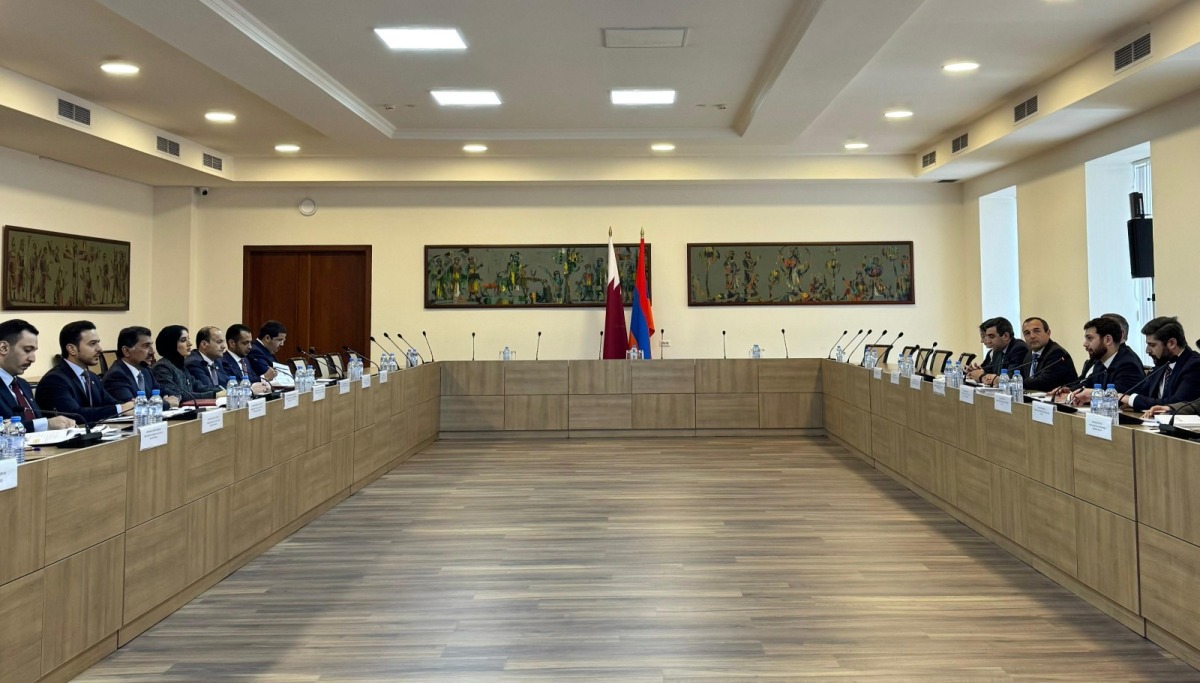

The State of Qatar and the Republic of Armenia held their inaugural round of political consultations in Yerevan on Tuesday, signaling a deepening of diplomatic ties between the two nations. Discussions focused on strengthening Qatar-Armenia relations and identifying areas for increased cooperation. The meeting, held at the Armenian Ministry of Foreign Affairs, underscores a growing trend of Qatar expanding its international partnerships beyond traditional allies.
Led by Qatar’s Secretary-General of the Ministry of Foreign Affairs, HE Dr. Ahmed bin Hassan Al Hammadi, and Armenia’s Deputy Minister of Foreign Affairs, HE Vahan Kostanyan, the consultations provided a platform for direct engagement on regional and international issues. The Qatari delegation also included Ambassador to Armenia, HE Mansour bin Abdulla Al Sulaitin, and Director of Asian Affairs Department, HE Al Johara bint Yousef Al Obaidan Fakhro. This first meeting sets the stage for a more structured dialogue moving forward.
Strengthening Qatar-Armenia Diplomatic Ties
While diplomatic relations between Qatar and Armenia were established in 1996, engagement has historically been limited. This round of political consultations represents a deliberate effort to elevate the relationship, particularly in the wake of evolving geopolitical dynamics in the region. According to a statement released by the Qatari Ministry of Foreign Affairs, the talks were productive and focused on mutual interests.
Areas of Potential Cooperation
Specific areas of potential collaboration were not detailed in initial reports, but analysts suggest several possibilities. These include economic partnerships, particularly in sectors like energy and technology, as well as cultural exchange programs. Qatar has been actively diversifying its economic portfolio, and Armenia presents opportunities for investment in emerging markets.
Additionally, the two countries likely discussed regional security concerns. Armenia has faced ongoing challenges related to the Nagorno-Karabakh conflict, and Qatar, known for its mediation efforts, may explore avenues for facilitating dialogue. The discussions also likely touched upon broader issues of regional stability, including the ongoing conflicts in Ukraine and the Middle East.
The timing of these consultations is noteworthy. Armenia is navigating a complex foreign policy landscape, seeking to balance its relationships with Russia, the West, and neighboring countries. Qatar, meanwhile, is playing an increasingly prominent role in international diplomacy, often acting as a mediator in disputes. This shared interest in fostering stability could be a key driver of the burgeoning partnership.
The meeting also comes as Qatar continues to strengthen its relationships with countries in Eastern Europe and the Caucasus. This broader strategy reflects Qatar’s desire to diversify its foreign policy and enhance its global influence. The country has been actively pursuing new trade agreements and investment opportunities in these regions.
However, challenges remain. Geopolitical considerations and differing regional priorities could potentially hinder deeper cooperation. The existing logistical hurdles related to trade and travel between the two countries also need to be addressed. Further development of infrastructure and transportation links could facilitate increased economic exchange.
The Armenian side has expressed a desire to attract foreign investment and expertise, particularly in areas such as renewable energy and tourism. Qatar’s sovereign wealth fund, the Qatar Investment Authority, has a significant track record of investing in infrastructure projects and emerging technologies globally, making it a potentially valuable partner for Armenia. The potential for increased bilateral trade was also likely a topic of discussion.
Looking ahead, the two ministries have agreed to hold subsequent rounds of political consultations on a mutually agreed-upon schedule. No specific date has been announced for the next meeting, but officials indicated a commitment to maintaining regular dialogue. The success of this initial consultation will be measured by the concrete steps taken to implement the discussed areas of cooperation and the continued momentum in Qatar’s foreign policy. Monitoring future announcements regarding investment projects and high-level visits will be crucial to understand the long-term implications of this developing relationship and the expansion of international relations for both countries.