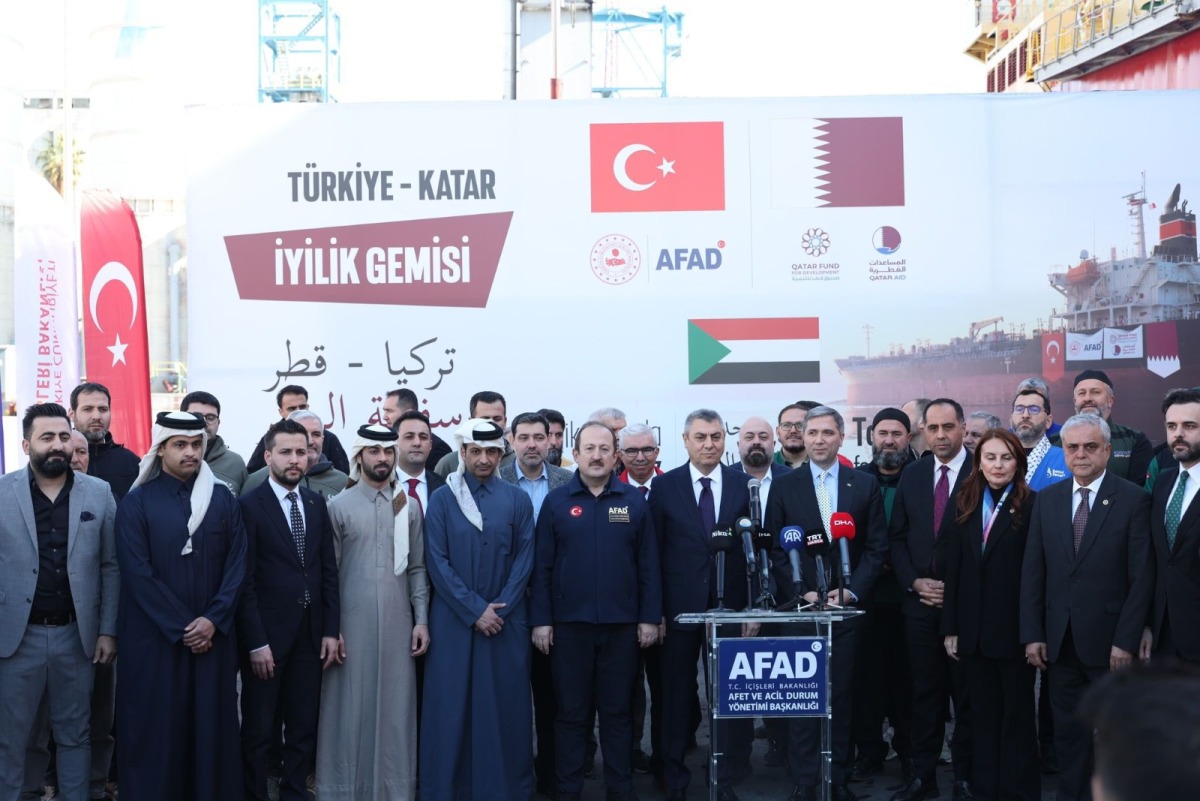

A significant shipment of humanitarian aid, totaling 2,428 metric tons, has been dispatched to Sudan from Mersin, Turkey, through a collaborative effort between the Qatar Fund for Development (QFFD) and the Turkish Disaster and Emergency Management Authority (AFAD). The aid aims to provide critical support to vulnerable populations affected by the ongoing conflict, food insecurity, and limited access to aid within the country. The departure of the vessel occurred on Saturday, marking a vital step in international relief efforts for Sudan.
The aid package, originating from both Qatar and utilizing Turkish logistical infrastructure, includes essential provisions such as food, clothing, shelter materials like tents and blankets, and basic household necessities. The initiative highlights the strengthening relationship between Qatar and Turkey regarding international assistance. The support is specifically directed to those most impacted by the crisis within Sudan.
Qatar and Turkey Expand Sudan Humanitarian Aid
The delivery of this humanitarian aid is part of a broader international response to the escalating crisis in Sudan, which began in April 2023. Fighting between the Sudanese Armed Forces and the Rapid Support Forces has led to widespread displacement, a severe food shortage, and a breakdown in essential services. According to the United Nations, over 8 million people have been displaced, both internally and across borders, creating one of the largest displacement crises globally.
The QFFD stated that the partnership with AFAD enabled a swift and effective response. Yousef Al Mulla, Acting Manager of the Humanitarian Aid Department at QFFD, emphasized the commitment to supporting communities in crisis. Representatives from both countries, including Abdulaziz Al Hammadi from the Qatari Embassy and Attila Toros, Governor of Mersin, attended the dispatch ceremony, marking the significance of the joint operation.
The Role of Mersin as a Logistics Hub
Mersin, a major port city in Turkey, has emerged as a crucial logistical hub for delivering aid to Sudan. Its strategic location and established port infrastructure allow for efficient loading and dispatch of large-scale shipments. The Turkish government, through AFAD, has been actively supporting international organizations in channeling humanitarian assistance to the conflict-affected nation. This involvement reflects Turkey’s increasing role in regional stability and disaster response.
Additionally, Turkey has provided medical supplies and personnel to Sudan, contributing to the efforts to address the growing health crisis. The ongoing conflict has severely strained Sudan’s healthcare system, with many hospitals and clinics forced to close or operate at reduced capacity. According to reports from various NGOs, access to healthcare remains a critical challenge for a large portion of the population.
Addressing Food Insecurity and Displacement
The humanitarian situation in Sudan has been significantly exacerbated by widespread food insecurity. The conflict has disrupted agricultural production and supply chains, leading to soaring food prices and limited availability. The World Food Programme (WFP) reports that over 18 million people in Sudan are facing acute hunger, with the risk of famine increasing in several regions. The provision of food supplies within this aid convoy is, therefore, a crucial component.
Beyond food, shelter remains a pressing need. Hundreds of thousands of Sudanese have been rendered homeless due to the fighting, and the delivery of tents and blankets will provide a measure of protection against the elements. However, the scale of the displacement crisis means that much more assistance is needed. Challenges related to the safe delivery of aid and reaching all affected populations continue to exist, hampered by ongoing violence and logistical constraints. Further aid is expected to be crucial for aiding the internally displaced people.
The QFFD reaffirmed its dedication to alleviating human suffering and bolstering resilience in crisis areas. This commitment extends beyond immediate relief, with a focus on initiatives aimed at promoting long-term peace and stability in Sudan and the wider region. The organization continues to assess the evolving needs within Sudan and collaborate with partners to tailor its assistance accordingly.
Looking ahead, the success of this aid delivery hinges on safe passage and efficient distribution within Sudan. Continued monitoring of the security situation and close coordination with local authorities and humanitarian organizations are vital. The international community is expected to maintain and, if possible, increase its support for Sudan, with a focus on addressing both immediate needs and fostering sustainable solutions to the ongoing crisis. The next major update will likely come after the aid is fully distributed and the impact of the delivery is assessed, potentially within the next few weeks.