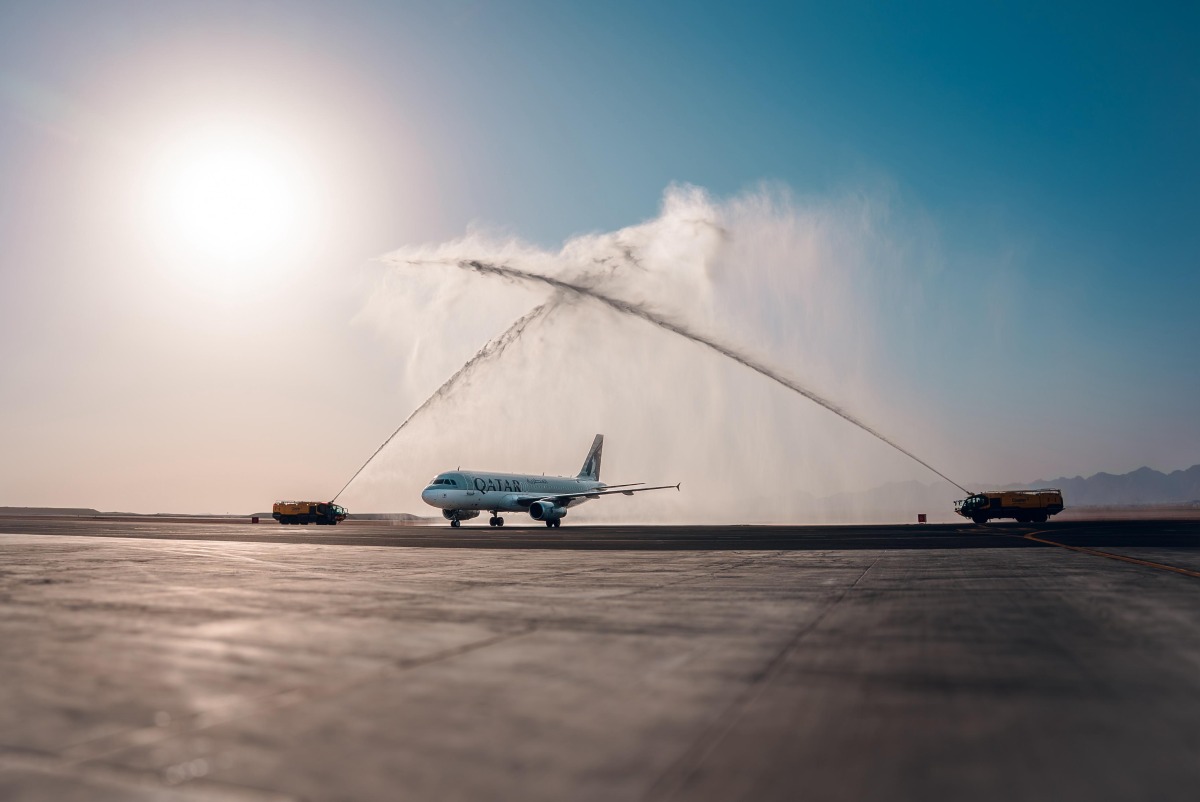

Qatar Airways commenced three weekly non-stop flights between Doha (DOH) and Hail, Saudi Arabia (HAS) on Monday, expanding its network within the Kingdom to 13 destinations. This new Qatar Airways Hail route aims to improve connectivity to the north-central region of Saudi Arabia for travelers originating in Africa, the Indian Subcontinent, the Middle East, and Southeast Asia. The launch underscores the airline’s commitment to growth in the Saudi Arabian market.
The inaugural flight departed Hamad International Airport, signaling a strategic move to capitalize on increasing travel demand to Saudi Arabia. Qatar Airways will now operate over 150 weekly flights to destinations across the Kingdom, including major cities like Riyadh and Jeddah, as well as emerging destinations like NEOM and The Red Sea Project. This expansion reflects the broader tourism initiatives within Saudi Arabia.
Expanding Connectivity with Qatar Airways Hail Flights
The addition of Hail International Airport to Qatar Airways’ network is part of a larger strategy to enhance regional air travel. Saudi Arabia is undergoing significant investment in tourism and infrastructure, creating opportunities for increased passenger traffic. According to the airline, the new service will facilitate both leisure and business travel to the Hail Province.
Hail Province: A Growing Destination
The Hail Province, located in north-central Saudi Arabia, is gaining recognition for its unique cultural and natural attractions. Historically, it served as a vital crossroads on ancient trade routes and pilgrimage paths. Today, the region attracts visitors interested in exploring its UNESCO World Heritage Sites, which feature ancient rock art depicting thousands of years of human history.
Additionally, the province offers distinctive desert landscapes and opportunities for outdoor adventures. The Saudi government is actively promoting Hail as a cultural and tourism hub, investing in infrastructure and events to attract both domestic and international visitors. This aligns with the Kingdom’s Vision 2030 plan, which aims to diversify the economy and reduce reliance on oil.
Meanwhile, Qatar Airways’ Doha hub, Hamad International Airport, continues to play a crucial role in connecting passengers globally. The airline, recently named the World’s Best Airline by Skytrax in 2025, provides seamless transfers to over 170 destinations worldwide. This connectivity is a key benefit for travelers utilizing the new Qatar Airways service to Hail.
The increased flight frequency to Saudi Arabia also supports the growing number of pilgrims traveling to Mecca and Medina. Qatar Airways offers dedicated services and facilities for pilgrims, facilitating their journey to the holy cities. This is a significant component of the airline’s operations in the region.
However, the success of the new route will depend on sustained demand and the overall economic climate. Fluctuations in oil prices and geopolitical events could impact travel patterns. Competition from other airlines operating in the region also presents a challenge.
Looking ahead, Qatar Airways will likely monitor passenger numbers and adjust flight schedules accordingly. Further expansion within Saudi Arabia, potentially including new routes or increased frequencies, remains a possibility. The airline’s long-term strategy in the Kingdom will be closely tied to the ongoing development of Saudi Arabia’s tourism sector and the implementation of Vision 2030. The airline is also expected to continue investing in its fleet and services to maintain its position as a leading global carrier, offering convenient flights to Saudi Arabia.
The airline has not announced any specific plans for further route expansions in Saudi Arabia beyond the current network, but industry analysts suggest that cities with growing tourism or business sectors are potential candidates for future service. Monitoring passenger load factors and economic indicators will be key to determining the next steps in Qatar Airways’ Saudi Arabian strategy.
Qatar Airways continues to adapt to evolving market conditions and passenger needs.