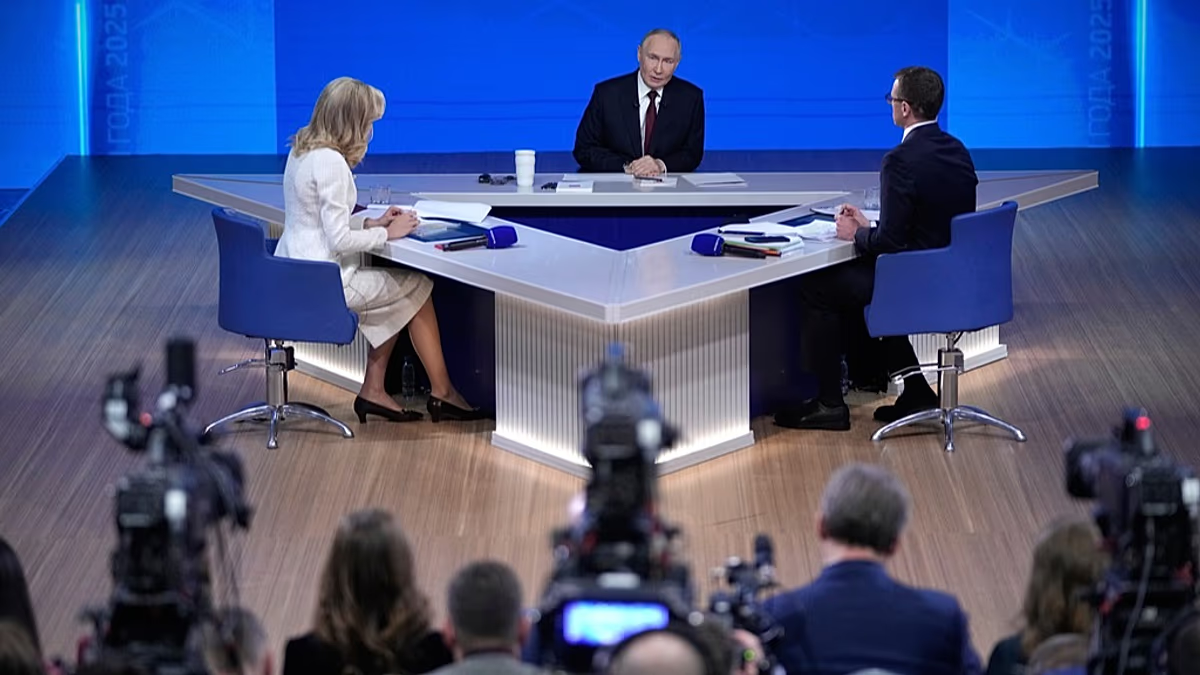

Russian President Vladimir Putin asserted on Friday that his forces are making gains across the battlefield in Ukraine, expressing confidence that the Kremlin’s military objectives will be met nearly four years after launching the full-scale invasion. The statement comes amid ongoing fighting and stalled peace negotiations, raising concerns about the prolonged conflict and its global implications. Putin’s remarks, delivered during his annual “Direct Line” press conference, signal a continued commitment to the war despite significant challenges and international pressure.
Speaking to journalists and Russian citizens, Putin claimed his troops have “fully seized the strategic initiative” and anticipate further advancements by the year’s end. He stated that Ukrainian forces are “retreating in all sectors,” though independent verification of these claims remains difficult. This follows initial setbacks for Russia in 2022, when Ukrainian counteroffensives successfully pushed back Russian troops from areas surrounding Kyiv.
Putin Claims Advances in Ukraine, Reiterates Demands
The current phase of the conflict is characterized by intense, grinding battles, primarily in eastern Ukraine. While Russia has made incremental gains in recent months, these advances fall short of the swift victory initially anticipated by many within Russia. According to reports, Moscow’s strategy now focuses on a war of attrition, aiming to wear down Ukrainian defenses and infrastructure.
Putin emphasized that Moscow is “ready and willing to end this [war] peacefully,” but insists that Kyiv has not demonstrated a reciprocal commitment, particularly regarding Russia’s territorial demands. These demands include the recognition of Russia’s annexation of Crimea, which occurred in 2014 and is not internationally recognized, and the acceptance of Russian control over approximately one-fifth of Ukraine’s territory.
Kremlin’s Maximalist Position
The Kremlin’s conditions for a peaceful settlement, often referred to as addressing the “root causes” of the war, have been consistently rejected by Ukraine and its allies. Kyiv maintains that its territorial integrity, as defined by its constitution, is non-negotiable. Furthermore, Ukraine refuses to relinquish its aspirations to join the North Atlantic Treaty Organization (NATO).
Russia has also demanded security guarantees, including a commitment from Ukraine to remain neutral and a prohibition on the deployment of NATO troops within the country, viewing such deployments as “legitimate targets.” Putin has repeatedly called for the “demilitarization” of Ukraine, suggesting limitations on the size of its armed forces.
Ukraine Seeks Security Guarantees, Eyes US Support
Ukrainian President Volodymyr Zelenskyy has reaffirmed his country’s commitment to its NATO bid, stating that Ukraine’s “position remains unchanged.” He acknowledged that the United States currently does not envision Ukraine joining NATO, but noted that “politicians change.” Zelenskyy also expressed concern that Russia is attempting to exclude the European Union from providing future security guarantees to Ukraine. Reuters reported on Zelenskyy’s comments at the European Council summit.
While European leaders have pledged to support Ukraine’s future security, including potential military assistance, Zelenskyy emphasized that this support cannot fully replace the security guarantees offered by the United States, specifically referencing Article 5 of the NATO treaty – a collective defense agreement.
EU Struggles with Russian Asset Funding
On Friday, EU leaders agreed to provide Ukraine with a €90 billion interest-free loan for 2026 and 2027. However, they failed to reach a consensus on utilizing frozen Russian assets to fund this aid package. Belgium raised legal and financial concerns, fearing potential retaliation from Moscow and risks to Euroclear, the Brussels-based financial clearing house holding a significant portion of the frozen funds.
Putin criticized the idea of using Russian assets as “robbery,” warning that such a move would undermine investor confidence in the eurozone. He also leveled accusations against Western leaders, alleging a conspiracy to orchestrate Russia’s collapse, though he provided no supporting evidence. The frozen assets, estimated at over €600 billion, will remain blocked until Russia provides reparations for the damage caused by the war in Ukraine.
The situation remains fluid, with continued fighting and diplomatic deadlock. Observers will be closely watching for any shifts in Russia’s military strategy, the level of continued Western support for Ukraine, and potential avenues for renewed negotiations. The future of Ukraine and the broader security landscape in Europe hinge on these developments.