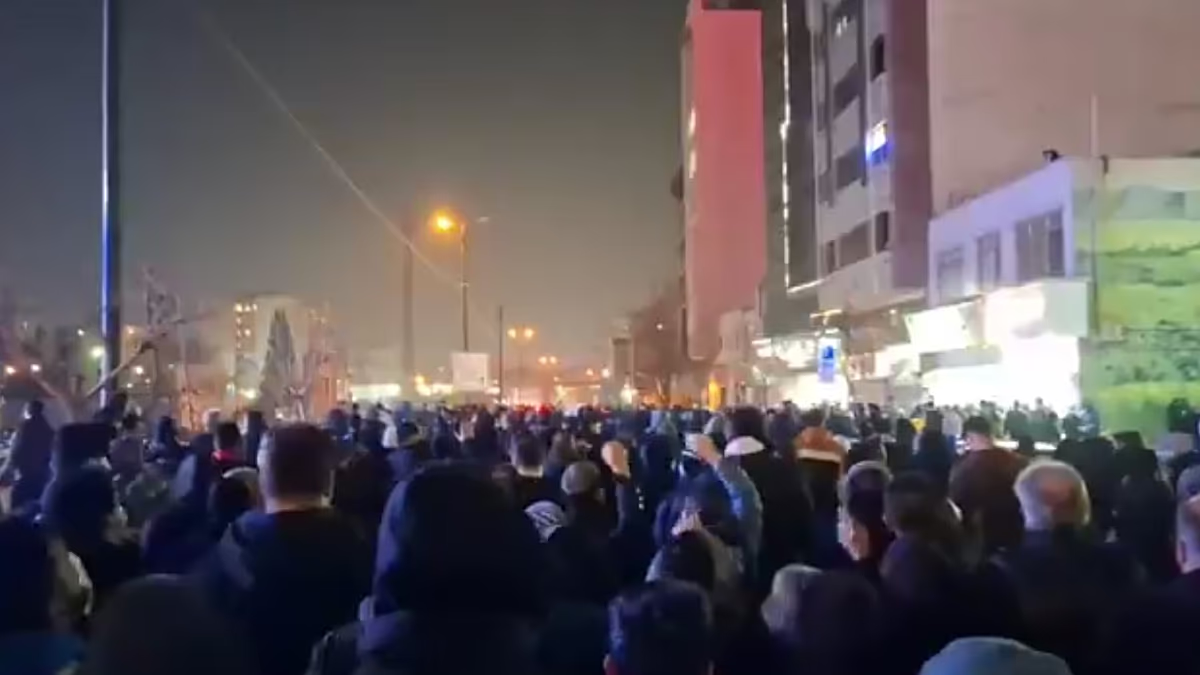

Mass protests erupted across Iran on Thursday evening following a call to action by exiled Crown Prince Reza Pahlavi, representing a significant escalation in the ongoing unrest. Witnesses report people taking to the streets in Tehran and other cities, chanting slogans against the government and in support of the former monarchy. Critically, internet access and telephone lines were immediately cut nationwide, a tactic frequently employed by Iranian authorities to suppress dissent and control information flow.
The demonstrations, initially sparked by economic hardship, have become increasingly widespread and politically charged. Internet monitoring group, NetBlocks, and the firm Cloudflare confirmed the outages, attributing them to government interference. Attempts to call landlines and mobile phones within and from outside Iran, such as from Dubai, were unsuccessful, raising concerns about a potential crackdown.
Growing Iran Protests and Government Response
Crown Prince Pahlavi urged Iranians to demonstrate at 8 pm local time on both Thursday and Friday, directly challenging the Islamic Republic. According to reports, the call was answered with widespread participation. Chants of “Death to the dictator!” and “Death to the Islamic Republic!” echoed through neighborhoods, alongside expressions of support for the pre-1979 monarchy with cries of “Pahlavi will return!”
Pahlavi’s statement also included a warning to the Iranian government and the Islamic Revolutionary Guard, asserting that their actions were under scrutiny by the international community, including U.S. President Donald Trump. He suggested that any suppression of the protesters would not go unnoticed.
Escalating Violence and Arrests
The current wave of protests builds upon demonstrations that began Wednesday in cities and rural towns throughout Iran, with increased market and bazaar closures in solidarity with the movement. Human Rights Activists News Agency, a U.S.-based organization, reports at least 39 deaths and over 2,260 detentions linked to the unrest so far.
This increasing scope of protests applies considerable pressure to both the Iranian civilian government and Supreme Leader Ayatollah Ali Khamenei. However, analysts point out that the movement remains notably leaderless, a factor that could influence its longevity and direction.
Nate Swanson of the Atlantic Council has observed that a lack of established opposition leaders has historically hampered protests in Iran. The Atlantic Council has been following the situation closely. He notes that Iranian security forces have actively suppressed and exiled potential transformational figures, creating a void in leadership.
Iranian officials appear to be taking the threat of escalation seriously. The hard-line Kayhan newspaper publicized a video alleging that security forces will utilize drones for identifying and monitoring participants in the demonstrations. Despite this, official acknowledgment of the protests’ widespread nature has been limited.
International Reaction to the Iran Unrest
The series of events has garnered international attention, with President Trump previously warning of repercussions if the government uses force against peaceful protesters. This statement drew sharp criticism from the Iranian Foreign Ministry, which dismissed it as hypocritical and part of a long history of U.S. interventionism.
Meanwhile, the U.S. State Department has been sharing online footage on X (formerly Twitter) purportedly showing support for Trump among the protesters, including stickers with his name on roads. The State Department also highlighted images of demonstrators discarding government-subsidized rice to emphasize the economic grievances driving the movement.
European leaders are also voicing their concern and solidarity. European Parliament President Roberta Metsola posted a video noting that the world is witnessing the courage of the Iranian people and recognizing their demands for freedom and self-determination. She stated that Europe and the world are hearing their cries for change.
The situation in Iran remains fluid and unpredictable. The ongoing internet blackout makes independent verification of events difficult, but signals a deepening crisis. The coming days will likely be critical in determining whether the protests continue to grow, whether the government responds with further suppression, or whether a new path forward emerges for the nation. Stay informed about Middle East developments as the situation unfolds.