
A new investigation into the awarding of an EU contract to the College of Europe is raising concerns about potential procurement fraud and its impact on the reputation of European Union institutions. Police raids have taken place at both the College of Europe in Bruges and the offices of the European External Action Service (EEAS) in Brussels as authorities probe allegations of irregularities in a 2021-2022 tendering process. The case highlights ongoing scrutiny of transparency and ethical conduct within the EU system.
The inquiry centers on suspicions that the EEAS may have violated its own rules by providing the College of Europe with inside information before the tender was officially launched. This alleged preferential treatment could have given the College an unfair advantage in securing the contract. Former EU foreign policy chief Federica Mogherini, who recently stepped down as rector of the College of Europe, is implicated in the investigation, according to reports.
Concerns Over EU Integrity and Procurement Fraud
The investigation comes amid a series of scandals that have shaken the EU establishment. Earlier this year, authorities investigated alleged illicit lobbying by Chinese tech giant Huawei. In 2022, the “Qatargate” scandal dominated headlines, involving accusations of influence peddling linked to Morocco and Qatar. These incidents, coupled with the current probe, are fueling anxieties about corruption and a lack of accountability.
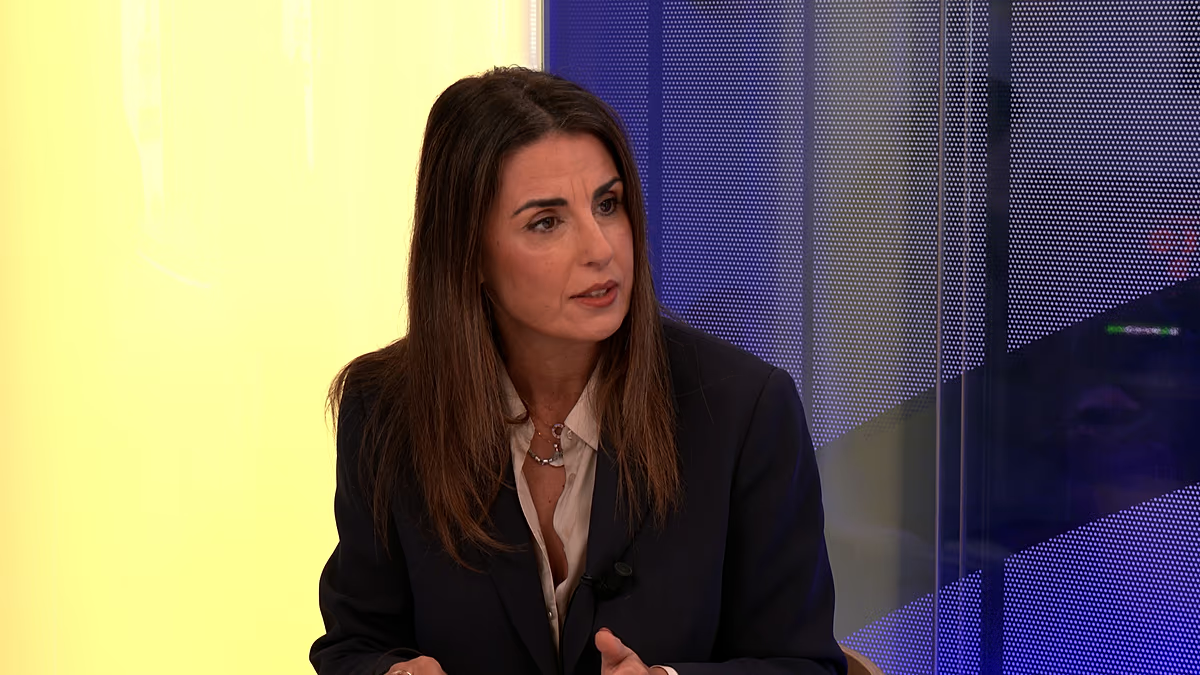
Teresa Anjinho, the European Ombudsman, warned that such allegations pose a significant risk to the EU’s standing. “Whenever you have these kinds of allegations that are related to integrity issues, it is very important to acknowledge that you always have high risks in terms of damaging the reputation of the European Union as a whole,” she stated in an interview with Euronews. She emphasized the importance of a swift and transparent resolution to restore public trust.
The Role of Oversight Bodies
While Anjinho’s office investigates maladministration within EU institutions, this particular case falls under the jurisdiction of the European Public Prosecutor’s Office (EPPO), working alongside Belgian police and the European Anti-Fraud Office (OLAF). The EPPO has indicated that if the allegations are substantiated, they could constitute procurement fraud, corruption, conflict of interest, and a breach of professional secrecy.
Anjinho expressed hope for a speedy and thorough investigation, stating, “I can only hope that this case will be solved as fast as possible and that all the facts will be clear and that the institutions will also be transparent and collaborative in guaranteeing that the public can continue to trust the European Union institutions.”
Ombudsman Faces Scrutiny Over Internal Hiring
Interestingly, Anjinho herself has recently been the subject of scrutiny. Questions were raised regarding her decision to offer her head of cabinet, Lampros Papadias, the position of secretary-general within her own office. Critics suggested the move could be perceived as cronyism, a practice her office is tasked with combating.
The European Parliament’s Budgetary Control Committee requested clarification from Anjinho on the hiring process. However, Anjinho defended the decision, characterizing it as a merit-based selection rather than a promotion. She asserted that the process included “clear checks and balances” and was conducted transparently. Euronews provides further details on this internal matter.
Anjinho acknowledged the potential for media coverage to impact her reputation but maintained that she is committed to safeguarding the integrity of the institution. She indicated a willingness to reflect on procedures to prevent any perception of favoritism in the future.
The ongoing investigations into the College of Europe contract and other alleged instances of misconduct underscore the need for robust oversight and ethical standards within the EU. The EPPO’s work, alongside scrutiny from the Parliament and the Ombudsman, will be crucial in determining the extent of any wrongdoing and implementing measures to prevent similar issues from arising. Observers will be watching closely for updates on these investigations and their potential consequences for the individuals and institutions involved.