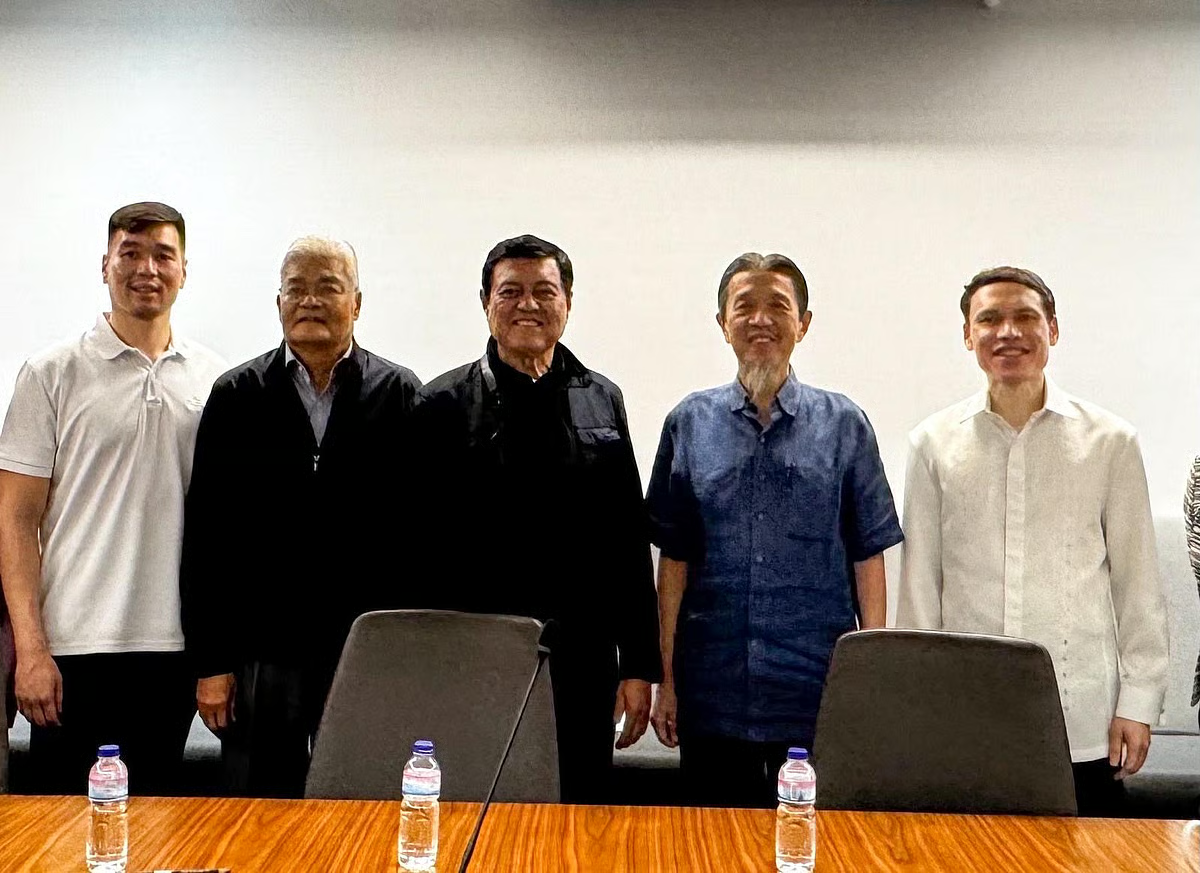

PrimeWater, one of the Philippines’ largest water and wastewater service providers, has undergone a complete ownership change. The Villar family’s Prime Asset Ventures Inc. has finalized the sale of its entire portfolio of PrimeWater operations to an undisclosed buyer. The deal, completed through definitive agreements, marks a significant shift in the landscape of private water utility services within the archipelago.
The acquisition encompasses PrimeWater’s extensive network across Luzon, the Visayas, and Mindanao, serving over a hundred cities and municipalities. This includes approximately 1.7 million service connections, impacting water access for millions of Filipinos. Financial details of the transaction have not been made public, according to reports from GMA Network and InsiderPH.
What Does the PrimeWater Ownership Transfer Mean for the Philippines?
The sale represents a full divestment from the Villar family, who previously controlled PrimeWater through Prime Asset Ventures Inc. For years, PrimeWater has operated primarily through joint venture agreements (JVAs) with local water districts, often those affiliated with the government. This model allowed for private sector investment and expertise in water infrastructure while maintaining a degree of public oversight.
However, the shift to complete private ownership raises questions about future investment strategies and service pricing. The Philippines faces ongoing challenges in providing clean and reliable water access to its entire population, particularly in rapidly urbanizing areas. Effective water management is crucial for sustainable development.
A History of Private Participation in Philippine Water Services
Private participation in the Philippine water sector dates back to the 1990s, driven by the need for significant infrastructure upgrades and expansion. The Asian Development Bank (ADB) has long advocated for increased private investment to address these needs. JVAs, like those utilized by PrimeWater, became a common approach, balancing public control with private efficiency.
PrimeWater’s business model focused on rehabilitating, expanding, and operating water supply and wastewater treatment facilities under these agreements. The company’s reach extended to both urban and rural areas, making it a key player in improving water sanitation and availability. The company’s extensive network is a valuable asset in the context of the country’s water infrastructure.
Implications of the Sale
The complete transfer of ownership could lead to a more streamlined decision-making process for PrimeWater, potentially accelerating infrastructure projects. A new owner might bring fresh capital and innovative technologies to improve water quality and reduce non-revenue water – water lost through leaks and theft.
Conversely, concerns have been raised regarding potential increases in water tariffs. Without the constraints of a JVA requiring public approval for rate adjustments, the new owner may have greater flexibility in setting prices. Monitoring the impact on affordability for consumers will be a key concern for regulators and advocacy groups.
The sale also highlights the broader trend of infrastructure asset recycling in the Philippines. The government is actively seeking to attract private investment in key sectors, including water, transportation, and energy, to fund its ambitious infrastructure development program. This program, known as “Build Better More,” aims to address the country’s infrastructure deficit and stimulate economic growth.
The identity of the acquiring entity remains undisclosed, adding to the uncertainty surrounding the future direction of PrimeWater. Industry analysts speculate that the buyer could be a domestic conglomerate, a foreign investment fund, or a consortium of investors. The buyer’s experience in the water sector and their financial capacity will be critical factors in determining their success.
The National Water Resources Board (NWRB) has not yet issued a formal statement regarding the ownership transfer. However, it is expected to review the transaction to ensure compliance with existing regulations and to assess its potential impact on water service delivery. The Local Water Utilities Administration (LWUA) will also likely play a role in overseeing the transition, given its close ties to the local water districts that partner with PrimeWater.
The completion of this deal follows a period of increased scrutiny on water concessionaires in the Philippines. In 2019, the government renegotiated concession agreements with Manila Water and Maynilad, the two major water providers in Metro Manila, citing unfavorable terms for consumers. This renegotiation underscored the government’s commitment to ensuring fair and equitable access to water resources.
Looking ahead, the NWRB and LWUA are expected to conduct a thorough assessment of the new ownership structure and its implications for water service quality, affordability, and sustainability. The public will be closely watching to see how the change impacts their access to this essential resource. Further details regarding the buyer’s plans for PrimeWater are anticipated within the next quarter, with a focus on proposed investments and operational improvements.
The long-term effects of this ownership transfer remain to be seen, but it undoubtedly marks a pivotal moment for the Philippine water industry. Continued monitoring and transparent communication from both the new owner and regulatory bodies will be essential to ensure a positive outcome for all stakeholders.