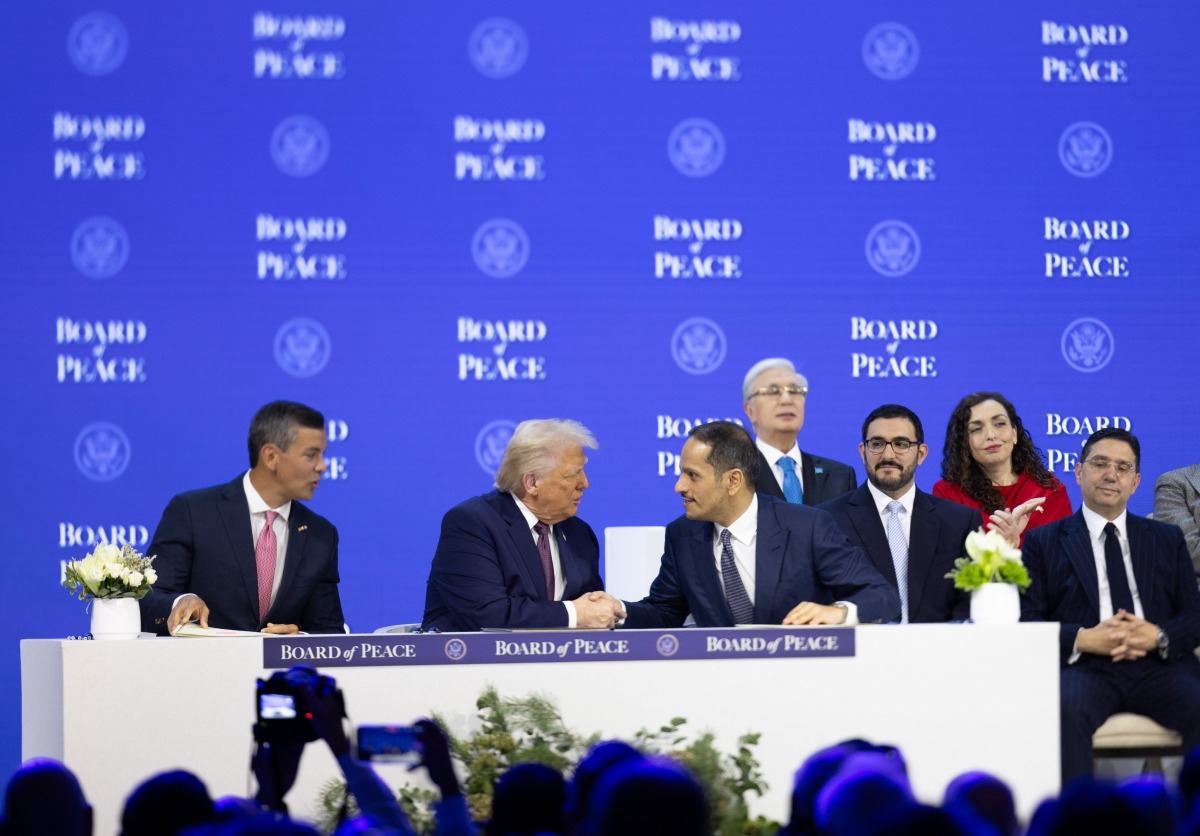

Qatar has formally joined the Board of Peace, a newly established international body aimed at fostering a path towards lasting peace in the Middle East. The signing ceremony took place Thursday in Davos, Switzerland, during the World Economic Forum, with Prime Minister and Minister of Foreign Affairs HE Sheikh Mohammed bin Abdulrahman bin Jassim Al-Thani representing the State of Qatar. This move signals Qatar’s increased role in regional diplomacy and its commitment to resolving the ongoing conflict in Gaza.
The agreement was signed in the presence of former U.S. President Donald Trump and leaders from several other nations. Qatar’s participation, alongside other Arab and Islamic countries, comes following an invitation from the United States to support the Board of Peace’s mission as a transitional body. The initiative is directly linked to the implementation of United Nations Security Council Resolution 2803, which addresses the conflict in Gaza.
Qatar’s Role in the Board of Peace
The Board of Peace is envisioned as a crucial component in implementing a comprehensive plan to end the conflict in Gaza. According to statements released by the Qatari Ministry of Foreign Affairs, the country’s involvement reflects its long-standing dedication to achieving a just and sustainable resolution to the Israeli-Palestinian conflict. Qatar has historically played a mediating role in regional disputes, and this new position builds upon that established track record.
Supporting UN Resolution 2803
UN Security Council Resolution 2803, adopted in late December 2023, calls for accelerating the provision of humanitarian assistance to civilians throughout Gaza. It also emphasizes the need for a durable cessation of hostilities and a two-state solution. The Board of Peace is intended to facilitate the practical steps necessary to achieve these goals, working in coordination with international partners and relevant stakeholders. Qatar’s commitment to supporting this resolution is central to its participation.
The invitation extended to Qatar and other Arab nations by the U.S. administration underscores the importance of regional involvement in any lasting peace process. However, the specific powers and authorities of the Board of Peace remain somewhat undefined, and its effectiveness will depend on the cooperation of all parties involved. This includes securing buy-in from Israel and Palestinian authorities.
Meanwhile, Qatar’s foreign policy has consistently prioritized dialogue and de-escalation. The country has maintained communication channels with various actors in the region, including Hamas, and has been instrumental in negotiating ceasefires and the release of hostages. This experience is expected to be valuable as the Board of Peace begins its work. The ongoing humanitarian crisis in Gaza adds urgency to these diplomatic efforts.
In contrast to some other international initiatives, the Board of Peace is explicitly framed as a “transitional body.” This suggests it is not intended to be a permanent institution, but rather a mechanism to guide the region through a critical period of transition towards a more stable and peaceful future. The timeframe for this transition remains unclear, and will likely be influenced by developments on the ground.
Additionally, the formation of the Board of Peace occurs amidst heightened geopolitical tensions in the Middle East. The conflict in Yemen and broader regional rivalries present significant challenges to any peace-building effort. Qatar’s ability to navigate these complexities will be crucial to the success of the initiative. Regional stability is a key secondary keyword in this context.
The involvement of former President Trump in the signing ceremony, while largely symbolic, highlights the bipartisan support for seeking a resolution to the conflict. It also suggests a continued U.S. interest in playing a leading role in the peace process, despite shifting domestic political priorities. The United States’ role as a mediator is a significant factor in the Board’s potential impact.
Looking ahead, the next steps for the Board of Peace will involve establishing its internal structure, defining its priorities, and developing a detailed implementation plan. The timeline for these actions is not yet public, and the Board will likely face significant hurdles in gaining the trust and cooperation of all parties. Monitoring the Board’s progress and the reactions of key stakeholders will be essential in assessing the prospects for a lasting peace in Gaza and the broader region. Further details regarding the Board’s operational framework are expected in the coming weeks, and the international community will be watching closely for signs of tangible progress towards a peaceful resolution.