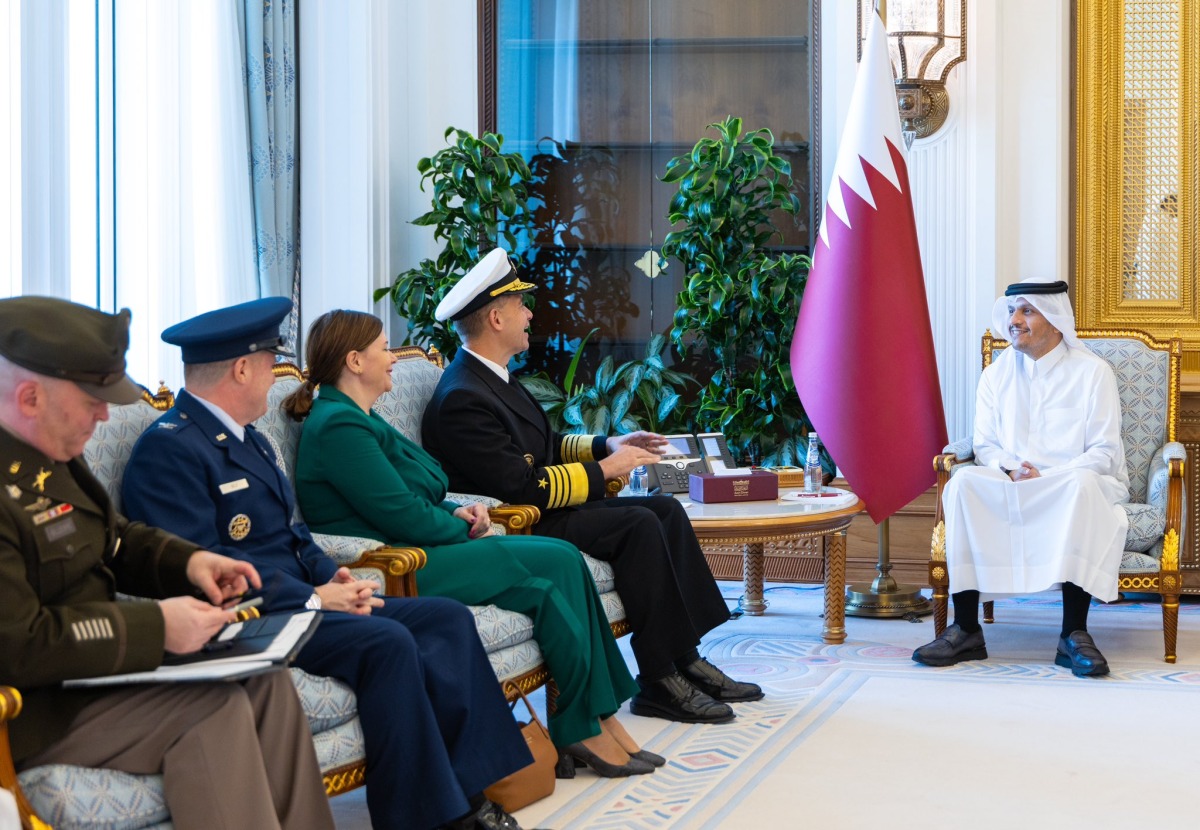

Doha, Qatar – Prime Minister and Minister of Foreign Affairs of Qatar, Sheikh Mohammed bin Abdulrahman bin Jassim Al Thani, met with Admiral Charles Bradford Cooper, Commander of the US Central Command (CENTCOM), on Tuesday. The meeting, held in Doha, focused on bolstering Qatar-US relations and expanding cooperation in defense and security. This visit underscores the ongoing strategic partnership between the two nations amid regional complexities.
The discussions took place as Admiral Cooper conducts a visit to Qatar, a key ally of the United States in the Middle East. According to the official Qatar News Agency, the leaders reviewed existing collaborations and explored avenues for strengthening ties, particularly in military and defense sectors. The meeting also addressed a range of issues of mutual concern, reflecting the broad scope of the bilateral relationship.
Strengthening Qatar-US Relations Through Defense Cooperation
The visit by the CENTCOM commander highlights the importance of Qatar as a stable partner for the US in a volatile region. Qatar hosts Al Udeid Air Base, a critical hub for US military operations in the Middle East, and has been instrumental in various security initiatives. This base is a key component of US military presence in the Gulf.
The two countries have a long-standing history of security cooperation, including joint military exercises and intelligence sharing. This collaboration is seen as vital for countering terrorism, maintaining regional stability, and protecting shared interests. The relationship has faced scrutiny at times, but both nations have consistently reaffirmed their commitment to partnership.
Recent Developments and Regional Context
The meeting occurred against a backdrop of heightened tensions in the Middle East, including the ongoing conflict in Gaza and concerns about Iranian influence. Qatar has played a significant role in mediation efforts related to the Gaza conflict, and the US likely sought to discuss these efforts with Sheikh Mohammed. These diplomatic initiatives add another layer to the strategic alliance.
Furthermore, Qatar’s independent foreign policy, while sometimes diverging from US positions, is widely seen in Washington as contributing to a more nuanced and stable regional environment. Qatar recently secured a role as the mediator in a hostage release deal between Israel and Hamas, demonstrating its unique position in fostering dialogue.
The US has consistently praised Qatar’s commitment to counter-terrorism efforts and its willingness to invest in its own defense capabilities. Qatar has been a purchaser of advanced US military equipment, further solidifying the defense ties between the two countries. This arms trade contributes to the overall defense partnership.
However, the relationship isn’t without its challenges. Concerns regarding human rights and labor practices in Qatar have been raised by US lawmakers and advocacy groups. These issues are periodically discussed in bilateral meetings, with the US urging Qatar to continue reforms.
The visit also comes as the US continues to reassess its overall military strategy in the Middle East, shifting towards a more focused approach on deterring Iran and protecting critical infrastructure. Qatar’s geographic location and its strong ties to various regional actors make it a valuable partner in this evolving strategy. The US is looking to maintain a strong regional security framework.
Looking ahead, further discussions are expected to focus on enhancing intelligence cooperation and coordinating efforts to address shared security threats. The specifics of any new agreements or initiatives resulting from Admiral Cooper’s visit remain to be seen. Analysts will be watching for any indications of increased US military deployments to Qatar or further investments in the country’s defense infrastructure in the coming months.
The long-term trajectory of Qatar-US relations will likely depend on developments in the broader regional context and the ability of both countries to navigate their differing priorities. Continued dialogue and a commitment to mutual respect will be crucial for maintaining a strong and productive partnership.
Learn more about US Central Command.
Visit the Qatar Ministry of Foreign Affairs.
Read about US relations with Qatar from the US Department of State.