



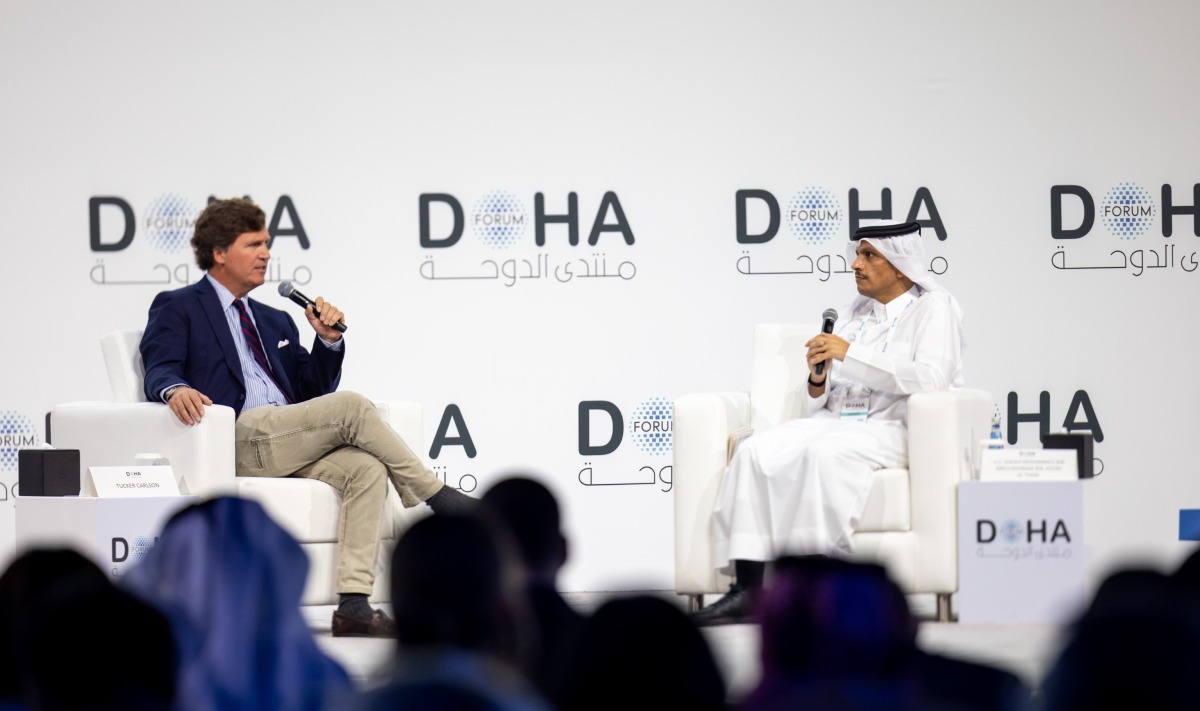

Doha, Qatar – Prime Minister and Minister of Foreign Affairs of Qatar, Sheikh Mohammed bin Abdulrahman bin Jassim Al-Thani, has reaffirmed Qatar’s ongoing commitment to supporting the Palestinian people with humanitarian aid, while clarifying the nation’s position on reconstruction costs in Gaza. His Excellency stated Qatar will continue providing assistance but will not fund the rebuilding of infrastructure destroyed by conflict, emphasizing the responsibility lies with those who caused the devastation. This announcement comes during the Doha Forum 2025, where regional and international issues are being addressed.
Speaking with Tucker Carlson, founder of the Tucker Carlson Network, Sheikh Mohammed addressed Qatar’s long-standing relationship with Hamas and the recent criticisms surrounding its role in mediating conflicts. The Prime Minister underscored the importance of engaging with all parties to achieve peaceful resolutions, even those considered controversial.
Qatar’s Role in Palestinian Aid and Hamas Relations
Qatar’s relationship with Hamas dates back nearly 19 years, beginning with the group’s participation in Palestinian Legislative Council elections. In 2012, Hamas established an office in Doha, which, according to Sheikh Mohammed, was solely dedicated to facilitating ceasefires and delivering aid to the Gaza Strip. This engagement has drawn censure, but the Prime Minister maintains it has been instrumental in securing ceasefires, releasing hostages, and alleviating civilian suffering.
Sheikh Mohammed explicitly denied allegations of direct funding to Hamas, stating such claims are baseless and intended to spread misinformation about Qatar. He emphasized that all aid to Palestinians has been delivered with full transparency and under the oversight of the United States, with Israel facilitating the process through successive governments.
Addressing Accusations and Maintaining US Ties
The Prime Minister addressed concerns about a potential strain in Qatar-US relations, particularly in light of reports suggesting US approval of an Israeli strike on Doha. He dismissed these reports as attempts to sabotage the partnership, highlighting the mutually beneficial nature of the relationship. According to Sheikh Mohammed, Qatar and the US consistently prioritize de-escalation and peace in the region.
He further clarified that the Israeli targeting of Doha was an unprecedented and unethical act, undermining the principles of mediation. A mediator, he explained, must be a safe space for dialogue, and an attack on the mediating party is a violation of international obligations.
Gaza Reconstruction and a Two-State Solution
Sheikh Mohammed firmly stated that Qatar will not bear the financial burden of rebuilding Gaza following the recent conflict, asserting that responsibility rests with those who caused the destruction. He emphasized the right of Palestinians to remain on their land, citing the resilience of the people of Gaza who have returned to their homes despite widespread devastation. This stance underscores Qatar’s commitment to supporting the Palestinian people directly, rather than funding the repair of damage inflicted by others.
The Prime Minister advocated for the implementation of a plan, initially proposed by former President Trump, that focuses on rebuilding Gaza and establishing a Palestinian state based on the two-state solution. He warned that continued violations in Gaza could escalate the conflict further, a scenario all parties must strive to avoid. Humanitarian aid remains a critical component of Qatar’s strategy.
Additionally, Sheikh Mohammed expressed concern about the potential for a wider conflict involving Israel and Iran, urging a revival of negotiations regarding Iran’s nuclear program. He also noted hope for progress in resolving the Russian-Ukrainian crisis, acknowledging the global harm caused by the ongoing war. Regional stability and international cooperation are key themes in Qatar’s foreign policy.
Looking ahead, the international community will be closely watching for further developments in the Gaza conflict and the implementation of any potential ceasefire agreements. The success of ongoing mediation efforts, and the provision of sustained humanitarian assistance, will be crucial in preventing further escalation and paving the way for a lasting political solution. The next steps will likely involve continued diplomatic engagement and a focus on securing commitments for reconstruction and long-term stability in the region.