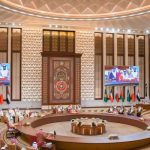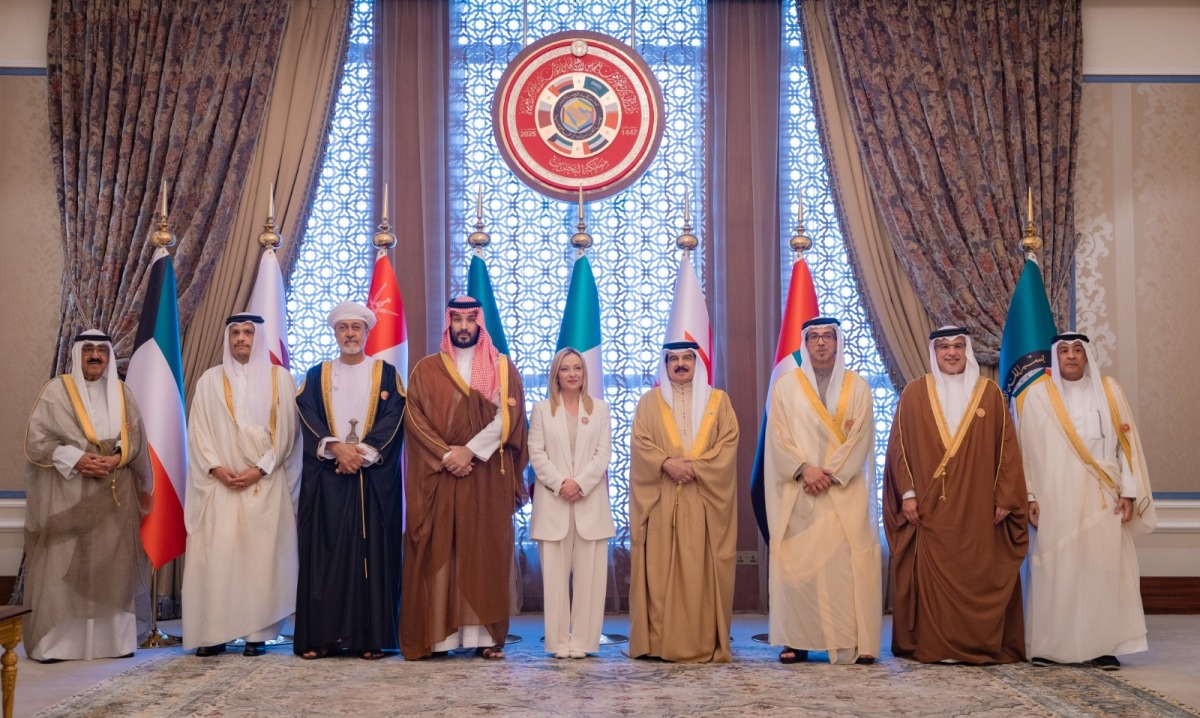

Manama, Bahrain – The Prime Minister and Minister of Foreign Affairs of Qatar, HE Sheikh Mohammed bin Abdulrahman bin Jassim Al-Thani, joined other Gulf leaders and Italian Prime Minister Giorgia Meloni at the 46th session of the Gulf Cooperation Council (GCC) Supreme Council held in Bahrain. Discussions centered on bolstering the GCC-Italy relations and identifying new avenues for collaboration. The summit, which convened today, signals a renewed focus on strategic partnerships for the six-member GCC bloc and Italy.
The working session, held in Manama, included a dedicated focus on strengthening ties with the Italian Republic, a key European partner. Leaders explored opportunities for increased cooperation across multiple sectors, ranging from energy and investment to security and cultural exchange. This meeting demonstrates the GCC’s proactive approach to diversifying its international relationships and fostering economic stability.
Strengthening GCC-Italy Relations: A Strategic Imperative
The impetus for deeper GCC-Italy relations comes amid shifting global dynamics and shared interests in regional stability. Both parties recognize the importance of a collaborative approach to address challenges related to energy security, economic diversification, and counter-terrorism. According to a statement released by the Bahraini Ministry of Foreign Affairs, the summit aimed to translate historical friendship into concrete, mutually beneficial actions.
Focus Areas of Cooperation
Several key areas were identified for potential expansion of cooperation. Energy was a prominent topic, given Italy’s reliance on external energy sources and the GCC states’ position as major oil and gas producers. The potential for Italian investment in Qatari and other GCC energy infrastructure projects was also discussed.
Investment and trade were another central focus. Leaders explored ways to remove barriers to increased commerce and to create a more favorable environment for Italian businesses operating within the GCC region, and vice-versa. The discussions included opportunities related to Qatar’s preparations for the 2030 Asian Games and broader infrastructure development plans across the GCC.
Security cooperation was also on the agenda, addressing shared concerns about regional stability and the threat of extremism. The GCC and Italy have a history of collaborating on counter-terrorism efforts and intelligence sharing, areas they seek to enhance further. This includes heightened discussions of maritime security in the Red Sea and Persian Gulf.
However, challenges remain in fully realizing the potential of this partnership. Differing political perspectives and bureaucratic hurdles can sometimes slow progress on joint initiatives. Furthermore, navigating the complex geopolitical landscape of the Middle East requires ongoing diplomacy and alignment of interests.
Italy’s guest-of-honor status at the summit underscores its commitment to engaging with the GCC. Prime Minister Meloni’s presence signaled Rome’s desire to play a more active role in the region and to deepen its existing ties with member states. This reflects Italy’s broader strategy of seeking stronger economic and political partnerships in the Mediterranean and the Middle East. The recent focus on Italy’s role as a Mediterranean hub likely influences this strategy.
The GCC, comprising Saudi Arabia, Kuwait, Oman, Qatar, Bahrain, and the United Arab Emirates, is a significant economic and political bloc in the Middle East. The organization aims to foster cooperation among its member states in various fields, including defense, security, and economic development. The current geopolitical climate encourages the GCC to pursue stronger alliances with countries outside the traditional regional framework, leading to increased engagement with European nations like Italy. Further information about the GCC is available on its official website.
Looking ahead, the next step will likely involve the formation of joint working groups to explore specific areas of cooperation in greater detail. These groups are expected to develop concrete proposals for projects and initiatives that can be presented at future meetings. The timeline for implementation remains uncertain, dependent on ongoing negotiations and internal approvals within both the GCC member states and Italy. Observers will be watching for concrete outcomes from these discussions, particularly in the energy and investment sectors, as indicators of the strength and sustainability of this evolving partnership. The development of a comprehensive economic framework will be crucial for long-term success.