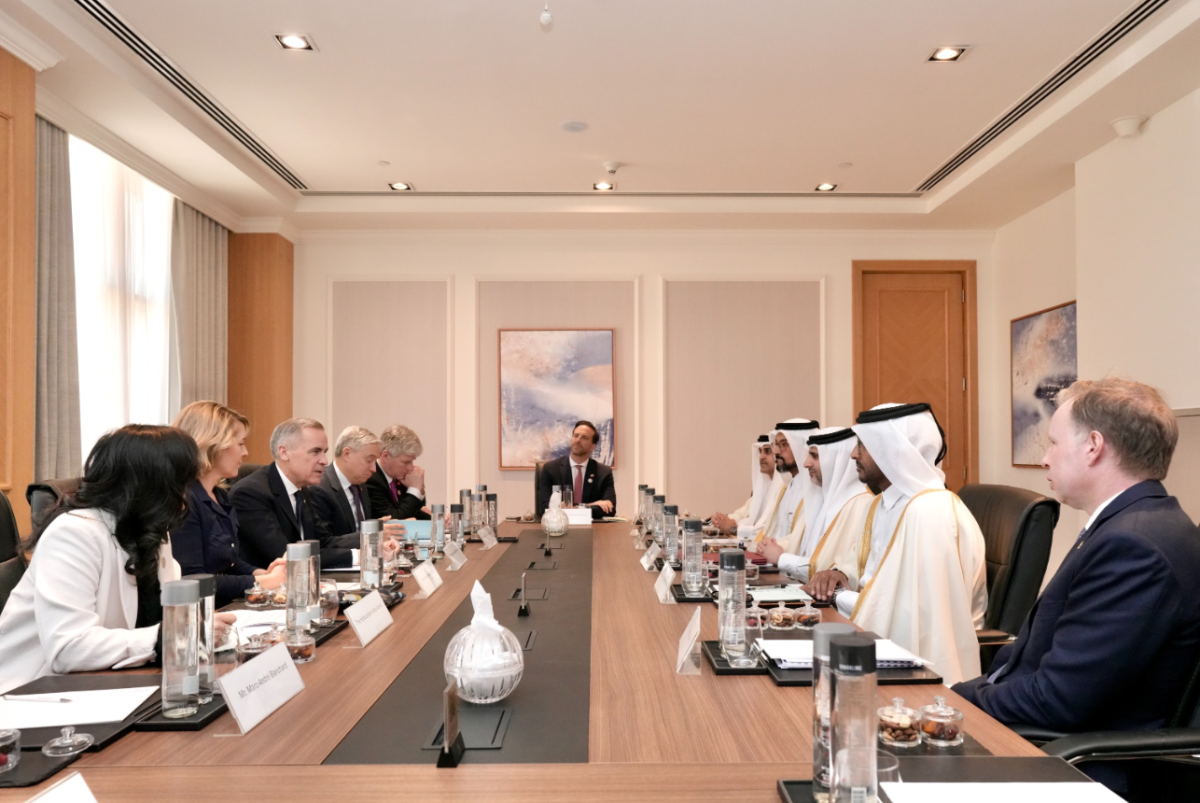

Doha, Qatar – Canadian Prime Minister Dr. Mark Carney held discussions with Sheikh Bandar bin Mohammed bin Saoud Al-Thani, Governor of Qatar Central Bank and Chairman of Qatar Investment Authority (QIA), on Sunday. The meeting, focused on strengthening Canada-Qatar relations, covered a broad range of economic and investment opportunities between the two nations. Discussions centered on potential collaborations and enhancing existing ties in key sectors.
The meeting took place in Doha, Qatar, and involved an exchange of perspectives on matters of mutual concern, with a particular emphasis on identifying avenues for increased bilateral cooperation. While specific details of the discussions were not immediately released, the encounter signals a continued effort to foster stronger economic partnerships between Canada and the Gulf state. This comes as Canada seeks to diversify its international economic relationships.
Strengthening Canada-Qatar Economic Ties
The visit by Dr. Carney and subsequent meeting with Sheikh Bandar underscores the growing importance of Qatar as a significant global investor. The QIA is one of the world’s largest sovereign wealth funds, with a diverse portfolio spanning multiple asset classes and geographies. Canada has been actively courting investment from the QIA for several years, recognizing its potential to contribute to key Canadian industries.
According to reports from the Canadian government, the discussions likely included potential Qatari investments in Canada’s energy sector, infrastructure projects, and technology companies. Canada is a leading exporter of natural resources, and Qatar’s substantial financial resources could facilitate the development of new projects and technologies in these areas. Additionally, the two parties likely explored opportunities for Canadian companies to participate in Qatar’s ongoing economic diversification initiatives, particularly those related to the 2030 National Vision.
Focus on Investment and Diversification
Qatar’s economy has traditionally been heavily reliant on oil and gas revenues. However, in recent years, the country has been actively pursuing a strategy of economic diversification, investing heavily in sectors such as tourism, finance, and technology. This diversification strategy presents opportunities for Canadian businesses with expertise in these areas.
Canada, meanwhile, is looking to expand its trade and investment relationships beyond its traditional partners, the United States and Europe. The country is actively seeking to forge new alliances in Asia, the Middle East, and other emerging markets. Foreign investment is seen as crucial to Canada’s long-term economic growth and competitiveness.
The meeting also touched upon global economic trends and challenges, including inflation, supply chain disruptions, and the transition to a low-carbon economy. Both Canada and Qatar are committed to addressing these issues and promoting sustainable economic development. Discussions likely involved sharing best practices and exploring potential areas for collaboration on climate change mitigation and adaptation.
However, it’s important to note that Canada-Qatar trade, while growing, remains relatively modest compared to Canada’s overall trade volume. In 2022, bilateral trade between the two countries totaled approximately CAD $700 million, according to Statistics Canada. This represents a significant increase from previous years, but still a small fraction of Canada’s total trade of over CAD $2 trillion.
In contrast to some other nations, Canada has maintained a consistent diplomatic and economic engagement with Qatar, even during periods of regional instability. This long-term commitment has helped to build trust and understanding between the two countries, creating a favorable environment for increased cooperation. The relationship is also underpinned by shared values, including a commitment to multilateralism and the rule of law.
The Qatari government has expressed interest in increasing its investments in Canada, particularly in sectors that align with its long-term economic goals. This includes renewable energy, sustainable infrastructure, and innovative technologies. The Canadian government, for its part, is actively working to attract foreign investment by streamlining regulations and promoting Canada as a stable and attractive investment destination.
Looking ahead, the next step will likely involve follow-up discussions between officials from both countries to explore specific investment opportunities and develop concrete plans for collaboration. A formal agreement outlining areas of cooperation could be announced in the coming months. The success of these efforts will depend on a number of factors, including global economic conditions and the evolving political landscape in both Canada and Qatar. Further developments in international finance and investment strategies will also play a role.
It remains to be seen how quickly these discussions will translate into tangible investments and projects. Monitoring the QIA’s investment decisions and any announcements from the Canadian government regarding new economic initiatives with Qatar will be key to assessing the impact of this meeting.