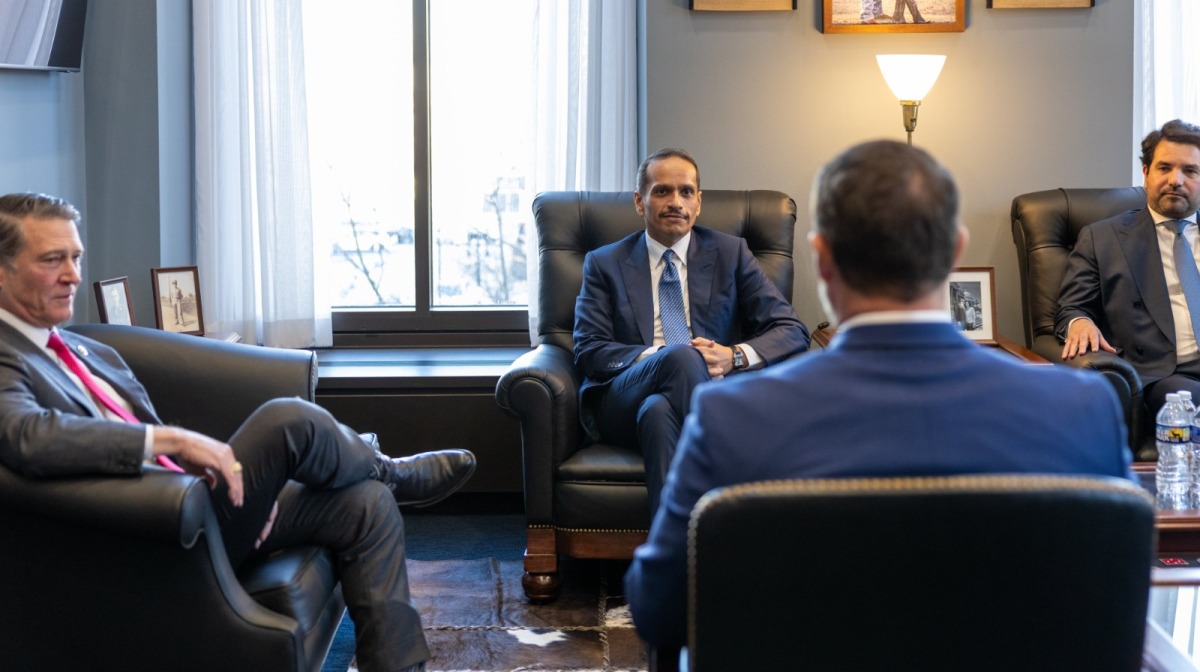

Doha, Qatar – Qatar’s Prime Minister and Minister of Foreign Affairs, Sheikh Mohammed bin Abdulrahman bin Jassim Al Thani, held meetings with a bipartisan group of U.S. lawmakers in Washington D.C. today. The discussions focused on bolstering the Qatar-US relations and addressing issues of mutual strategic importance, signaling continued efforts to strengthen ties between the two nations. The meetings took place as Qatar navigates its role as a key mediator in regional conflicts and a significant economic partner for the United States.
The delegation of U.S. Senators and Representatives included Steve Daines, Roger Wayne Marshall, Markwayne Mullin, Jacky Rosen, Brian Schatz, James Lankford, Ronny Jackson, Jimmy Panetta, and Josh Gottheimer. These meetings underscore the importance both countries place on maintaining a strong and collaborative partnership, particularly in areas of security, energy, and investment. The timing of these discussions is notable given ongoing geopolitical tensions in the Middle East and evolving global energy markets.
Strengthening Qatar-US Relations: A Focus on Strategic Alignment
The primary objective of Sheikh Mohammed’s visit and the subsequent meetings appears to be reinforcing the long-standing strategic alliance between Qatar and the U.S. According to a statement released by the Qatari Ministry of Foreign Affairs, the talks reviewed ways to enhance cooperation across multiple sectors. This includes defense, counterterrorism, and economic collaboration, all areas where Qatar and the U.S. have historically worked closely together.
Qatar has been a crucial non-NATO ally of the United States for decades, hosting Al Udeid Air Base, a major U.S. military installation in the region. The base plays a vital role in U.S. operations, including efforts to counter ISIS and maintain regional stability. Continued access and operational effectiveness of Al Udeid are likely key considerations in these ongoing dialogues.
Regional Mediation and Security Concerns
The discussions likely extended to Qatar’s prominent role in mediating regional disputes, most recently concerning hostage negotiations between Israel and Hamas. Qatar has consistently positioned itself as a neutral facilitator, leveraging its relationships with various actors to de-escalate tensions and promote peaceful resolutions. The U.S. has publicly acknowledged and appreciated Qatar’s mediation efforts.
However, Qatar’s relationship with certain groups has drawn scrutiny from some U.S. lawmakers. These concerns were likely addressed during the meetings, with Qatari officials reiterating their commitment to combating terrorism and maintaining regional security. The U.S. and Qatar share intelligence and collaborate on counter-terrorism initiatives, a partnership that is expected to continue.
Economic Partnerships and Investment
Beyond security, the Qatar-US relations are significantly underpinned by economic ties. Qatar is a major investor in the U.S. economy, with holdings in real estate, infrastructure, and various industries. These investments contribute to job creation and economic growth in the United States. The meetings likely explored opportunities to further expand these economic partnerships, including potential investments in renewable energy and technology.
Qatar’s status as a leading liquefied natural gas (LNG) exporter is also a key component of the relationship, particularly in light of global energy security concerns. The U.S. has been encouraging Qatar to increase LNG exports to Europe to help reduce reliance on Russian energy sources. This aspect of the bilateral trade was likely a topic of conversation, as well as potential long-term energy agreements.
The meetings also come amidst ongoing discussions regarding a potential arms sale to Qatar. While no specific details were released, such sales are often a point of contention in U.S. foreign policy and require congressional approval. The defense cooperation between the two countries is a critical element of their overall strategic alignment.
Looking ahead, the outcomes of these meetings will likely be reflected in future policy decisions and continued collaboration on key initiatives. Further details regarding specific agreements or commitments are expected to emerge in the coming weeks. Observers will be watching for any indications of shifts in U.S. policy towards Qatar, particularly concerning regional security and investment flows. The long-term stability of the Qatar-US relations will depend on navigating these complex issues and maintaining a shared commitment to mutual interests.