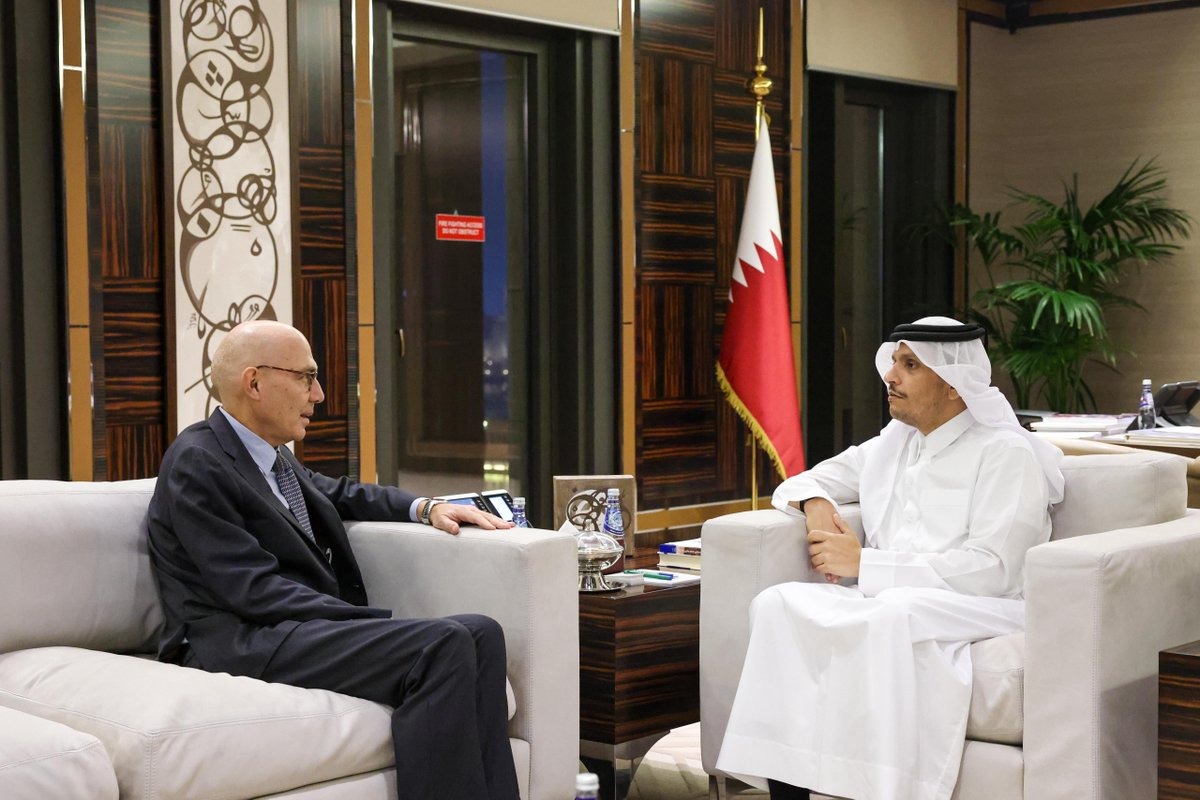

Doha, Qatar – Prime Minister and Minister of Foreign Affairs of Qatar, Sheikh Mohammed bin Abdulrahman bin Jassim Al-Thani, met with United Nations High Commissioner for Human Rights, Volker Turk, on Wednesday. The meeting, held in Doha, focused on strengthening Qatar’s human rights cooperation with the UN and addressing key international concerns. This discussion underscores Qatar’s ongoing engagement with global human rights bodies amidst increased scrutiny.
The visit by Turk and subsequent discussions come as Qatar continues to implement reforms following its hosting of the FIFA World Cup 2022, an event that brought considerable attention to its labor practices. According to the official Qatar News Agency, both leaders explored a range of issues of mutual interest during the meeting. The timing suggests a continuing dialogue on progress and remaining challenges in Qatar’s human rights landscape.
Qatar and the UN: Advancing Human Rights Collaboration
Qatar has been working to enhance its international standing on human rights, particularly regarding migrant worker welfare and freedom of expression. The country has ratified several international human rights treaties, including the International Covenant on Economic, Social and Cultural Rights, and has been engaging with UN special rapporteurs and committees. However, reports from organizations like Amnesty International and Human Rights Watch continue to highlight areas needing improvement.
The meeting with Turk likely addressed Qatar’s steps towards fulfilling its commitments under these treaties. These commitments often include submitting periodic reports, accepting country visits from UN experts, and incorporating international standards into national legislation. This consistent reporting is essential for transparency and accountability.
Focus on Labor Rights
Prior to the World Cup, Qatar faced significant criticism regarding its kafala system, which tied migrant workers’ visas to their employers, and reports of exploitative working conditions. Following the tournament, the government reportedly dismantled aspects of the kafala system and introduced measures to improve worker safety.
Reportedly, the discussions with Turk will have encompassed the ongoing effects of these reforms and areas where further action is needed. This includes ensuring effective enforcement of labor laws, providing accessible grievance mechanisms for workers, and addressing issues of wage theft and discrimination. Further attention to UN special rapporteurs’ recommendations is expected.
Broader Human Rights Issues
While labor rights are central to the conversation, Qatar’s human rights record extends beyond this area. Concerns have also been raised regarding freedom of expression, association, and assembly, as well as the rights of LGBTQ+ individuals. These broader issues likely featured in the dialogue with the UN High Commissioner.
The Ministry of Foreign Affairs has previously stated its commitment to protecting fundamental freedoms, but practical implementation remains a key challenge. Ongoing reviews of national laws and practices, aligned with international standards, are critical for demonstrating progress. Securing human rights advocacy support demonstrates long-term commitment.
The UN’s engagement with Qatar also creates opportunities for technical assistance and capacity-building. The Office of the High Commissioner for Human Rights can provide expertise and support to Qatari authorities in developing and implementing human rights policies and programs. This collaborative approach is fundamental to achieving sustainable improvements.
Meanwhile, Qatar also plays a role on the international stage in mediating conflicts and promoting humanitarian assistance. The country’s diplomatic efforts, particularly in relation to regional disputes and hostage negotiations, are often seen as contributing to broader peace and security objectives, factors that intersect with international justice considerations.
Looking ahead, the implementation of commitments made during Turk’s visit will be crucial to watch. While no specific deadlines or outcomes were publicly announced, continued dialogue and cooperation between Qatar and the UN are anticipated. Further reports assessing the situation on the ground are expected from various human rights organizations, providing benchmarks against which Qatar’s progress can be measured. The next formal review of Qatar’s human rights record by the UN is likely to occur within the next few years, contingent on fulfilling reporting requirements.