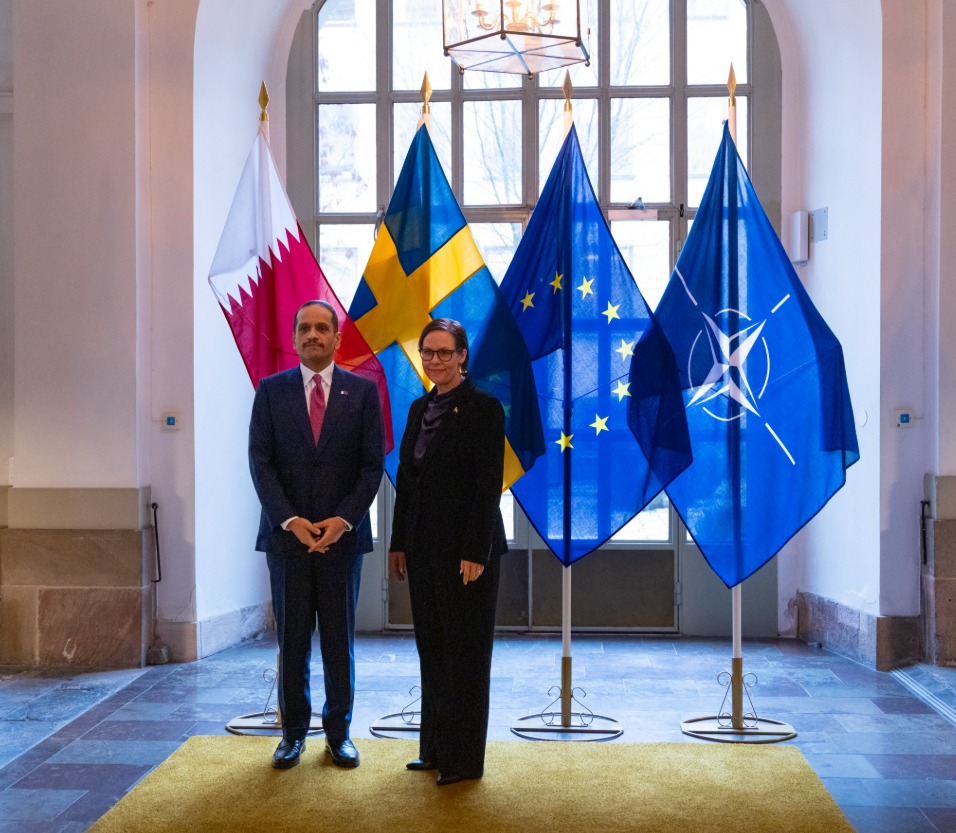

Qatar’s Prime Minister and Minister of Foreign Affairs, Sheikh Mohammed bin Abdulrahman bin Jassim Al Thani, held discussions with Swedish Foreign Minister Maria Malmer Stenergard in Stockholm today, focusing on bilateral Qatar-Sweden relations and regional stability. The meeting addressed cooperation between the two nations, particularly concerning the ongoing crisis in Gaza and the broader Palestinian territories. This engagement signals continued diplomatic efforts by Qatar to mediate and address escalating international concerns.
The meeting took place in Stockholm on February 29, 2024, according to a statement released by the Qatari Ministry of Foreign Affairs. Discussions centered on strengthening ties and exploring avenues for enhanced collaboration, alongside a detailed review of the current geopolitical landscape. Both officials reaffirmed their commitment to peaceful resolutions and de-escalation in conflict zones.
Strengthening Qatar-Sweden Relations
The visit underscores Qatar’s proactive approach to maintaining strong diplomatic relationships with key European partners like Sweden. While specific details of the cooperation discussed were not disclosed, the meeting suggests a mutual desire to build upon existing economic and political ties. Qatar has been increasingly focused on diversifying its international partnerships, and Sweden represents an important link within the European Union.
Areas of Potential Collaboration
Potential areas for increased collaboration could include renewable energy, technology, and education, according to analysts following the region. Qatar has significant investments in these sectors and Sweden possesses advanced expertise. Additionally, discussions likely touched upon cultural exchange programs and initiatives aimed at fostering greater understanding between the two countries.
However, the meeting also occurred against a backdrop of ongoing scrutiny regarding human rights issues in the region, a topic frequently raised by European nations. While not explicitly mentioned in the official statement, it is reasonable to assume that these concerns were addressed during the discussions, reflecting a broader trend of integrating human rights considerations into diplomatic engagements.
Gaza Crisis and Regional Developments
A significant portion of the meeting was dedicated to the deteriorating situation in Gaza and the occupied Palestinian territories. Qatar has played a central role in mediation efforts between Israel and Hamas, and Sheikh Mohammed likely briefed Minister Stenergard on the latest developments and ongoing negotiations. The Qatari government has consistently called for an immediate ceasefire and increased humanitarian aid to the region.
The discussions also likely encompassed the broader regional implications of the conflict, including the potential for escalation and the impact on regional stability. Qatar has consistently advocated for a two-state solution as the only viable path to lasting peace, a position that aligns with international consensus. The situation in Yemen and other regional hotspots were also reportedly touched upon, reflecting Qatar’s comprehensive approach to conflict resolution.
Meanwhile, Sweden, holding the rotating presidency of the Council of the European Union in the first half of 2024, is in a position to influence the EU’s foreign policy agenda. This provides an additional platform for Qatar to convey its perspectives and advocate for its priorities within the European context. The diplomatic ties between the two nations are therefore strategically important for both parties.
The ongoing international mediation efforts, including those led by Qatar, face significant challenges due to the complexity of the conflict and the divergent interests of the involved parties. The report indicates that securing a lasting ceasefire and ensuring the delivery of humanitarian aid remain the most pressing priorities. Regional security is also a key concern for both Qatar and Sweden.
Looking ahead, further diplomatic engagements between Qatar and Sweden are anticipated in the coming months. The immediate focus will likely be on monitoring the situation in Gaza and continuing to explore avenues for de-escalation. The effectiveness of these efforts will depend on the willingness of all parties to engage in constructive dialogue and prioritize the needs of civilians. The evolving geopolitical landscape and the potential for further escalation remain key uncertainties to watch.