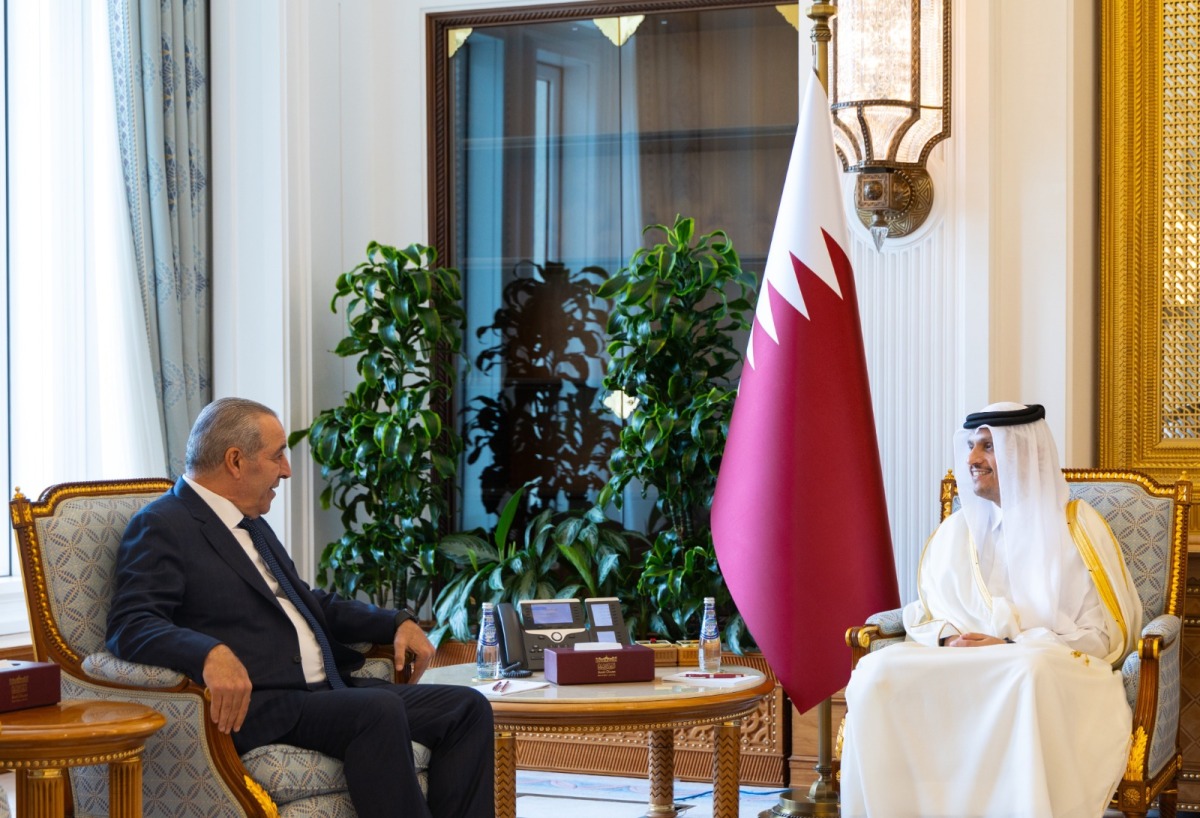

Doha, Qatar – Qatar’s Prime Minister and Minister of Foreign Affairs, Sheikh Mohammed bin Abdulrahman bin Jassim Al-Thani, held discussions with Palestinian Vice President Hussein Al Sheikh in Doha on Monday. The meeting focused on strengthening Qatar-Palestine relations and addressing the escalating humanitarian crisis in Gaza. The talks underscore Qatar’s ongoing diplomatic efforts in the region and its commitment to a lasting resolution of the Israeli-Palestinian conflict.
The meeting, which took place at the Prime Minister’s office, reviewed the current situation in the Gaza Strip and the occupied Palestinian territories. Both leaders exchanged views on potential avenues for de-escalation and increased humanitarian aid delivery. This engagement follows weeks of heightened tensions and a significant increase in casualties in Gaza, prompting international concern and mediation attempts.
Qatar’s Steadfast Support for the Palestinian Cause
Qatar has historically maintained a strong stance in support of the Palestinian people and their right to self-determination. According to a statement released by the Qatari Ministry of Foreign Affairs, Sheikh Mohammed reaffirmed Qatar’s unwavering commitment to the Palestinian cause, emphasizing the importance of a two-state solution based on internationally recognized borders. This position aligns with broader Arab consensus and international law.
The Prime Minister reiterated Qatar’s belief that an independent Palestinian state, with East Jerusalem as its capital, is crucial for regional stability. This stance has been consistently voiced by Qatari officials in international forums and bilateral meetings. Qatar has also been a significant provider of financial assistance to the Palestinian Authority and to humanitarian organizations operating in Gaza and the West Bank.
Recent Developments and Qatar’s Role
The current crisis in Gaza began following the October 7th attacks by Hamas on Israel, which resulted in numerous Israeli casualties and the subsequent declaration of war by Israel. The ensuing Israeli military response has led to a devastating humanitarian situation in Gaza, with widespread destruction and a growing number of Palestinian deaths and injuries. The conflict has also raised concerns about regional escalation and the potential for a wider war.
Qatar has been actively involved in mediation efforts, working with regional and international partners to secure the release of hostages held by Hamas and to facilitate the delivery of humanitarian aid to Gaza. These efforts have included direct communication with Hamas leadership, as well as collaboration with Egypt and the United States. The ongoing diplomatic initiatives aim to prevent further loss of life and to create conditions for a ceasefire.
Meanwhile, Qatar has increased its humanitarian aid to Gaza, providing medical supplies, food, and shelter to those affected by the conflict. The Qatar Red Crescent Society and other Qatari organizations are working on the ground to deliver assistance and support to the Palestinian population. This aid is being channeled through established humanitarian organizations to ensure it reaches those most in need.
The discussions between Sheikh Mohammed and Hussein Al Sheikh also touched upon broader issues of mutual interest, including economic cooperation and cultural exchange. Strengthening bilateral ties is seen as important for Qatar’s long-term engagement with the Palestinian territories. However, the immediate priority remains addressing the urgent humanitarian needs in Gaza and working towards a sustainable ceasefire.
In contrast to some international actors, Qatar maintains open communication channels with all parties involved in the conflict, including Hamas. This approach, while sometimes controversial, is seen by Qatari officials as essential for effective mediation and for understanding the complexities of the situation. The country believes that isolating Hamas would only exacerbate the conflict and hinder efforts to achieve a lasting peace.
Looking ahead, Qatar is expected to continue its diplomatic efforts to de-escalate the conflict and to secure a lasting ceasefire. The timing and success of these efforts remain uncertain, dependent on the positions of all parties involved and the evolving dynamics on the ground. Further discussions are anticipated in the coming days, potentially involving additional regional and international stakeholders, as the international community seeks a resolution to the ongoing crisis and a path towards a just and comprehensive peace for the Palestinian people. The focus will likely remain on securing increased humanitarian access to Gaza and exploring options for a long-term political settlement.