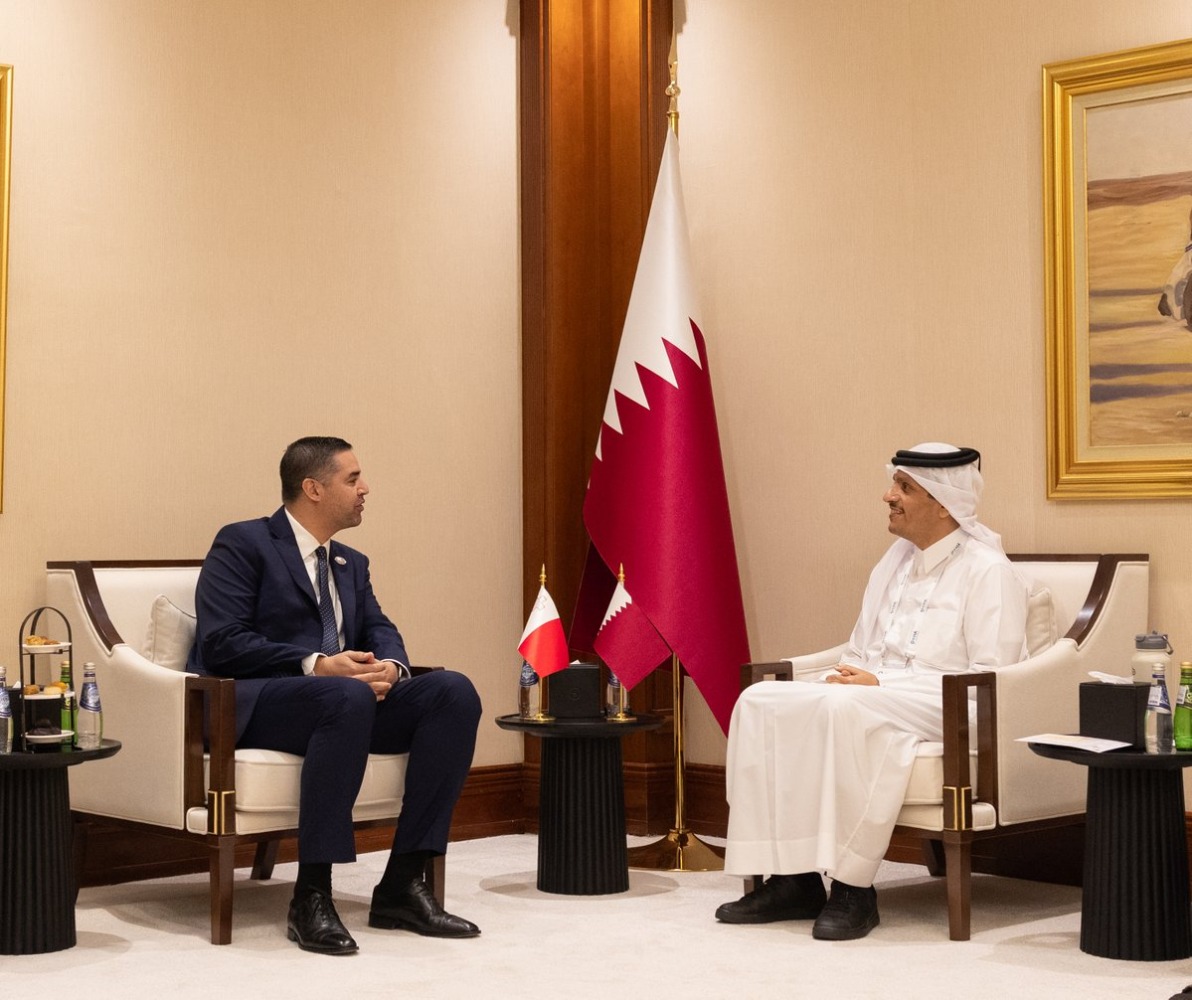

Doha, Qatar – Qatar and Malta have reaffirmed their commitment to strengthening bilateral relations during a meeting between Prime Minister and Minister of Foreign Affairs Sheikh Mohammed bin Abdulrahman bin Jassim Al-Thani and Maltese Deputy Prime Minister and Minister for Foreign Affairs and Tourism Dr. Ian Borg. The meeting, held on Sunday, took place on the sidelines of the 23rd Doha Forum 2025, a significant international platform for dialogue on global challenges. Discussions centered on enhancing cooperation and exchanging perspectives on key regional and international issues.
The encounter between the Qatari and Maltese officials underscores both nations’ dedication to fostering closer ties amidst a backdrop of evolving geopolitical dynamics. According to the official Qatar News Agency, the leaders explored avenues for collaboration and shared viewpoints on the Doha Forum’s agenda, which this year focuses on themes of stability, peace, and economic development. This meeting signals a continued effort to build partnerships beyond traditional alliances.
Strengthening Qatar-Malta Bilateral Relations
While historically modest, bilateral relations between Qatar and Malta have been steadily growing in recent years, particularly in the areas of investment and tourism. Qatar has shown increasing interest in Maltese infrastructure projects, and Malta serves as a European gateway for Qatari investments. This latest meeting is expected to further facilitate these economic connections.
Areas of Potential Cooperation
Several sectors were identified as having potential for expanded collaboration. These include energy, where Qatar is a major player, and financial services, a key component of the Maltese economy. Discussions also touched upon cultural exchange programs, aiming to promote greater understanding between the two countries.
The meeting also provided an opportunity to discuss regional security concerns. Both Qatar and Malta share an interest in promoting stability in the Mediterranean region and addressing challenges such as terrorism and maritime security. The two sides reportedly exchanged views on ongoing conflicts and potential diplomatic solutions. This aligns with Qatar’s broader diplomatic efforts in the Middle East and North Africa.
Additionally, the officials addressed the importance of multilateral cooperation in tackling global issues like climate change and sustainable development. Malta, as an EU member state, brings a European perspective to these discussions, while Qatar actively participates in international climate initiatives. The exchange of ideas is expected to contribute to a more coordinated global response.
In recent years, Qatar has been actively diversifying its international partnerships, seeking to strengthen ties with countries across various regions. This strategy is driven by a desire to enhance its economic resilience and play a more prominent role in global affairs. Malta, with its strategic location and stable political environment, represents a valuable partner in this endeavor. The diplomatic ties between the two countries have been consistently positive.
Meanwhile, Malta has been looking to expand its economic and political influence in the Gulf region. Qatar’s significant economic resources and its growing role in international mediation make it an attractive partner for Malta. The strengthening of foreign policy alignment is a key outcome of these interactions.
The 23rd Doha Forum, which serves as the backdrop for these discussions, is a crucial platform for Qatar to showcase its commitment to international cooperation and dialogue. The forum attracts high-level officials, policymakers, and experts from around the world, providing a unique opportunity to address pressing global challenges. The event itself is expected to generate further opportunities for international collaboration.
Looking ahead, the two countries are expected to continue exploring concrete projects and initiatives to deepen their cooperation. A joint commission may be established to oversee the implementation of agreements reached during the meeting. The success of these efforts will depend on sustained political will and a shared commitment to mutual benefit. Further developments in this bilateral partnership are anticipated in the coming months, with a focus on translating discussions into tangible outcomes.
It remains to be seen how these discussions will evolve into specific agreements, and the impact of these strengthened ties on regional dynamics will require continued monitoring. The next steps will likely involve detailed consultations between the respective ministries to identify priority areas for collaboration and develop a roadmap for future engagement.