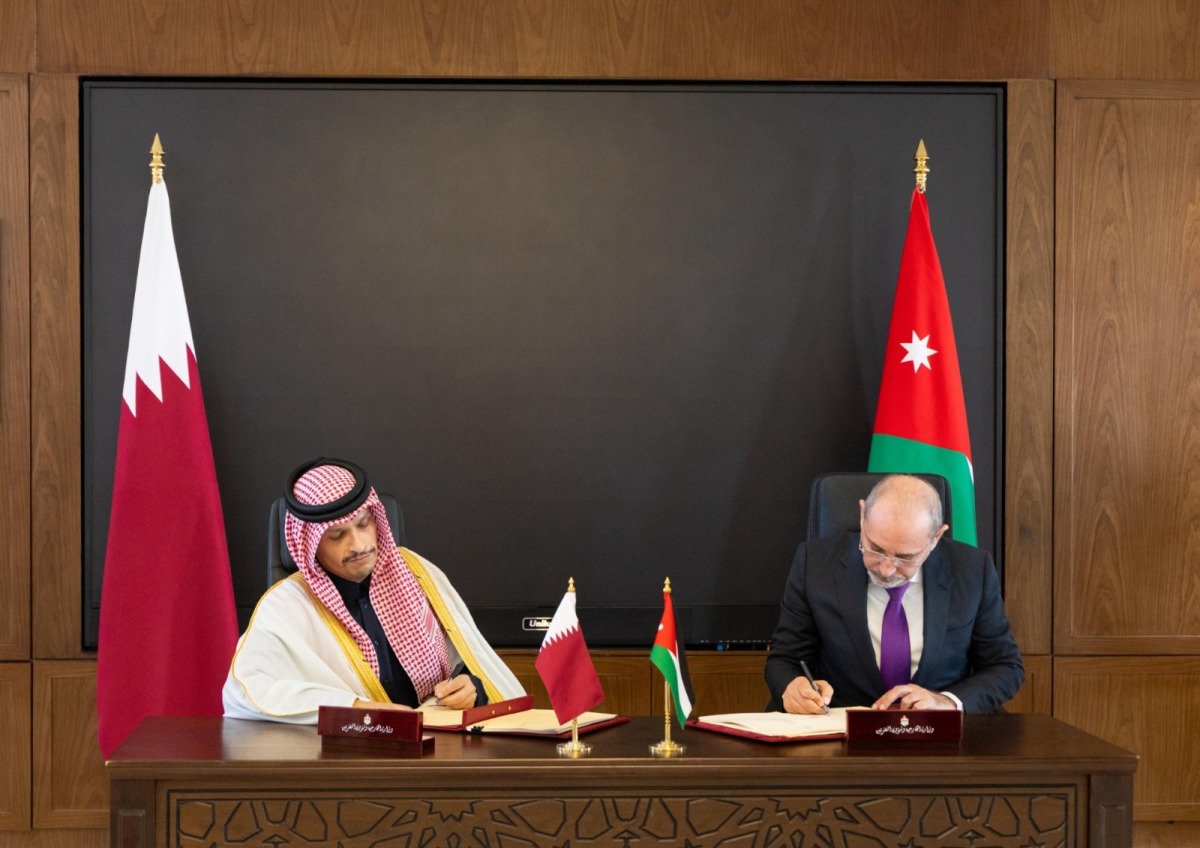

Amman, Jordan – Qatar and Jordan convened the 5th session of their Joint Higher Committee on Sunday, signaling continued commitment to strengthening bilateral relations between the two nations. The meetings, co-chaired by Qatari Prime Minister and Minister of Foreign Affairs HE Sheikh Mohammed bin Abdulrahman bin Jassim Al-Thani and Jordanian Deputy Prime Minister and Minister of Foreign Affairs and Expatriates HE Dr. Ayman Safadi, focused on expanding cooperation across multiple sectors and addressed pressing regional issues. The session took place in Amman, the Jordanian capital.
Discussions encompassed a wide range of topics, from economic partnerships and investment opportunities to collaboration in areas like youth development, tourism, and religious endowments. The meeting also provided a platform to exchange views on the evolving situation in the Gaza Strip and the broader Palestinian territories, particularly following the commencement of the second phase of the recent ceasefire agreement. This underscores the shared interest in regional stability and conflict resolution.
Strengthening Qatar-Jordanian Bilateral Relations
The Joint Higher Committee serves as a key mechanism for fostering closer ties between Qatar and Jordan, two countries with historically strong diplomatic and economic connections. According to statements released following the meeting, both sides expressed a strong desire to elevate their partnership to new levels, benefiting their respective populations. This commitment is particularly noteworthy given the current geopolitical landscape in the Middle East.
Qatar has been a significant investor in Jordan, particularly in the tourism and real estate sectors. The discussions likely centered on identifying further avenues for Qatari investment, contributing to Jordan’s economic growth and job creation. Jordan, in turn, is a crucial partner for Qatar in regional security and diplomatic efforts.
Key Areas of Cooperation
Several specific areas of cooperation were highlighted during the session. The signing of a memorandum of understanding (MoU) in the field of endowments signifies a commitment to collaborate on managing and developing religious properties and institutions. This is a sensitive area with significant cultural importance in both countries.
Additionally, a second executive program was established for a cooperation protocol in youth and sports, aiming to enhance exchanges and joint initiatives in these fields. A further MoU was signed to promote collaboration in tourism and business events, recognizing the potential for growth in these sectors. Finally, an agreement on bilateral political consultations was reached, ensuring regular dialogue on matters of mutual concern.
The agreements reflect a strategic approach to deepening ties beyond traditional diplomatic channels. The focus on youth and tourism, for example, suggests a desire to build people-to-people connections and diversify economic partnerships. These initiatives are expected to contribute to long-term stability and prosperity for both nations.
The meetings also addressed the ongoing humanitarian crisis in Gaza. Sheikh Mohammed reportedly reaffirmed Qatar’s commitment to providing aid and supporting efforts to achieve a lasting ceasefire. Jordan, which shares a border with the Palestinian territories, has been actively involved in coordinating humanitarian assistance and advocating for a peaceful resolution to the conflict. The discussions likely involved aligning strategies and coordinating diplomatic efforts to address the situation.
The timing of the meeting is significant, coinciding with the fragile peace in Gaza and broader regional instability. The need for coordinated diplomatic action and economic support for regional partners is more pressing than ever. This collaboration between Qatar and Jordan is a demonstration of their commitment to playing a constructive role in addressing these challenges. The discussions also likely touched upon broader regional security concerns, including counter-terrorism efforts and the ongoing conflicts in Syria and Yemen. Middle East Monitor provides ongoing coverage of these issues.
Looking ahead, the implementation of the signed MoUs and executive programs will be crucial. Officials from both countries are expected to convene follow-up meetings to develop detailed action plans and timelines. The success of these initiatives will depend on sustained political will and effective coordination between the relevant ministries and agencies. Further developments regarding Qatari investment in Jordan and joint diplomatic initiatives related to the Palestinian issue should be monitored in the coming months. Zawya is a good source for tracking economic developments in the region.
The next session of the Qatari-Jordanian Joint Higher Committee is anticipated to be held in Qatar in two years, providing a continued forum for dialogue and collaboration. However, the specific date and agenda will be determined based on evolving regional circumstances and the progress made on the commitments outlined in the current agreements. The Peninsula Qatar offers regular updates on Qatar’s foreign policy.