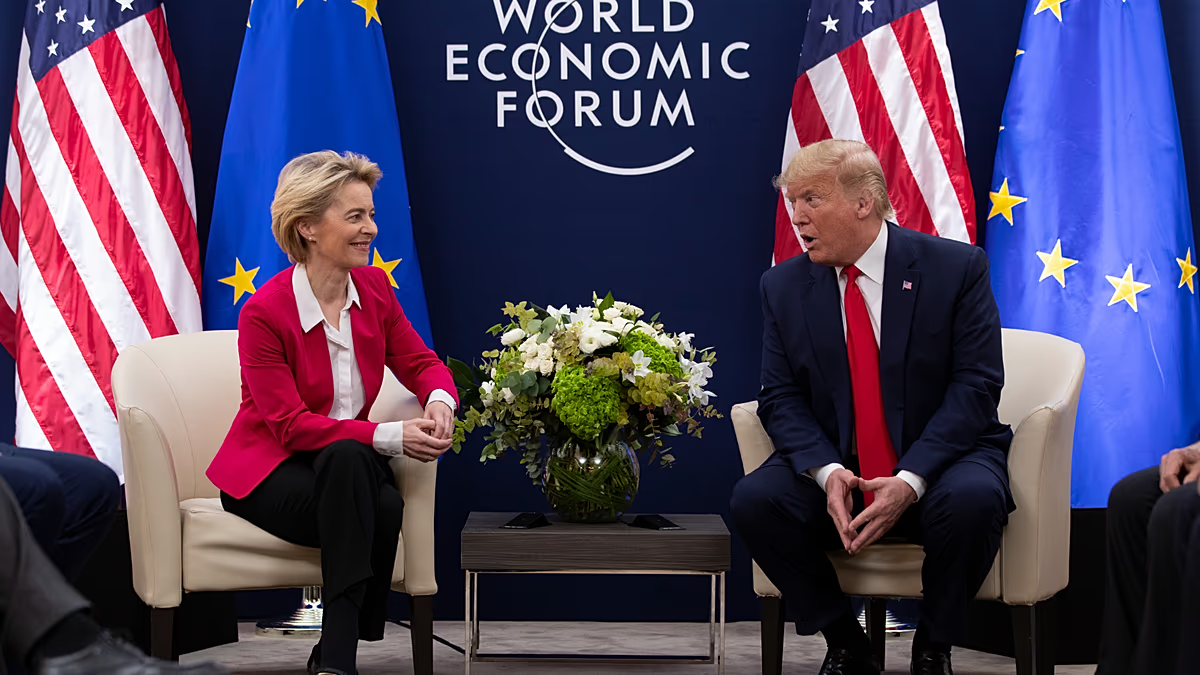

Growing tensions between the United States and the European Union are escalating after former President Trump threatened new tariffs on several European nations, including Denmark, Germany, and France. The dispute centers around Trump’s repeated, and unconventional, desire to purchase Greenland, a semi-autonomous territory of Denmark. This has prompted calls for the EU to consider deploying its anti-coercion instrument, a trade defense mechanism designed to counter economic pressure from third countries.
The Trump administration’s threat involves a potential 10% tariff on products originating from eight European countries, set to take effect February 1st if a deal for the “complete and total purchase of Greenland” isn’t reached. A joint statement released Sunday by Denmark, Sweden, Finland, France, Germany, the Netherlands, and the United Kingdom condemned the tariff threats, stating they “undermine transatlantic relations and risk a dangerous downward spiral.”
EU Considers Retaliation Against US Tariffs
European leaders are now actively coordinating a response, with an emergency meeting of EU ambassadors scheduled. French President Emmanuel Macron is reportedly pushing for the EU to explore all available options, including the use of the anti-coercion instrument. This tool, adopted in 2023, allows the EU to restrict market access for countries attempting to exert political pressure through trade measures.
The anti-coercion instrument could involve limiting third-country participation in EU public procurement, restricting trade licenses, and even blocking access to the EU single market. While potentially impactful for the US economy, deploying such a measure carries significant geopolitical risks, according to analysts.
Italy’s Prime Minister Giorgia Meloni, who has remained relatively quiet on the Greenland issue, has also criticized the tariff threats as “an error,” suggesting a possible miscommunication within the NATO alliance. She revealed she spoke with President Trump on Sunday to discuss the situation.
The current dispute highlights a shift in European strategy towards the US. Previously, the EU adopted a more appeasing approach, exemplified by a trade deal last summer that significantly lowered tariffs on US industrial goods while increasing duties on European products. This deal was widely criticized, with some, like former European Central Bank President Mario Draghi, arguing it weakened Europe’s position.
A Failed Strategy of Appeasement?
The initial justification for the concessions was to maintain US engagement in Ukraine and broader global stability. However, Trump’s latest actions suggest these concessions have not yielded the desired results. The European Commission, led by Ursula von der Leyen, initially defended the deal as providing clarity for businesses and easing tensions, but the current situation casts doubt on that assessment.
Several European leaders are now adopting a firmer stance. Swedish Prime Minister Ulf Kristersson stated the EU would not allow itself to be “blackmailed,” and Macron echoed this sentiment, asserting the EU would not be intimidated. This unified front extends to the European Parliament, where major political groups are signaling their opposition to implementing the US-EU trade deal until Trump reverses course.
Former EU Commissioners Paolo Gentiloni and Cecilia Malmstrom, instrumental in developing the anti-coercion instrument, have publicly advocated for its use. Malmstrom stated on social media, “It is getting ridiculous this constant threat of tariffs. Time for Europe to stand up. Greenland is not for sale.” The debate over trade policy and transatlantic relations is intensifying.
The situation remains fluid, and the EU’s response will be closely watched by global markets. The coming days will be crucial in determining whether the dispute escalates into a full-blown trade war or if a diplomatic solution can be found. Businesses with interests in both the US and Europe should monitor developments and prepare for potential disruptions to international trade.