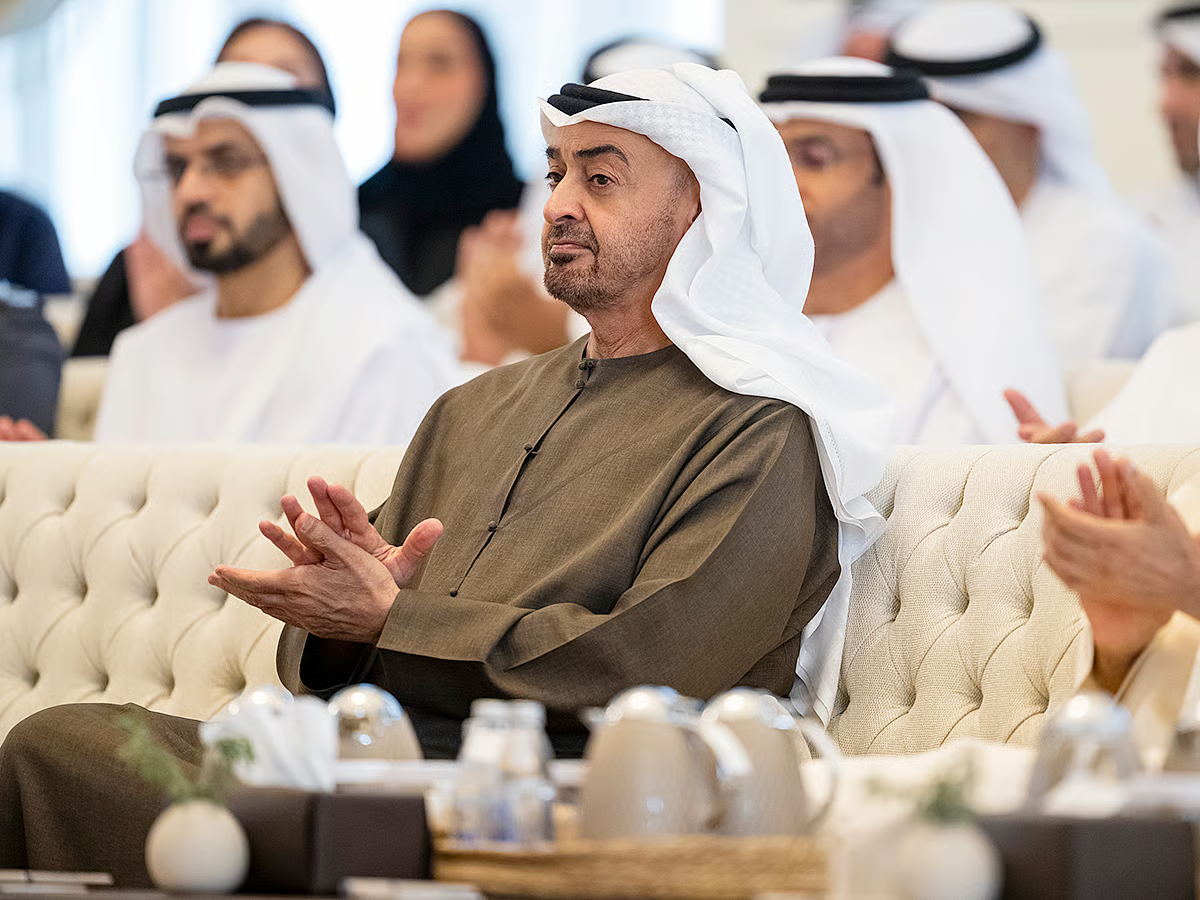

Abu Dhabi – President His Highness Sheikh Mohamed bin Zayed Al Nahyan convened a high-level session Friday to discuss the United Arab Emirates’ ambitious plans for an integrated artificial intelligence ecosystem. The meeting brought together key leaders and experts to outline strategies for leveraging AI to benefit citizens, strengthen communities, and secure the nation’s future. This initiative underscores the UAE’s commitment to becoming a global leader in the rapidly evolving field of AI and its applications.
The session reaffirmed the UAE’s dedication to utilizing artificial intelligence to enhance quality of life, bolster national competitiveness, and establish itself as a prominent global technology hub. Participants noted the pervasive impact of AI across numerous sectors, including healthcare, education, the economy, government services, and national security, signaling a fundamental shift in how modern life is conducted.
A Vision for Human-Centred Artificial Intelligence
Khaldoon Khalifa Al Mubarak, Chairman of the Executive Affairs Authority, opened the session by emphasizing the leadership’s proactive vision for innovation. He illustrated how AI is already integrated into daily routines and predicted its continued influence on the way communities function and individuals work.
Several ministers and senior officials contributed to the discussion, including Sarah Al Amiri, Minister of Education; Omar Sultan Al Olama, Minister of State for Artificial Intelligence, Digital Economy and Remote Work Applications; and Dr. Mohamed Al Kuwaiti, Head of the UAE Cybersecurity Council. These leaders stressed that artificial intelligence is more than just a technological instrument; it is a transformative power shaping societies and economies.
A core tenet of the UAE’s artificial intelligence strategy is centering people within the innovation process, ensuring that technological advancements serve humanity and prioritize its wellbeing. This approach seeks to balance progress with ethical considerations and social responsibility.
Impact Across Key Sectors
The application of AI across vital sectors was a central theme. In healthcare, officials reported that AI tools are improving diagnostic accuracy and treatment efficacy, contributing to increased survival rates and more efficient patient care. The implementation of AI promises to revolutionize medical practices and patient outcomes.
Education is another key area of focus, with discussions centering on preparing students to utilize AI responsibly and effectively. Leaders highlighted ongoing initiatives to strengthen educational outcomes while preserving and promoting national identity, cultural awareness, and the skills needed for future employment. This emphasizes the importance of digital literacy.
Building a Robust AI Ecosystem
Speakers outlined the UAE’s significant investments in developing a world-class AI ecosystem. The national strategy encompasses multiple initiatives designed to attract skilled talent, enhance digital infrastructure, and support sustainable global economic expansion. This includes fostering a collaborative environment for research and development.
Key programs discussed included the AI Readiness Index, designed to assess the preparedness of federal entities to lead in the age of AI. Additionally, the Large Language Model Alignment Index was presented as a means to evaluate how well AI language models align with Emirati values and cultural norms. These indices aim to provide benchmark data and track progress towards national AI goals.
The integration of AI into government services was demonstrated through a live showcase of the TAMM app. This platform consolidates services across multiple government entities, allowing users to efficiently renew vehicle registrations, manage insurance, make payments, and access instant support via an AI-powered chatbot. This move aligns with the UAE’s goal of providing seamless and efficient digital government services.
The UAE’s long-term commitment to artificial intelligence extends to addressing potential cybersecurity risks. According to Dr. Al Kuwaiti, ensuring the security and responsible use of AI is a paramount concern, requiring proactive measures and international collaboration.
The session concluded with a commitment to continue advancing the UAE’s AI trajectory with responsibility, ambition, and a firm focus on human advancement. The country anticipates that continued innovation will bolster communities, stimulate economic development, and safeguard the values that underpin the nation’s future, potentially positioning it as a pioneer in responsible AI governance.
Looking ahead, the UAE government is expected to announce further details and timelines for the implementation of specific AI initiatives in the coming months. The success of these programs will depend on continued investment, cross-sector collaboration, and a commitment to addressing the ethical and societal implications of this rapidly evolving technology. Monitoring the development and adoption of these indices will be crucial in assessing the UAE’s progress towards its AI vision.