


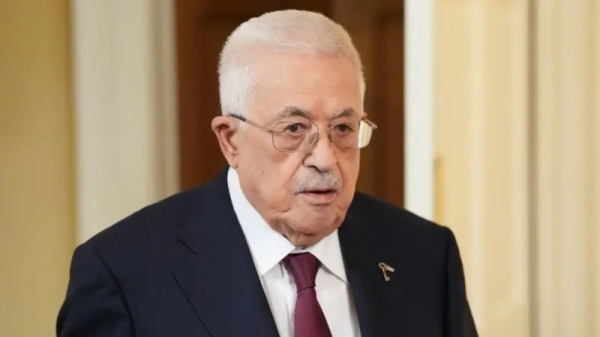

Palestinian President Mahmoud Abbas has publicly expressed gratitude for Saudi Arabia’s continued support of the Palestinian cause, following recent discussions between Saudi Crown Prince Mohammed bin Salman and US President Donald Trump. The statement, released Tuesday, highlights Saudi Arabia’s commitment to a two-state solution and the rights of the Palestinian people. This reaffirmation of support comes amid ongoing efforts to restart stalled peace negotiations and address the complex geopolitical landscape of the region, focusing on the future of Palestine.
Abbas specifically praised the positions taken by the Crown Prince during his White House meeting, emphasizing Saudi Arabia’s unwavering dedication to defending Palestinian rights and legitimacy. The Palestinian President’s comments signal a desire for continued close collaboration with Saudi Arabia in pursuing the establishment of a Palestinian state with East Jerusalem as its capital, according to the official statement.
Saudi Arabia’s Role in the Israeli-Palestinian Conflict
Saudi Arabia has historically been a key player in the Arab-Israeli conflict, and its stance on the Palestinian issue carries significant weight. While not directly involved in past peace negotiations, the Kingdom has consistently advocated for a just and lasting resolution based on international law and relevant UN resolutions. This position is rooted in the Arab Peace Initiative, first proposed in 2002, which offers normalized relations with Israel in exchange for a full withdrawal from territories occupied since 1967.
Recent Shifts in Saudi Policy
Recent years have seen subtle shifts in Saudi Arabia’s approach to Israel, marked by behind-the-scenes diplomatic contacts and a growing focus on regional security concerns, particularly regarding Iran. However, Saudi officials have consistently maintained that any normalization of relations with Israel is contingent upon progress towards a comprehensive peace agreement that addresses the needs of the Palestinian people. This balancing act reflects the Kingdom’s desire to protect its strategic interests while upholding its long-standing commitment to the Palestinian cause.
The meeting between Crown Prince Mohammed bin Salman and President Trump reportedly covered a range of regional issues, including the ongoing conflict in Yemen, the threat of terrorism, and the need for stability in the Middle East. According to sources familiar with the discussions, the Palestinian issue was a prominent topic, with the Crown Prince reiterating Saudi Arabia’s support for a two-state solution.
Meanwhile, the United States has also been actively engaged in efforts to revive the peace process, although its approach has differed from that of previous administrations. The Trump administration’s recognition of Jerusalem as Israel’s capital and its subsequent relocation of the US embassy sparked controversy and were widely condemned by Palestinians and many Arab states. However, the administration has also sought to facilitate economic development in the Palestinian territories and to encourage dialogue between the parties.
Implications for Peace Negotiations
Abbas’s praise for Saudi Arabia’s stance underscores the importance of regional support in any future peace negotiations. A unified Arab front, backed by influential players like Saudi Arabia, could exert significant pressure on Israel to make concessions and to engage in meaningful dialogue with the Palestinians. However, deep divisions within the Arab world and the lack of a clear US strategy continue to pose challenges to the peace process.
Additionally, the internal political dynamics within both Israel and Palestine complicate the situation. The Israeli government is currently facing political instability, and the Palestinian Authority lacks legitimacy in the eyes of many Palestinians. These factors make it difficult to build the trust and confidence necessary for successful negotiations.
The ongoing expansion of Israeli settlements in the occupied West Bank remains a major obstacle to peace. According to reports from the United Nations, settlement activity has increased in recent years, further eroding the viability of a two-state solution. The international community has repeatedly called on Israel to halt settlement construction, but these calls have largely gone unheeded.
The Future of Palestine and Regional Stability
The situation surrounding Palestine remains volatile and unpredictable. The recent expressions of support from Saudi Arabia offer a glimmer of hope, but significant challenges remain. The future of the region hinges on the ability of all parties to overcome their differences and to commit to a just and lasting peace. The pursuit of a viable Palestine is central to achieving broader regional stability.
Looking ahead, the next few months will be crucial in determining the direction of the peace process. The appointment of a new US special envoy for the Middle East could provide a fresh impetus for negotiations. However, the success of any diplomatic efforts will depend on the willingness of both Israelis and Palestinians to compromise and to address the core issues at the heart of the conflict. The international community will be closely watching for any signs of progress, and the role of key regional players like Saudi Arabia will be paramount.