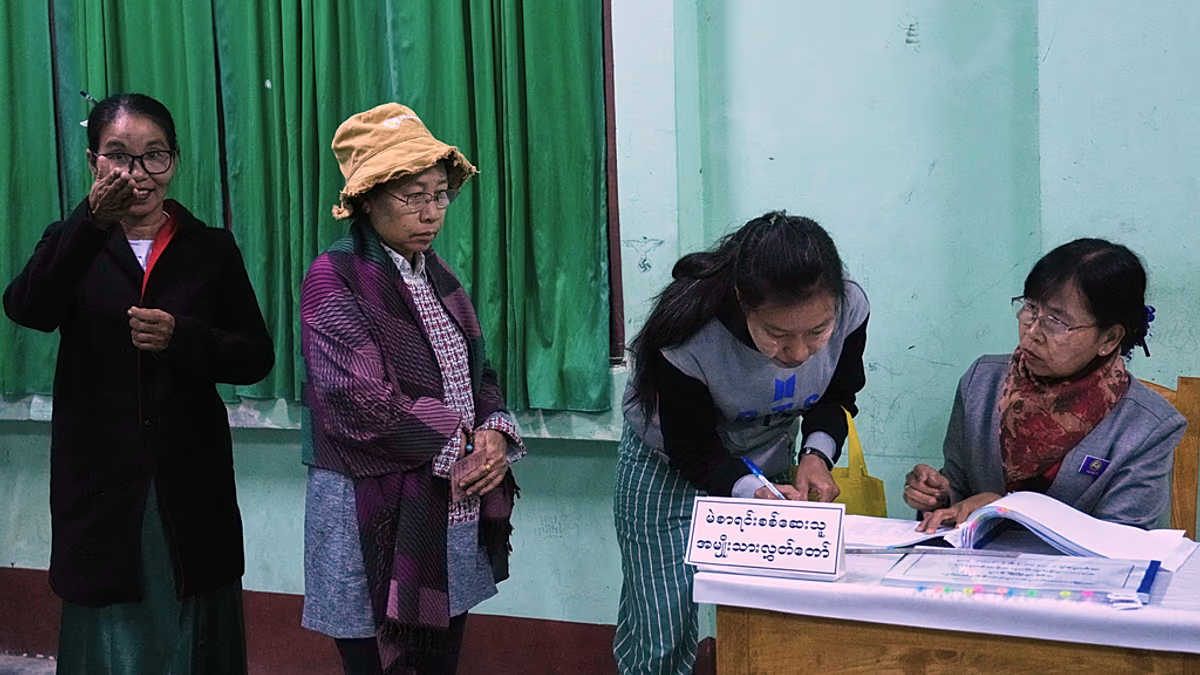

Myanmar held the first phase of widely criticized elections on Sunday, nearly five years after the military coup in 2021. The polls, taking place across 102 townships, are being viewed by many as a bid by the junta to legitimize its rule amidst ongoing civil war and widespread opposition. Further voting phases are scheduled for January 11th and 25th, with final results expected in February.
The election process unfolded despite significant challenges, including the dissolution of major political parties, the imprisonment of leaders like Aung San Suu Kyi, and active conflict preventing participation in roughly half of the country. According to the United Nations, over 3.6 million people have been displaced by the fighting that followed the coup. The junta maintains the vote represents a return to democratic processes.
Myanmar Elections Face Widespread Criticism
Observers suggest the military government is attempting to solidify its power with support from regional neighbors such as China, India, and Thailand. This effort comes as the country remains locked in a devastating stalemate, with no clear path toward resolution. The military has presented the vote as a step towards restoring electoral democracy, but this claim is undermined by restrictions on opposition parties and allegations of coercion to encourage voter turnout.
Khin Marlar, a voter in Yangon, expressed a hope for peace as her reason for participating, telling the Associated Press she dreams of returning to her village after fleeing conflict in the Mandalay region. Her sentiment reflects a desire for stability among some citizens, even within a deeply fractured political landscape.
Aung San Suu Kyi’s Absence and Party Dissolution
While over 4,800 candidates from 57 parties are contesting the seats, only six have a realistic chance of gaining significant influence in Parliament. The Union Solidarity and Development Party, backed by the military, is considered the frontrunner. Meanwhile, the absence of Aung San Suu Kyi and her National League for Democracy (NLD) casts a long shadow over the proceedings.
Suu Kyi, the 80-year-old former leader, is currently serving a 27-year prison sentence following convictions widely considered politically motivated. The NLD was dissolved in 2023 after refusing to comply with new military-imposed registration rules. The 2021 coup overturned the results of the 2020 election, which the NLD won in a landslide.
The international community has largely condemned the election. Tom Andrews, the U.N.-appointed human rights expert for Myanmar, described the process as “a theatre of the absurd performed at gunpoint” in a post on X. Western nations have maintained sanctions against the ruling generals due to their actions and the ongoing conflict.
The situation is further complicated by the ongoing civil war, which has created a humanitarian crisis and severely limited access to information. The conflict has also led to increased scrutiny of Myanmar’s relationships with its neighbors, particularly regarding economic and political support for the junta. Human Rights Watch provides ongoing coverage of the human rights situation in Myanmar.
The outcome of these elections is unlikely to be recognized internationally, and the legitimacy of the resulting government remains highly questionable. The future of Myanmar hinges on the resolution of the civil war and the release of political prisoners. Continued monitoring of the situation and pressure on the junta will be crucial in the coming months as the remaining phases of the elections unfold and results are tallied.
Additional sources • AP