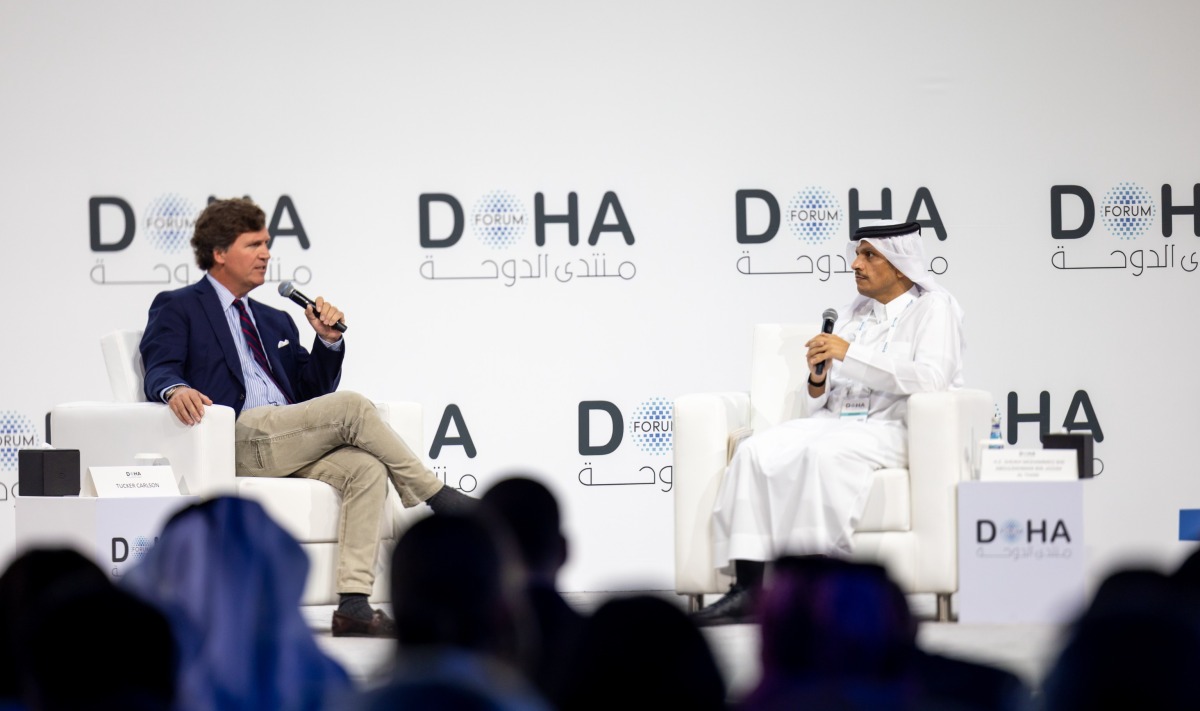

Qatar remains steadfast in its support for the Palestinian people, but clarifies that its aid is directed towards alleviating suffering in Gaza, not to the Hamas organization, Prime Minister and Minister of Foreign Affairs H.E. Sheikh Mohammed bin Abdulrahman bin Jassim Al-Thani stated during a discussion with Tucker Carlson at the Doha Forum. The Prime Minister addressed concerns regarding Qatar’s relationship with Hamas and criticized perceived double standards in international responses to ongoing conflicts. This comes amid continued international efforts to negotiate a ceasefire and increase humanitarian aid to Gaza.
The remarks, delivered yesterday in Doha, Qatar, underscore the nation’s commitment to regional stability and its role as a mediator in complex geopolitical situations. Sheikh Mohammed emphasized the urgent need for a sustainable resolution to the Israeli-Palestinian conflict, highlighting the unsustainable conditions currently prevailing in Gaza. The discussion also touched upon the recent attack on Qatar during mediation efforts, which the Prime Minister described as unprecedented and unethical.
Qatar’s Support for Palestine and Clarification on Hamas
Sheikh Mohammed firmly reiterated that Qatar’s assistance is focused on the humanitarian needs of the Palestinian people. He explained that Qatar’s engagement with Hamas began over a decade ago at the request of the United States, and has primarily served to facilitate ceasefires and the release of hostages. According to the Prime Minister, this communication is essential for resolving conflicts, even with non-state actors.
He addressed allegations of Qatar financing Hamas, stating that all aid has been transparently directed to Gazans with the full awareness and facilitation of both the United States and Israel across multiple administrations. He asserted that claims to the contrary are unfounded. Additionally, he pointed out Qatar’s consistent role in de-escalating regional tensions and promoting peace through dialogue with all parties involved.
Double Standards and Accountability
The Prime Minister criticized what he described as a double standard in the international community’s approach to post-conflict accountability. He contrasted the calls for Russia to fund Ukraine’s reconstruction with the expectation that regional actors, rather than Israel, should bear the responsibility for rebuilding Gaza. This disparity, he argued, is “ironic” and hinders progress towards a just and lasting peace.
He stressed that Qatar will continue to support the Palestinian people and alleviate their suffering, but believes the responsibility for rebuilding Gaza lies with those who caused the destruction. The Prime Minister also highlighted the importance of addressing the root causes of the conflict, emphasizing that a lasting solution requires granting Palestinians their rights to a state and self-determination.
The Path Forward and Obstacles to Peace
Sheikh Mohammed suggested revisiting the plan initially launched under the Trump administration, which aimed to rebuild Gaza and pursue a political solution. However, he expressed concern about the current political landscape in Israel, particularly the increasing opposition to a two-state solution within the Knesset. He warned against allowing far-right and extremist agendas to dictate the future of the region.
The Prime Minister emphasized the need for a two-state solution, where Israelis and Palestinians can live side-by-side peacefully. He also condemned the attack on Qatar during mediation efforts, stating it undermined the principles of international law and respect for national sovereignty. The incident, he noted, jeopardized the delicate process of negotiation and raised questions about the commitment to peaceful resolution.
Looking ahead, the situation in Gaza remains highly volatile. International pressure continues to mount for a ceasefire and increased humanitarian access. The next steps will likely involve further diplomatic efforts led by Qatar, Egypt, and the United States to secure a lasting truce and address the underlying political issues. The feasibility of a two-state solution, however, remains uncertain given the current political climate and the ongoing challenges to mediation efforts. Observers will be watching closely for any shifts in Israeli policy and the potential for renewed negotiations.