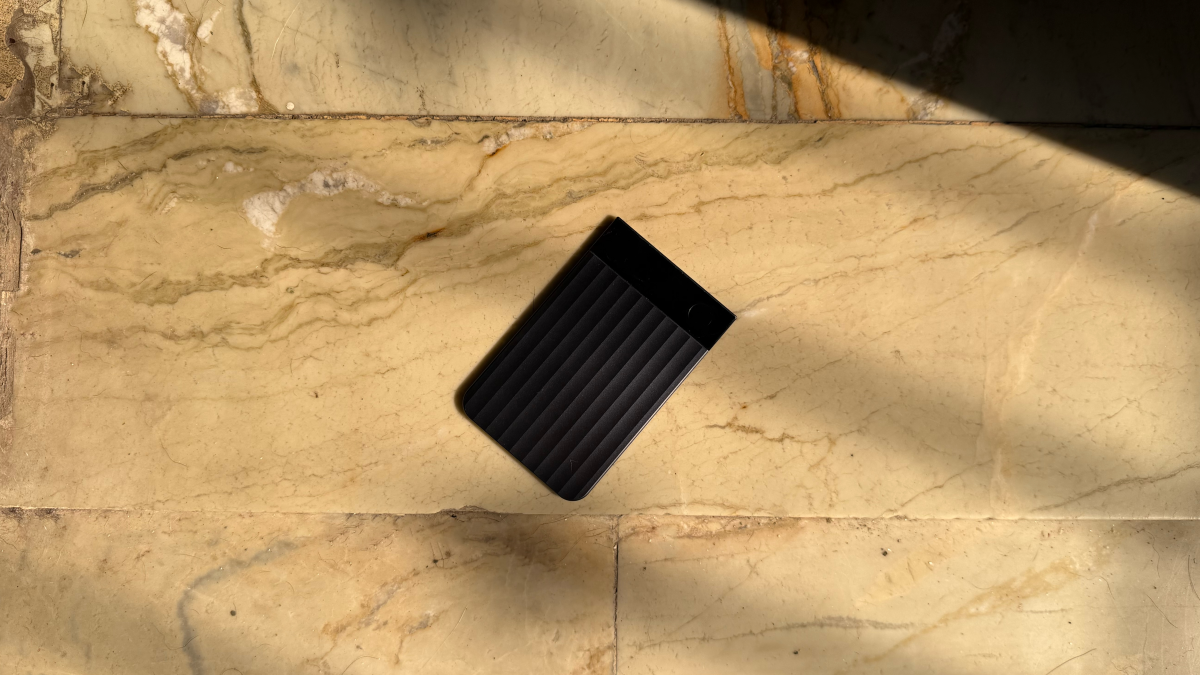

The market for wearable AI devices is becoming increasingly crowded with gadgets promising seamless voice recording and artificial intelligence integration. Following attempts from companies like Omi, Bee (acquired by Amazon) and the upcoming Stream ring, Plaud is carving out a niche with its unique, wallet-sized AI recording device. Unlike its competitors, Plaud is finding success by focusing on professional users and prioritizing simplicity and functionality over a flashy, always-on wearable design.
While many startups are aiming for an “always-listening” experience through rings or pendants, Plaud has shipped over a million units of its original Note and now its successor, the Note Pro, with over half of its customer base opting for professional subscriptions. This suggests a demand for discrete, reliable audio capture, particularly in professional settings, that isn’t being fully met by the current crop of wearable AI assistants.
Plaud Note Pro: A Different Approach to AI Recording
The Plaud Note Pro launched for preorder in August, priced at $179, and represents a significant evolution of the original Note. Its remarkably thin profile – just 0.12 inches, comparable to three stacked credit cards – is a key differentiator. This design allows it to easily slip into a wallet, or attach magnetically to the back of a phone, making it far less conspicuous than many other AI recording solutions.
A core focus of Plaud’s design is practicality. The device weighs only 30 grams, minimizing any noticeable bulk in a pocket or wallet. It’s bundled with a protective wallet-like pouch and a magnetic ring for convenient attachment to MagSafe-compatible smartphones, providing flexible carrying options.
Key Features and Functionality
Unlike some competitors requiring constant phone connectivity, the Plaud Note Pro functions independently, storing up to 64GB of audio directly on the device. This eliminates the need for immediate cloud uploads or reliance on a stable Bluetooth connection during recording. The Note Pro features four MEMS microphones, designed to capture audio from all directions, and a dedicated voice processing unit for noise suppression, voice isolation, and echo cancellation.
Plaud reports its device can achieve an effective audio range of up to 16.4 feet. In testing, users have found the recordings to be satisfactory even when positioned further from the audio source, such as at conferences. This reliability is crucial for capturing important conversations and presentations.
Battery life is another standout feature. A recent user reported over two weeks of use – including conference recordings and phone call notes – on a single charge, with 55% battery remaining. Plaud claims up to 30 hours of continuous recording and 60 days of standby time, making it a dependable tool for frequent travelers and those with demanding schedules. The device is charged via a proprietary charger with a USB-C cable, taking approximately two hours for a full charge.
Recognizing privacy concerns around covert recording, the Note Pro includes a small display screen to clearly indicate recording status. Furthermore, a tactile button press allows users to mark key moments within a recording, which are then highlighted in the AI-generated transcripts. Haptic feedback confirms the start and stop of recordings, enhancing user awareness.
Transcription and AI-Powered Notes
Plaud offers both direct audio export and native transcription services. Users receive 300 minutes of free transcription monthly, and can also customize AI-generated notes using pre-built templates tailored to various professional roles and tasks. The transcription accuracy is generally high, and the company has addressed previous issues with accessing recordings directly from transcript text, according to users. Access to recordings, transcripts and notes is now available through a dedicated website.
While microphone quality isn’t usually a benefit of compact size, the Plaud Note Pro appears to be a notable exception. Its design prioritizes audio capture quality over the sleek form factor commonly seen in other wearable AI options like rings and pendants. This focus resonates well with professionals requiring accurate records of meetings and interviews. The overall experience, centered on intentional recording, positions it as an alternative to more passively-capturing devices.
Looking ahead, the continued adoption of voice recording technology will likely hinge on addressing user concerns around privacy, data security, and ease of use. The success of Plaud, and its ability to attract a substantial professional subscriber base, suggests that a deliberate, high-quality approach to audio capture can overcome the challenges faced by attempts to create always-on, ambient AI assistants. It remains to be seen how competing devices, like the upcoming AI ring from the former Pebble founder, will fare, and whether the market will ultimately favor discrete, purpose-built recorders or more integrated wearable solutions.