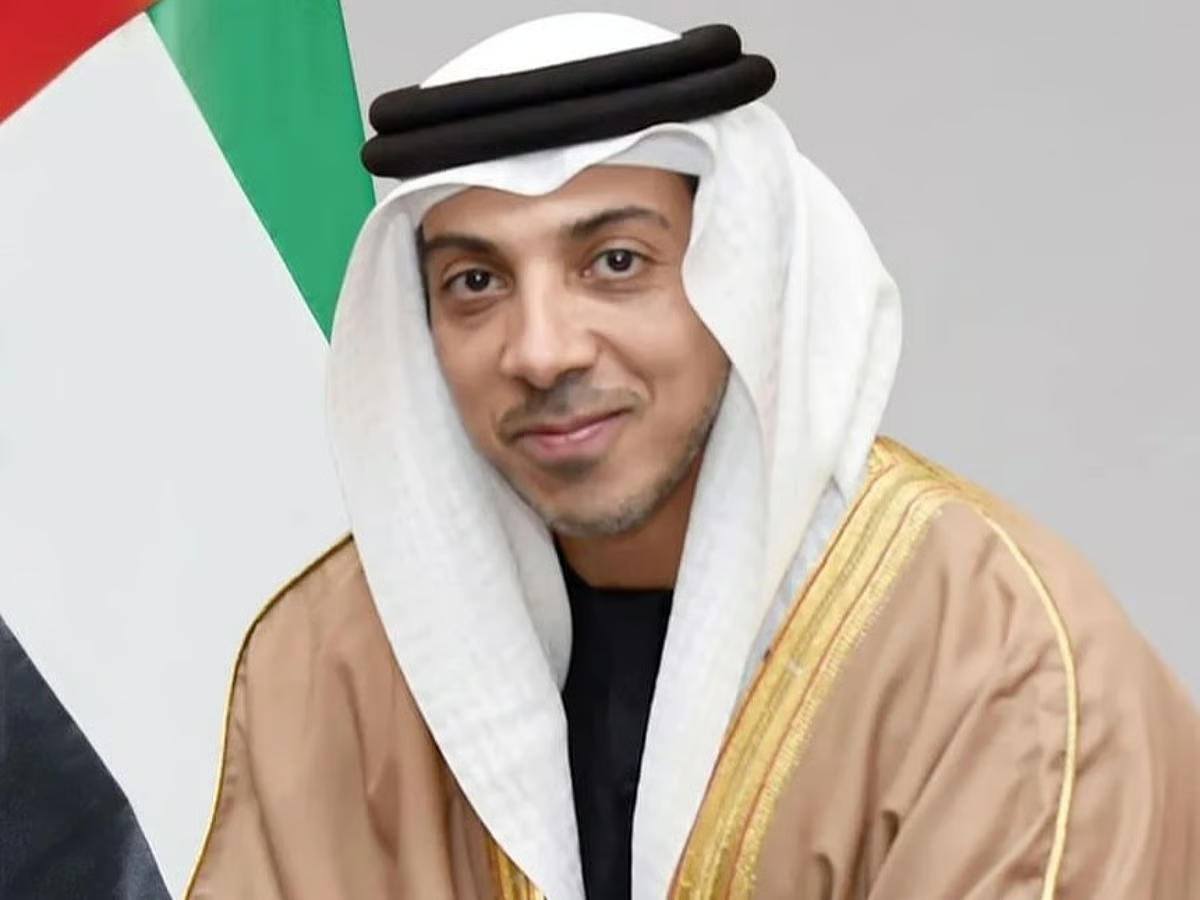

The United Arab Emirates (UAE) today, December 2nd, celebrates its 54th National Day, marking the anniversary of the union of six emirates in 1971. Celebrations across the country commemorate the vision of the late Sheikh Zayed bin Sultan Al Nahyan and the other Founding Fathers who established the modern UAE. This annual observance is a source of national pride and reflects on the country’s rapid development and cultural heritage.
The National Day of the UAE commemorates the formal establishment of the nation on December 2nd, 1971, with the unification of Abu Dhabi, Dubai, Sharjah, Ajman, Umm Al Quwain, and Fujairah. Ras Al Khaimah joined the federation in 1972, completing the seven emirates that now comprise the UAE. The day is observed with a public holiday, national parades, and displays of patriotism throughout the country as well as by Emirati communities abroad.
The Historical Significance of UAE National Day
The creation of the UAE was a pivotal moment in the region’s history, stemming from a desire for stability and collective progress. Prior to unification, the emirates were British protectorates. With Britain announcing its intention to withdraw from its commitments east of Suez in the late 1960s, discussions began amongst the rulers of the Trucial States regarding their future.
Sheikh Zayed bin Sultan Al Nahyan, then the Ruler of Abu Dhabi, and Sheikh Rashid bin Saeed Al Maktoum, the Ruler of Dubai, emerged as key proponents of the union. They recognized the benefits of collaboration, including enhanced security, economic diversification, and improved living standards for their citizens. According to historical records, negotiations were complex, involving debates over governance, resource sharing, and individual emirate sovereignty.
Early Challenges and Founding Principles
The early years of the UAE were marked by significant challenges, including building infrastructure, developing a national identity, and establishing robust institutions. However, the Founding Fathers, driven by a shared vision, prioritized unity, stability, and the welfare of the Emirati people. This commitment laid the foundation for the UAE’s subsequent success.
The initial agreement focused on establishing a federal structure with powers shared between the national government and the individual emirates. A provisional constitution was adopted in 1971, outlining the principles of governance and safeguarding the rights of citizens. This focus on balanced power continues to be a defining characteristic of the UAE political system.
Economic Transformation and National Development
The discovery of oil in the 1960s played a crucial role in the UAE’s economic development, providing the financial resources necessary to implement ambitious national projects. However, the leadership wisely invested these resources not only in oil extraction but also in diversification, focusing on sectors like tourism, finance, and real estate. This strategic approach helped shield the UAE from over-reliance on a single commodity, contributing to long-term economic growth.
The UAE has consistently ranked high in global indices related to infrastructure, competitiveness, and ease of doing business. Substantial investments have been made in modern transportation networks, including world-class airports and ports. The government also prioritizes education and healthcare, striving to provide its citizens with access to high-quality services. These initiatives have significantly improved the overall quality of life in the UAE.
Beyond oil, the UAE is increasingly recognized for its burgeoning non-oil sectors, specifically in the realm of sustainable development. The country has committed to ambitious targets for renewable energy, including significant investments in solar and nuclear power. Additionally, the UAE is actively promoting eco-tourism and sustainable agricultural practices as part of its broader vision for a diversified and resilient economy.
Cultural Preservation and Global Engagement
Alongside economic progress, the UAE has placed a strong emphasis on preserving its cultural heritage. Traditional arts, crafts, and customs are actively promoted through festivals, museums, and educational programs. The Sheikh Zayed Grand Mosque in Abu Dhabi stands as a magnificent example of Islamic art and architecture, attracting visitors from around the world.
The UAE has also emerged as an increasingly influential player on the global stage, actively engaging in international diplomacy and humanitarian initiatives. The nation provides substantial aid to countries in need and plays a constructive role in addressing regional and global challenges. Moreover, the UAE’s hosting of major international events, such as Expo 2020 Dubai, demonstrates its commitment to fostering collaboration and innovation.
The UAE’s commitment to fostering a tolerant and inclusive society is another hallmark of its national identity. The country is home to people from diverse nationalities and backgrounds, who contribute to its vibrant cultural landscape. The Ministry of Tolerance and Coexistence has spearheaded initiatives to promote understanding and respect amongst different communities. This openness is noteworthy in a region sometimes characterized by sectarian divisions.
Looking ahead, the UAE is focused on implementing its “We the UAE 2031” vision, a comprehensive plan for future national development. This strategy prioritizes innovation, technological advancement, and enhancing the country’s global competitiveness. The success of this plan will depend on continued investment in human capital, infrastructure, and a diversified economy. Further announcements regarding specific policy implementations and funding allocations related to “We the UAE 2031” are anticipated in the coming months, specifically during the annual governmental strategy meetings. The ongoing monitoring of global economic trends and geopolitical developments will also be critical in shaping the UAE’s future trajectory.