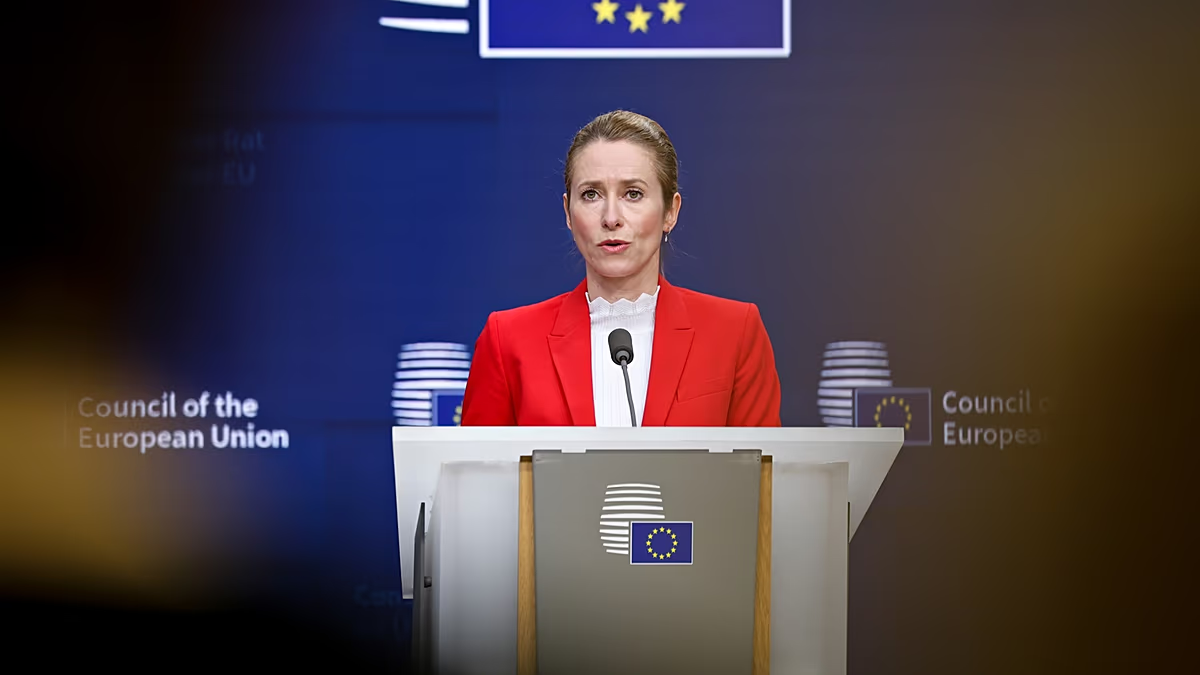

European leaders are pushing for any future peace deal to end Russia’s war in Ukraine to focus on limiting Russia’s future military capabilities, rather than imposing restrictions on Ukraine. High Representative Kaja Kallas emphasized that obligations should fall on the aggressor to deter further invasions, as a US-led effort to broker an agreement continues to face challenges. The debate centers on the terms of a proposed agreement, with initial drafts reportedly favoring Moscow.
The proposed deal, originating from discussions between US and Russian officials, reportedly included provisions requiring Ukraine to forgo its aspirations to join NATO, cede territory currently under its control, and cap its armed forces at 600,000 personnel. However, European nations are now actively working to revise these terms, advocating for a framework that prioritizes Ukrainian sovereignty and long-term security. This push comes after the initial draft leaked last week, sparking concern over its perceived bias.
The Focus on Russia: A New Approach to Ukraine Peace
Kallas argued strongly that curbing Russia’s military power is paramount. She stated that Russia’s substantial military spending – nearly 40% of its budget – incentivizes further aggression and poses a threat to all nations. “If you spend close to 40% (of the budget) on military, then you will want to use it again, and that is a threat to us all,” she said Wednesday following a meeting of EU foreign ministers.
European governments are united in their insistence that Ukraine retain the right to freely determine the size of its armed forces, currently estimated between 800,000 and 850,000. They view any attempt to cap Ukraine’s military as a concession to Russia and a potential invitation for future aggression. Latvia’s Foreign Minister Baiba Braže echoed this sentiment, advocating for a “peace through strength” strategy that maximizes economic, military, and political pressure on Moscow.
According to Kallas, Russia’s willingness to engage in diplomacy stems from its inability to achieve its objectives on the battlefield. She expressed skepticism about Russia’s genuine commitment to a ceasefire, noting that its military buildup continues unabated. “We see zero indications that Russia is ready for a ceasefire,” she stated.
European Unity and Security Guarantees
The recent flurry of diplomatic activity includes an informal EU summit on Monday and an online gathering of a “Coalition of the Willing” on Tuesday, demonstrating a concerted effort to amplify Europe’s voice in the negotiations. French President Emmanuel Macron, co-chairing the coalition, has also called for a “strong” Ukrainian army without limitations and proposed a multinational force to provide security after the conflict ends.
The EU intends to contribute significantly to Ukraine’s long-term security by providing financial aid, training, and support for its defense industry. However, Kallas emphasized that these guarantees are ultimately secondary to addressing the root cause of the threat: Russia. She highlighted the broader implications for European security, warning that allowing aggression to succeed would embolden other potential aggressors.
Austria’s Beate Meinl-Reisinger stressed the importance of a unified European approach, stating that “We can only strongly represent our European interests if we are able to speak with one voice and present our own plan.” This sentiment underscores the desire among European nations to avoid being sidelined in the negotiations and to ensure their interests are adequately represented.
The situation remains fluid, with the most sensitive issues deferred to a planned face-to-face meeting between Ukrainian President Volodymyr Zelenskyy and former US President Donald Trump. The outcome of that meeting will likely be crucial in shaping the final terms of any potential peace deal.
As negotiations continue, observers will be closely watching for signs of genuine flexibility from Russia and whether a framework can be established that ensures Ukraine’s long-term sovereignty and security. The coming weeks will be critical in determining whether a lasting resolution to the conflict can be achieved, or if the war will continue to escalate. Stay informed about developments in the Ukraine conflict and its potential impact on international security.