


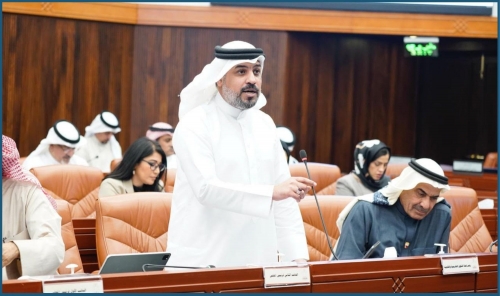

Bahrain’s legal landscape is poised for a significant update as Parliament prepares to debate a proposed amendment to the country’s evidence law. The core of the discussion revolves around raising the threshold for proving civil claims through witness testimony, a move intended to reflect modern economic realities and streamline the process for smaller disputes. Currently set at 500 Bahraini Dinars (BHD), the proposed change would increase the limit to 1,000 BHD, allowing for more flexibility in how individuals can substantiate their claims.
Understanding the Proposed Evidence Law Amendment
The draft amendment focuses on revising Articles 61 and 62 of the Law of Evidence in Civil and Commercial Matters, originally issued in 1996 by Legislative Decree No. 14. This law dictates the acceptable forms of evidence in civil and commercial court cases. The current regulations require written documentation for claims exceeding 500 BHD, placing a burden on individuals involved in transactions of slightly higher value who may not have formalized agreements in writing.
The Rationale Behind the Increase
The government has strongly advocated for this change, arguing that the 500 BHD threshold is outdated. Purchasing power has shifted considerably since 1996, and many everyday transactions now routinely exceed this amount. Without an adjustment, individuals could find themselves unable to legally prove legitimate claims simply due to a technicality.
The government’s response highlights a practical observation: people frequently conduct business in the 500-1,000 BHD range without relying on written contracts. Raising the threshold to 1,000 BHD would allow courts to consider oral evidence – specifically, the accounts of witnesses – in these common scenarios, making the legal system more accessible and responsive to the needs of the population.
Support and Considerations from Key Stakeholders
The proposed amendment hasn’t moved forward without careful consideration from other branches of the legal system. The Legislative and Legal Affairs Committee has already recommended approval in principle, signaling a positive outlook for the bill.
The Supreme Judicial Council offered no objections, acknowledging the legislature’s authority to adjust evidentiary standards. This indicates a broad consensus that the change falls within the bounds of legal discretion.
However, the Ministry of Justice, Islamic Affairs and Waqf, while supportive of raising the threshold, initially proposed a higher limit of 3,000 BHD. After further review, the ministry settled on endorsing the 1,000 BHD figure, deeming it a more appropriate balance given current economic conditions and a growing trend towards digital transactions. The shift towards electronic transfers and other written records, the ministry noted, provides a degree of documentation even in the absence of formal contracts.
Limitations and Safeguards Within the Draft
It’s important to note that the proposed amendment doesn’t grant carte blanche for relying on witness testimony. The draft maintains crucial limitations to prevent abuse and ensure the integrity of the legal process.
Specifically, witness testimony will not be admissible in the following situations, even if the claim falls below the 1,000 BHD threshold:
- When it directly contradicts existing written documentation.
- When the claim pertains to a portion of a right that must be proven in writing.
- If a claimant initially files a claim exceeding 1,000 BHD and subsequently reduces it to fall under the limit.
These safeguards are designed to prevent parties from strategically manipulating the value of their claims to circumvent the requirement for written proof. They reinforce the principle that written evidence remains the preferred and more reliable method of establishing legal rights.
Implications for Civil Claims and Dispute Resolution
This amendment, if passed, will likely have a noticeable impact on how smaller civil disputes are resolved in Bahrain. It will particularly benefit individuals involved in transactions like personal loans, minor property damage claims, or service agreements where written contracts are not always customary.
By allowing witness testimony to be considered, the amendment reduces the barriers to accessing justice for these claimants. It acknowledges the reality of everyday dealings and provides a more practical approach to proving the existence and terms of agreements. This could lead to a decrease in the number of cases dismissed due to a lack of formal documentation, and a more efficient resolution of smaller claims.
Looking Ahead: Parliamentary Debate and Potential Impact
The parliamentary debate on Tuesday will be a crucial step in determining the future of this amendment. While the initial response from key stakeholders is positive, a thorough discussion of the potential implications is essential. MPs will likely scrutinize the proposed 1,000 BHD threshold, considering whether it strikes the right balance between accessibility and legal certainty.
Ultimately, the goal of this amendment is to modernize Bahrain’s evidence law and make it more relevant to the current economic climate. By carefully considering the input from the government, the judiciary, and the Ministry of Justice, Parliament has the opportunity to create a legal framework that is both fair and effective in resolving civil disputes. The outcome of this debate will be closely watched by legal professionals and individuals alike, as it promises to shape the landscape of civil litigation in Bahrain for years to come.