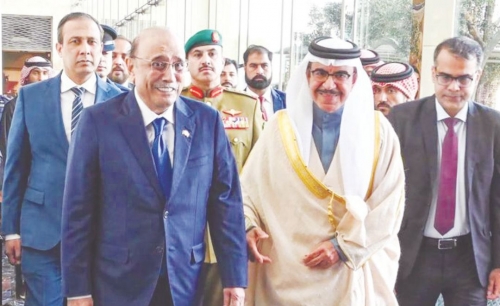

Pakistan and Bahrain are strengthening their long-held alliance, focusing on crucial areas like security and counter-narcotics efforts. Recent talks between Pakistani President Asif Ali Zardari and Bahrain’s Interior Minister, General Shaikh Rashid bin Abdullah Al Khalifa, underscored a mutual commitment to bolstering bilateral relations and tackling shared challenges. This meeting signifies a continued dedication to cooperation between the two nations, built on a foundation of respect and shared interests.
Deepening Pakistan-Bahrain Bilateral Relations
The visit by President Zardari and subsequent discussions with Bahraini officials represent a significant step in reinforcing the ties between Pakistan and Bahrain. The core of the conversation revolved around enhancing collaboration in several key sectors, with a particular emphasis on security. Both leaders acknowledged the evolving nature of regional threats and the necessity for a unified approach to address them effectively.
President Zardari specifically lauded the wise leadership of His Majesty the King of Bahrain and its instrumental role in fostering the close relationship enjoyed by both countries. This acknowledgement highlights the importance of high-level political engagement in maintaining and strengthening international partnerships. The Pakistani President’s praise wasn’t merely diplomatic; it reflected a genuine appreciation for Bahrain’s consistent support and understanding on regional and international platforms.
Acknowledging Historical Ties
The Bahraini Interior Minister reciprocated the positive sentiment, welcoming the outcomes of President Zardari’s visit. He emphasized that the meeting between His Majesty the King and the President of Pakistan served as a powerful demonstration of the historical ties and ongoing cooperation that define the relationship. This historical context is vital, as it provides a strong base for future collaboration and mutual support.
The Minister also expressed gratitude for President Zardari’s dedication to improving cooperation and joint action in areas of mutual concern. This commitment from both sides suggests a proactive approach to addressing challenges and capitalizing on opportunities for growth.
Focus on Security and Drug Enforcement Cooperation
A central theme of the discussions was the intensification of cooperation in security matters. Both Pakistan and Bahrain face similar threats from transnational organized crime, including terrorism and, critically, drug trafficking. The leaders agreed to continue coordinated efforts to combat these dangers, recognizing that a collaborative approach is far more effective than individual responses.
This commitment to joint efforts isn’t new. Pakistan and Bahrain have a long-standing history of security cooperation, including intelligence sharing and joint training exercises. However, the recent talks indicate a desire to elevate this cooperation to a new level, potentially involving more sophisticated technologies and expanded areas of collaboration.
Combating the Global Drug Trade
The issue of counter-narcotics received particular attention during the meeting. The global drug trade poses a significant threat to both national security and public health, and both countries are determined to disrupt the flow of illicit drugs through their territories. This involves strengthening border controls, enhancing law enforcement capabilities, and working with international partners to dismantle drug trafficking networks.
The agreement to continue coordinated efforts in this area is particularly important given the proximity of both countries to major drug production and transit routes. By working together, Pakistan and Bahrain can play a crucial role in stemming the tide of illegal narcotics and protecting their citizens.
Implications for Regional Stability
The strengthening of Pakistan-Bahrain relations has broader implications for regional stability. Both countries are key players in the Gulf region and South Asia, and their cooperation can contribute to a more secure and prosperous environment for all. A united front against terrorism and drug trafficking sends a strong message to criminal organizations and helps to deter future attacks.
Additionally, closer economic ties between Pakistan and Bahrain can create new opportunities for trade and investment, boosting economic growth and creating jobs in both countries. This economic interdependence can further strengthen the political relationship and foster a sense of shared destiny.
Furthermore, the commitment to dialogue and cooperation demonstrated by both leaders sets a positive example for other countries in the region. In a world often characterized by conflict and division, it is refreshing to see two nations working together to address common challenges and build a brighter future.
In conclusion, the recent talks between President Zardari and Bahrain’s Interior Minister represent a significant reaffirmation of the strong bilateral relations between Pakistan and Bahrain. The focus on security, particularly drug trafficking and counter-narcotics efforts, demonstrates a shared commitment to protecting their citizens and promoting regional stability. This continued collaboration, built on a foundation of historical ties and mutual respect, is a positive development for both countries and the wider region. It is hoped that these discussions will translate into concrete actions and further strengthen the partnership in the years to come. Readers interested in learning more about Pakistan’s foreign policy can explore resources on the Ministry of Foreign Affairs website.