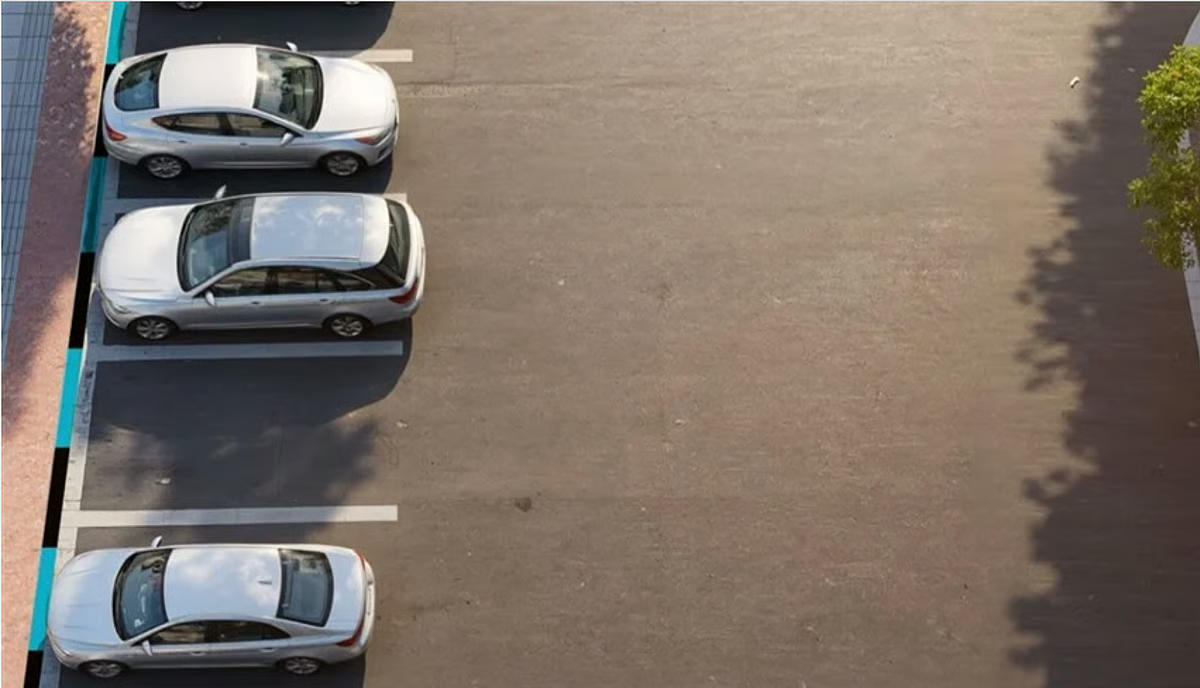

Dubai’s Roads and Transport Authority (RTA) has begun activating paid parking in several key city sectors, starting this month. The initiative, impacting areas including Bur Dubai and Deira, will initially cover 4,680 spaces, addressing increasing congestion and demand for parking across the emirate. Designated parking for people with disabilities is also included in the first phase of implementation.
The affected zones – M1, M2, M3, M4 and M24 – will see parking fees applied from November 2023, a move announced earlier this year to improve parking space utilization. The RTA anticipates further expansion of the paid parking scheme based on observed traffic and resident needs across Dubai. This rollout forms part of a broader strategy to enhance urban mobility and streamline public services.
Understanding the New Dubai Parking System
The introduction of paid parking is occurring in stages, starting with these five zones. Residents and visitors should familiarize themselves with the designated areas and the associated fees to avoid penalties. The RTA encourages the use of digital payment methods, like their app, for convenience and efficiency.
Affected Zones in Detail
While precise boundaries are available on the RTA website and app, the initial zones generally encompass busy commercial and residential areas. M1 focuses on areas near Al Fahidi metro station, stretching towards the Dubai Creek. M2 and M3 span sections of Bur Dubai’s residential districts, while M4 covers parts of Deira. Zone M24 is centered on a key commercial area in Bur Dubai.
This phased approach allows the RTA to monitor the impact of the fees and adjust them if necessary. According to the RTA, the allocation of transport resources is continuously evaluated to best serve the population. The implementation is designed to minimize disruption while maximizing the effectiveness of the new system.
Previously, many of these areas offered free, or very limited-metered, parking. This often led to prolonged searching for available spaces, causing traffic congestion and frustration for drivers. The RTA hopes to alleviate this issue by encouraging higher turnover of parking spots.
The fee structure varies depending on the zone and is based on time. Users can pay via RTA parking app, SMS, Nol Card and parking meters. The system supports both hourly and daily rates, offering flexibility for short-term visitors and those requiring long-term parking.
Alongside paid parking, the RTA is investing in expanding public transportation options and promoting the use of alternative modes of transport, such as cycling and walking. This integrated approach to urban mobility aims to create a more sustainable and efficient transportation network for Dubai. An increase in public transportation usage is a stated goal of the RTA’s overall plan.
The plan also incorporates dedicated spaces for people of determination, ensuring accessibility throughout the paid parking areas. These spaces are allocated in compliance with accessibility standards and will remain free of charge for eligible users.
Several other cities globally have implemented similar paid parking schemes to manage parking demand, alleviate congestion, and generate revenue for infrastructure improvements. Examples include London, New York, and Singapore, which have all seen varying degrees of success with their systems. Dubai’s implementation draws upon best practices and lessons learned from these international models.
However, experiences in other cities also indicate potential challenges. Concerns have been raised by some business owners about the potential impact of parking fees on customer footfall. The RTA has stated that it will closely monitor the economic effects in the initial zones, and potentially offer exemptions or adjustments if needed. These concerns are valid, and the RTA’s response will be a key factor in the success of the initiative.
The initial phase of paid parking focuses on areas where demand demonstrably outstrips supply. The RTA’s data analysis indicates that these zones experience consistently high occupancy rates, leading to significant congestion. By introducing fees, the RTA aims to encourage more efficient parking utilization and discourage long-term parking in short-term spaces.
The RTA continues to emphasize the importance of utilizing alternative transport methods. Ongoing improvements to the Dubai Metro, bus network, and taxi services aim to provide convenient and affordable alternatives to private vehicle use. This holistic approach to traffic management recognizes that parking is just one piece of a larger puzzle.
Future expansion of the paid parking system will be data-driven, guided by traffic patterns, population density, and the overall needs of the community. The RTA plans to analyze real-time parking occupancy data, resident feedback, and economic indicators to determine which areas should be prioritized for inclusion in the scheme.
The next step involves evaluating the effectiveness of the current phase, likely within the first quarter of 2024. The RTA will assess parking space turnover, revenue generated, and the overall impact on traffic flow. The subsequent expansion plan and associated timelines remain subject to this assessment and any emerging logistical challenges. Monitoring public response and making data-backed adjustments will be crucial for optimizing the Dubai parking situation in the coming months.