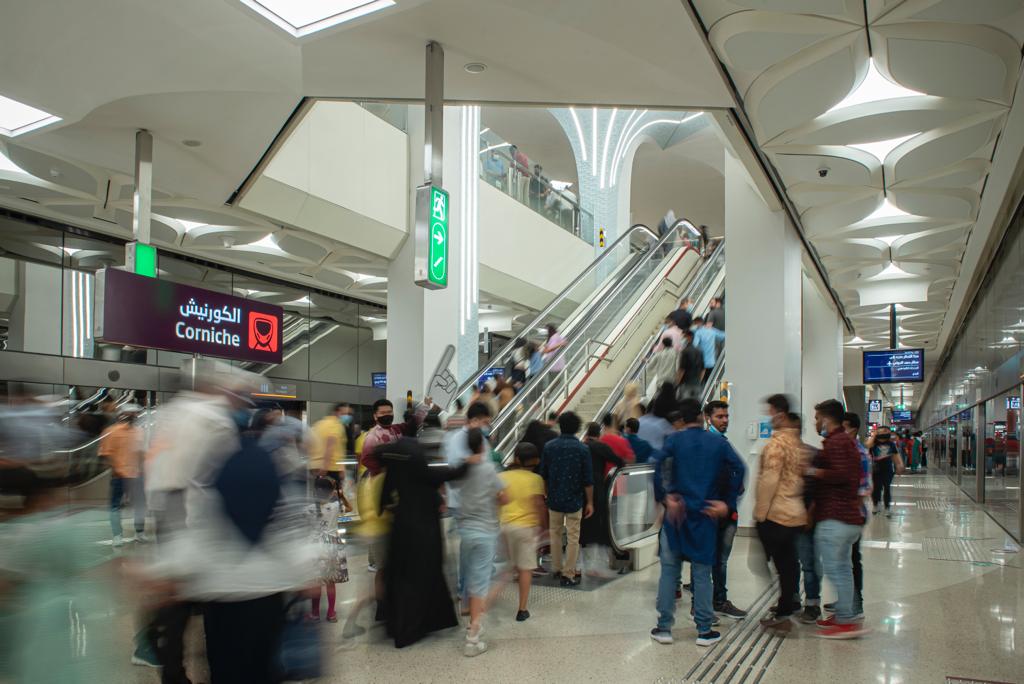

Qatar Rail reported a total of 4,924,919 passengers utilized the Doha Metro and Lusail Tram networks between December 1st and 18th, 2025, during the FIFA Arab Cup Qatar 2025 and FIFA Intercontinental Cup Qatar 2025. The figures demonstrate the significant role public transportation played in facilitating movement for fans and visitors attending the tournaments. The data highlights the success of Qatar’s investment in its rail infrastructure as it prepares to host future major sporting events.
The majority of passengers, 4,712,758, opted for the Metro, while 212,161 used the Lusail Tram. This resulted in a daily average of 273,606 passengers across both networks, according to Qatar Rail’s official announcement. The performance underscores the efficiency of the system in handling large-scale events and providing a viable alternative to private vehicle use.
Doha Metro’s Key Role in Tournament Transportation
The Doha Metro was strategically positioned to serve as a primary transportation method for attendees. Five of the six Arab Cup stadiums – Lusail Stadium, Ahmad Bin Ali Stadium, Education City Stadium, Khalifa International Stadium, and Stadium 974 – were within walking distance of Metro stations. Al Bayt Stadium was accessible via dedicated shuttle bus services from Lusail QNB Metro Station, ensuring convenient access for all fans.
Stadium Connectivity and Ridership
Approximately 34% of spectators utilized the Metro to attend matches overall. However, ridership increased to 50% for the five stadiums directly connected to Metro stations, demonstrating the clear preference for rail travel when readily available. This suggests a strong correlation between accessibility and public transport adoption.
The FIFA Intercontinental Cup’s three final matches, held at Ahmad Bin Ali Stadium, also benefited from the stadium’s direct connection to Al Riffa Mall of Qatar Station. This ease of access contributed to smooth operations and reduced congestion around the venue.
Operationally, Qatar Rail completed a total of 48,422 train trips during the period, comprising 41,843 Metro trips and 6,579 tram trips. This substantial number of trips highlights the intensive use of the network during the tournaments.
December 18th, coinciding with Qatar National Day celebrations and the Arab Cup Final, saw the highest daily ridership of the tournament, reaching 357,287 passengers. Of these, 347,987 traveled by Metro and 9,300 by tram. This peak demonstrates the system’s capacity to handle exceptionally high demand.
DECC, Lusail QNB, and Msheireb stations were identified as the busiest on the Metro network, while Legtaifiya Station saw the highest traffic within the Lusail Tram network. These stations likely served as key interchange points and destinations for tournament attendees. The concentration of ridership at these locations may inform future network planning and resource allocation.
Qatar Rail’s success in supporting the Arab Cup and Intercontinental Cup provides a valuable model for future large-scale events in Qatar. The efficient operation of the public transportation network contributed significantly to the overall success of the tournaments, enhancing the experience for fans and visitors. The experience also provides data for optimizing rail network capacity and service frequency.
Looking ahead, Qatar Rail will likely analyze the data collected during these events to further refine its operations and prepare for future events, including the 2030 Asian Games. Further expansion of the Lusail Tram network and potential adjustments to Metro service schedules are possible, depending on ongoing assessments of passenger demand and network performance. The long-term impact of these tournaments on Qatar’s public transport usage remains to be seen.