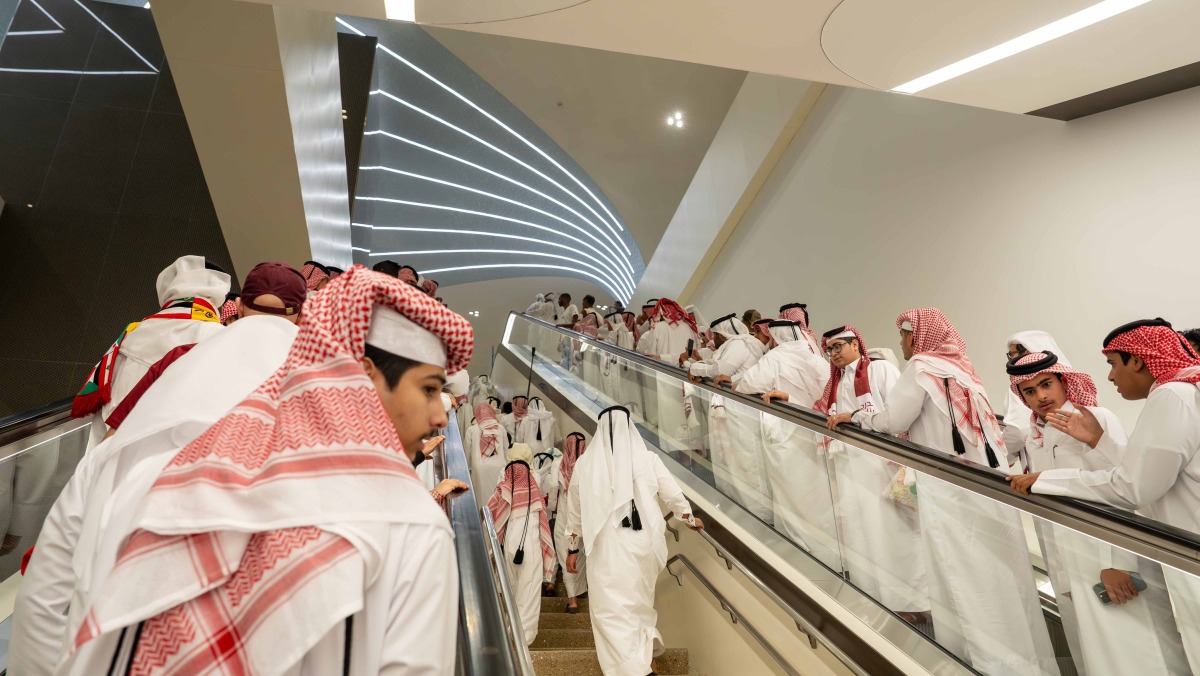

Doha, Qatar – Qatar Rail reported a surge in ridership during the group stage of the FIFA Arab Cup Qatar 2025, with over 2.5 million passengers utilizing the Doha Metro and Lusail Tram networks between December 1st and 9th. The significant increase demonstrates the public transportation system’s capacity to handle large-scale events and its role in facilitating access to tournament venues. This success bodes well for upcoming international competitions hosted in Qatar.
The total passenger count reached 2,419,433 on the Metro and 108,239 on the Tram, with December 8th marking the peak day with over 315,000 passengers transported across both networks, according to Qatar Rail. The high numbers underscore the growing preference for public transport among event attendees and residents alike.
Doha Metro Ridership Soars During FIFA Arab Cup 2025
The success of the Doha Metro during the Arab Cup is a testament to Qatar’s investment in its infrastructure ahead of the FIFA World Cup 2022 and subsequent international events. The network has proven its ability to efficiently move large crowds, reducing congestion and providing a convenient alternative to private vehicles. This is particularly important as Qatar continues to establish itself as a major hub for sporting events.
Key Station Usage
Lusail QNB Station emerged as the busiest station on the Metro network, serving nearly 88,000 passengers. Msheireb and DECC stations followed closely behind, indicating high demand from areas central to the city and event accommodations. Legtaifiya Station recorded the highest footfall within the Lusail Tram network.
Qatar Rail proactively increased capacity to meet the demand. The company fully mobilized its fleet of 110 trains, including deploying six-carriage trains on the Red Line, increasing passenger capacity to 1,120 per train. Headways – the time between trains – were also reduced on all lines, even outside of typical peak hours.
Accessibility to the six tournament stadiums – Lusail, Ahmad bin Ali, Al Bayt, Education City, Khalifa International, and Stadium 974 – was a key focus. Five of these stadiums are within walking distance of a Metro station, streamlining access for fans. Al Bayt Stadium is connected via a dedicated shuttle bus service from Lusail QNB Station, ensuring all venues are easily reachable via public transport. This strategic planning minimized traffic congestion around the stadiums.
However, the success wasn’t achieved in isolation. Qatar Rail maintained close coordination with several key entities, including the Ministry of Interior, the Ministry of Transport, Hamad Medical Corporation, Mowasalat (Qatar’s public transport company), and the local organizing committee. This collaborative approach ensured a coordinated response to any challenges and a seamless experience for passengers. The Ministry of Transport has been a key driver of infrastructure development in the country.
The increased ridership also highlights the growing adoption of public transportation in Qatar. Beyond major events, the Metro and Tram networks are increasingly used by residents for daily commutes and leisure travel. This shift contributes to reducing carbon emissions and improving air quality in the city.
Looking ahead, Qatar will host the FIFA Intercontinental Cup Qatar 2025 from December 12th to 18th. Qatar Rail and its service provider are continuing to monitor performance and refine operations to ensure continued reliable service. Future performance will depend on factors such as event attendance and weather conditions, and further adjustments to service levels may be necessary. The long-term impact of these events on sustained ridership of the Doha Metro and Lusail Tram remains to be seen.