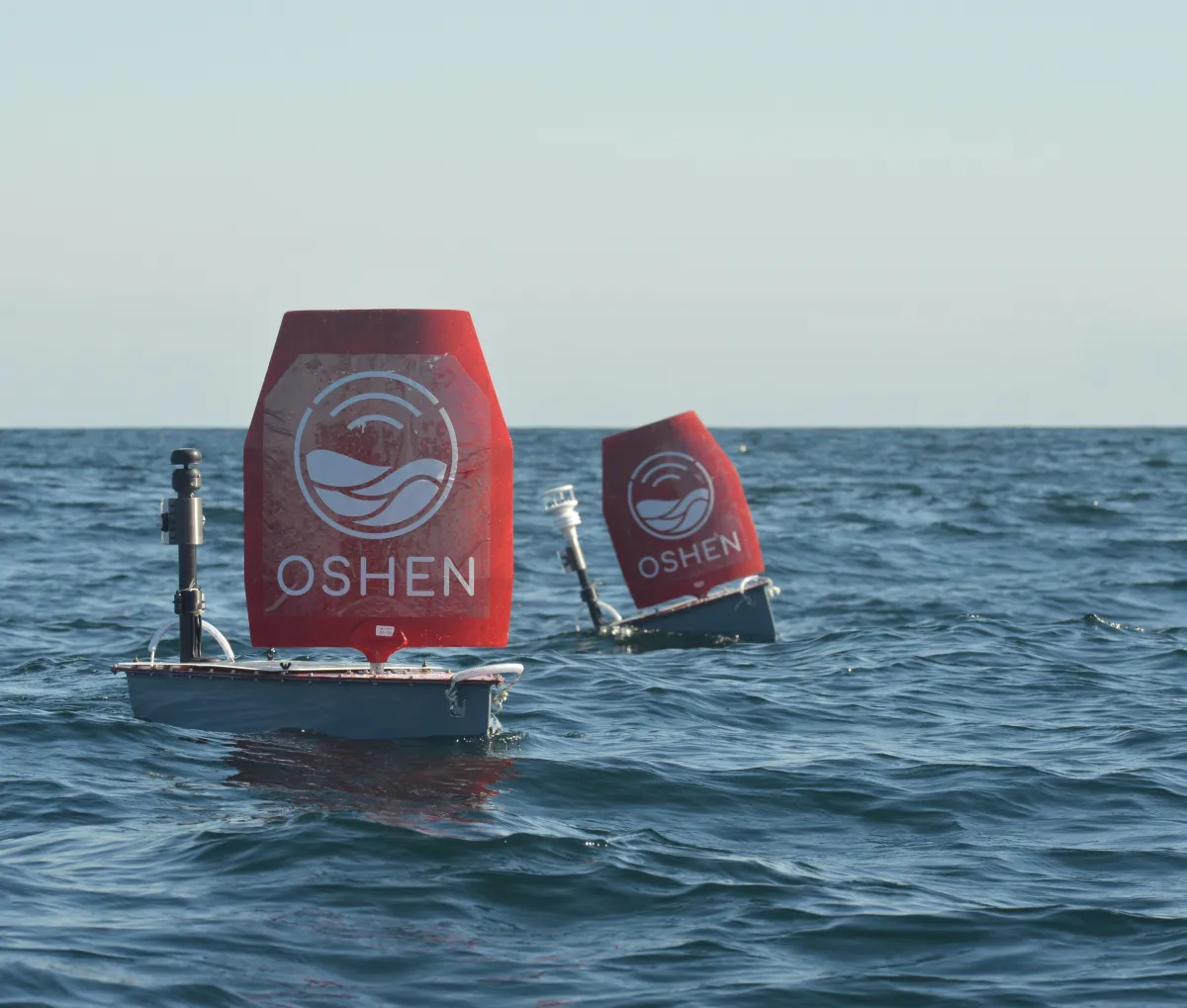

A British startup, Oshen, is making waves in the field of oceanographic data collection with its fleet of durable, autonomous micro-robots. Founded in 2022, the company has rapidly gained traction with defense and government organizations, including the National Oceanic and Atmospheric Administration (NOAA), after successfully deploying its C-Star robots in challenging conditions. This innovative approach to ocean data gathering promises to improve weather forecasting and enhance maritime security.
The Rise of Autonomous Ocean Data Collection
The need for comprehensive and real-time ocean data is growing, driven by climate change concerns, increasing maritime traffic, and national security interests. Traditional methods of data collection, relying on ships, buoys, and satellites, are often expensive, limited in scope, or vulnerable to harsh weather. Oshen addresses these limitations by offering a scalable and cost-effective solution using swarms of small, resilient robots.
From Robotics Challenge to Ocean Startup
Oshen’s origins trace back to founder Anahita Laverack’s participation in the Microtransat Challenge, an autonomous robotics competition focused on transatlantic crossings. While her initial attempt to navigate the Atlantic with a micro-robot failed, it highlighted a critical gap in available oceanographic information. Laverack observed that the primary obstacle to success wasn’t just robot durability, but a lack of detailed, real-time data about ocean conditions.
Recognizing a market opportunity, Laverack and co-founder Ciaran Dowds initially bootstrapped the company, utilizing personal savings to acquire a sailboat for testing and development. This allowed for iterative improvements to the C-Star robots in a real-world marine environment, according to reporting from TechCrunch. They deliberately avoided seeking venture capital in the early stages, prioritizing self-sufficiency and rapid prototyping.
C-Star: Surviving the Storm
The C-Star robots are designed for long-duration deployments, capable of surviving at sea for up to 100 days. Their compact size and relatively low cost enable mass deployment, creating a dense network of sensors. This is a key differentiator, as many existing autonomous underwater vehicles (AUVs) are either too expensive for large-scale deployments or lack the necessary resilience for prolonged operation in unpredictable seas.
Oshen’s technology recently gained significant attention after a deployment with NOAA. Fifteen C-Stars were deployed ahead of the 2025 hurricane season, with five positioned near the U.S. Virgin Islands in anticipation of Hurricane Humberto. Remarkably, three of the robots successfully weathered the entire Category 5 storm, collecting valuable data throughout the event. This marks the first time a ocean robot has reportedly gathered data during a hurricane of that intensity.
Contracts and Future Expansion
The successful hurricane deployment has led to increased demand for Oshen’s technology. The company has secured contracts with the U.K. government for both weather monitoring and defense applications. The U.K. Ministry of Defence is exploring the use of the robots for tasks such as maritime surveillance and mine countermeasures, according to industry sources.
Currently based in a marine technology hub in Plymouth, England, Oshen is preparing for further growth. Laverack indicated the company plans to raise venture capital in the near future to scale production and meet the growing demand for its marine robotics solutions. This funding will be crucial for expanding the C-Star fleet and developing new capabilities.
However, challenges remain. Maintaining robot functionality in extreme conditions, ensuring data security, and navigating regulatory hurdles for autonomous operations are ongoing concerns. The long-term impact of large-scale robot deployments on marine ecosystems also requires careful consideration.
Looking ahead, Oshen aims to continue refining its technology and expanding its customer base. The company is actively exploring partnerships with research institutions and other organizations to broaden the applications of its data buoys. The timing of the venture capital raise and the specifics of future deployments will be key indicators of Oshen’s trajectory in the rapidly evolving ocean technology sector.