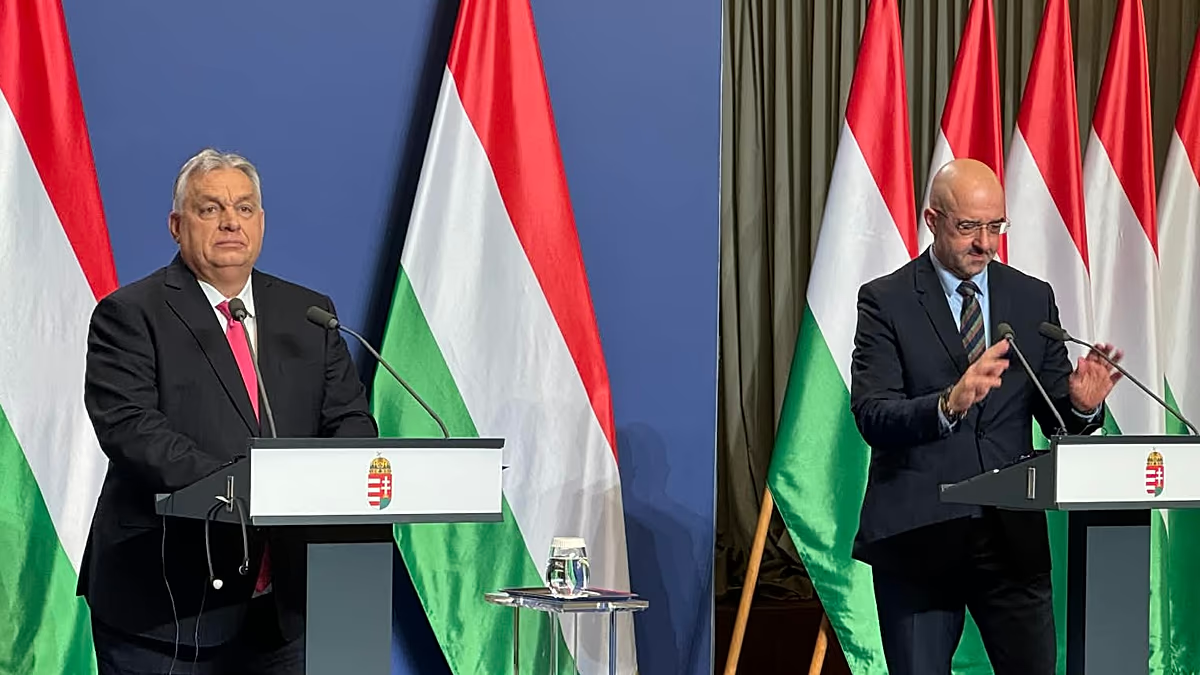

Hungarian Prime Minister Viktor Orbán has predicted the European Union will “fall apart on its own” due to internal divisions, while also asserting Hungary’s commitment to remaining within both the EU and NATO, albeit with greater sovereignty over its policies. Speaking at a press conference on Monday, Orbán accused Brussels of attempting to isolate Hungary from Russian energy sources and outlined a vision of a multi-polar world order, emphasizing relationships with nations beyond the traditional Western sphere. This latest rhetoric underscores ongoing tensions between Budapest and the EU, fueled by concerns over rule of law and Hungary’s stance on the war in Ukraine.
Orbán’s statements come amidst repeated clashes with EU institutions, particularly regarding democratic standards and Hungarian vetoes of crucial aid packages. Hungary has consistently resisted aligning fully with EU foreign policy objectives, notably maintaining ties with Moscow and blocking substantial support for Ukraine, despite Russia’s prolonged military aggression. According to Orbán, these actions are driven by a desire to protect Hungary’s national interests and secure its energy future.
Orbán’s Vision for the Future of the European Union
The Prime Minister reiterated Hungary’s position that leaving the EU is not a viable option, citing the country’s size. However, he stressed the importance of a sovereign foreign and economic policy, arguing that Hungary should cultivate strong relationships with a diverse range of global powers, including the United States, Russia, China, and nations in the Arab and Turkish world.
On the issue of energy, Orbán claimed that the European Commission is actively seeking to cut off Hungary’s access to Russian oil and gas. He stated that the Hungarian government is responding with legal challenges and political opposition to EU regulations, hoping for a lifting of sanctions by 2027, coinciding with potential resolution of the conflict in Ukraine. Hungary has already secured exemptions from several EU sanctions related to Russian energy, and remains heavily reliant on it.
Meanwhile, Orbán has been publicly supportive of former US President Donald Trump, even suggesting a potential financial agreement. He confirmed he “asked for it, and we agreed that there would be one” but Trump has offered conflicting statements about any such arrangements. Orbán presented Trump’s recent actions regarding Venezuela as a pivotal moment, believing it signals a significant shift in global power dynamics.
The Venezuela Factor and a “New World Order”
Orbán characterized the US involvement in Venezuela as “a powerful manifestation of the new world,” suggesting it gives the US potential control over 40-50% of global oil reserves. He argued that this could ultimately lead to lower energy prices worldwide, benefitting Hungary. This perspective aligns with Orbán’s broader narrative of a decline in the “liberal world order” and the rise of a new era focused on national interests. He casts himself as a leading voice in this transition, dating back to his time in office since 2010.
Additionally, Orbán firmly ruled out providing financial aid to Ukraine, stating bluntly, “We are not giving our money to Ukraine” and dismissing the possibility of loans, predicting they would not be repaid. This stance has consistently placed Hungary at odds with the majority of EU member states, requiring workarounds to maintain support for Kyiv.
In contrast to EU efforts to redistribute asylum seekers, Orbán asserted Hungary will not accept dictates on immigration, specifically rejecting a proposed EU regulation involving the acceptance and processing of asylum applications. Hungary has previously built border fences and actively resisted participation in EU asylum schemes, resulting in ongoing legal disputes.
As Hungary approaches upcoming elections, with challenger Péter Magyar gaining ground in polls, Orbán indicated he will not engage in debates with opposition leaders he doesn’t consider “sovereign”, accusing those with international affiliations of lacking independence. He aims for his Fidesz party to replicate its 2022 election success.
The situation remains fluid, and observers will be closely watching the developments in Hungary’s relationship with the EU, particularly regarding Ukraine funding and energy policy. The outcome of the upcoming elections could also significantly impact Hungary’s future trajectory within the bloc, and its broader foreign policy alignment.