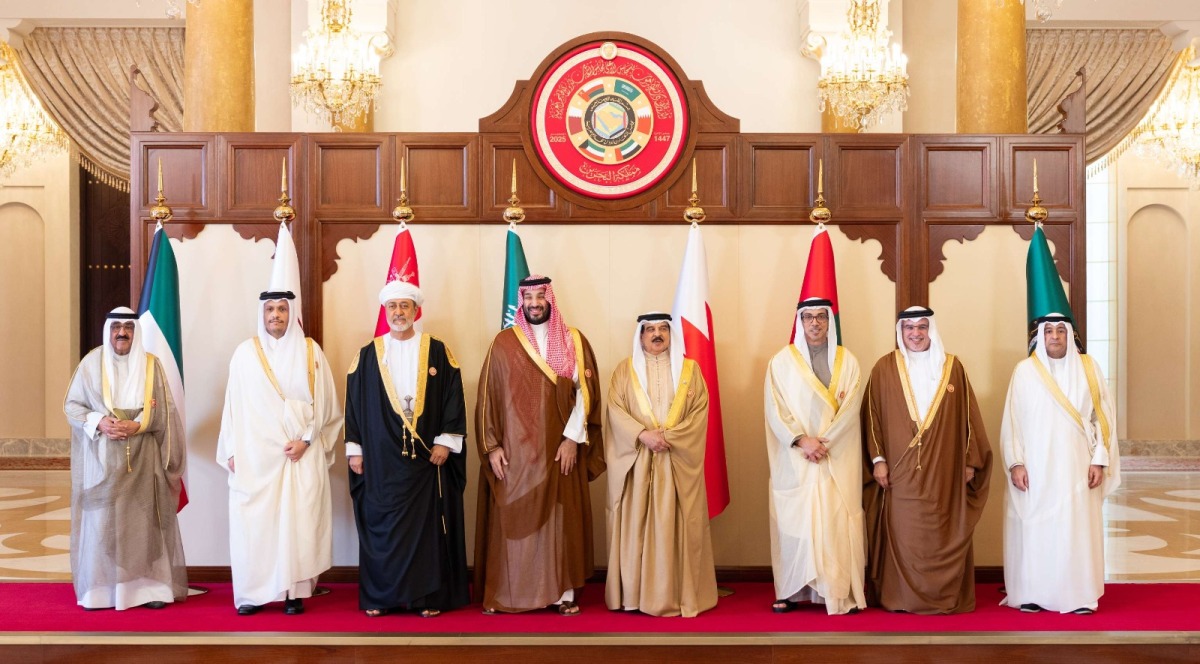

Manama, Bahrain – Prime Minister and Minister of Foreign Affairs of Qatar, Sheikh Mohammed bin Abdulrahman bin Jassim Al-Thani, represented the Amir HH Sheikh Tamim bin Hamad Al-Thani at the 46th Ordinary Session of the Gulf Cooperation Council (GCC) Summit held in Manama on Wednesday. Leaders and high-ranking officials from all six GCC member states participated in the annual meeting, focusing on regional security, economic integration, and diplomatic initiatives. The GCC Summit addressed pressing issues facing the Gulf region and reaffirmed commitment to collective action.
The session, convened in Bahrain’s capital, brought together representatives from Qatar, Saudi Arabia, Kuwait, the United Arab Emirates, Oman, and Bahrain. Discussions centered on strengthening cooperation across various sectors, including defense, trade, and energy, according to statements released by participating delegations. The event underscores the continued importance of the GCC as a key regional bloc.
Strengthening Regional Security at the GCC Summit
A primary focus of the GCC Summit was enhancing regional security in the face of ongoing geopolitical challenges. The leaders reportedly discussed escalating tensions in the Red Sea, stemming from attacks on commercial vessels, and explored coordinated responses to maintain maritime stability. Additionally, the summit addressed concerns regarding Iran’s regional activities and the need for de-escalation through diplomatic channels.
Defense Cooperation and Joint Exercises
Member states reaffirmed their commitment to strengthening defense cooperation through joint military exercises and intelligence sharing. These initiatives aim to enhance the GCC’s collective defense capabilities and deter potential threats. The ministry indicated that further details regarding specific defense agreements will be released in the coming weeks.
However, differing national priorities sometimes complicate unified defense strategies. Balancing individual security concerns with the collective good remains a key challenge for the GCC.
Economic Integration and Diversification
Beyond security, the Summit addressed economic integration and diversification efforts within the GCC. Discussions included progress on the implementation of a customs union and the development of a common market. The goal is to foster greater trade and investment among member states and reduce reliance on oil revenues.
The leaders also explored opportunities for collaboration in emerging sectors, such as renewable energy and technology. Diversification is seen as crucial for long-term economic sustainability in the region. The report indicates that a new framework for attracting foreign investment was also discussed.
Meanwhile, the impact of global economic slowdowns and fluctuating oil prices were acknowledged as significant challenges. Member states agreed to continue coordinating economic policies to mitigate these risks.
Diplomatic Initiatives and International Relations
The Summit also provided a platform for discussing diplomatic initiatives and strengthening relations with international partners. Leaders exchanged views on ongoing conflicts in the region, including the situation in Yemen and the Israeli-Palestinian conflict. The GCC reiterated its support for a two-state solution to the Palestinian issue.
In contrast to previous years, this year’s summit saw a more unified stance on regional issues, reflecting a growing consensus among member states. This shift is attributed to recent diplomatic efforts to resolve outstanding disputes and foster greater trust.
The GCC also emphasized the importance of maintaining dialogue with external powers to promote regional stability. The United States remains a key strategic partner for the GCC, and discussions reportedly included strengthening security cooperation and addressing shared concerns.
Looking ahead, the GCC General Secretariat will be tasked with implementing the decisions reached during the Summit. A follow-up meeting is expected within the next six months to assess progress and address any outstanding issues. The evolving geopolitical landscape and internal economic pressures will continue to shape the GCC’s agenda in the coming year, and the effectiveness of its collective action remains to be seen.