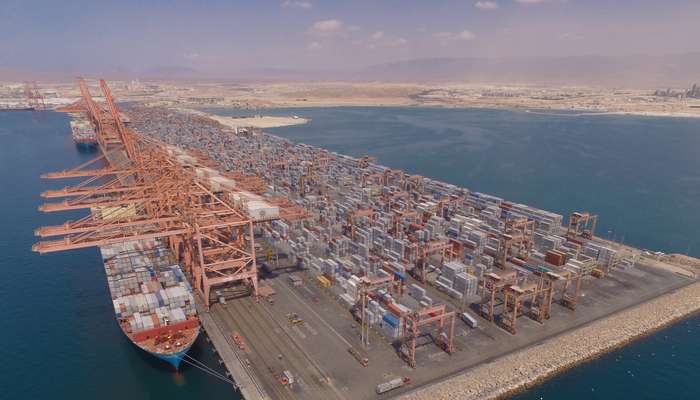

Oman’s trade landscape experienced a notable shift in the first three quarters of 2025, with the nation’s trade surplus declining significantly. Initial data released by the National Centre for Statistics and Information (NCSI) reveals a 42% drop, landing at OMR3.885 billion by the end of September, compared to the OMR6.743 billion recorded during the same period in 2024. This downturn is primarily linked to fluctuations in the global energy market and evolving export dynamics, impacting the overall economic performance of the Sultanate. Understanding these changes is crucial for investors, policymakers, and businesses operating within and connected to the Omani economy.
Analyzing the Decline in Oman’s Trade Surplus
The substantial decrease in the trade surplus isn’t a simple story of falling exports. A closer look at the figures reveals a more nuanced picture. The total value of Oman’s goods exports decreased by 9.1% to OMR17.182 billion, a clear indication of external pressures. However, this decline was largely driven by a significant reduction in oil and gas exports, which fell by 16.5% to OMR10.913 billion.
This reliance on hydrocarbon exports highlights Oman’s vulnerability to global oil price volatility and production quotas. The nation is actively pursuing economic diversification strategies, but oil and gas remain a dominant force in its export revenue. The recent dip underscores the urgency of these diversification efforts.
The Role of Oil and Gas Prices
Global oil prices have experienced periods of instability throughout 2025, influenced by geopolitical events, production decisions by OPEC+ nations, and shifts in global demand. These fluctuations directly impact Oman’s export earnings, as crude oil constitutes a major portion of its export basket. Reduced demand from key trading partners, particularly in Asia, has also contributed to the decline in oil and gas exports.
Growth in Non-Oil Exports: A Silver Lining
While oil and gas exports experienced a downturn, Oman’s non-oil exports demonstrated resilience and growth. These exports increased by a commendable 10.3% to reach OMR5.002 billion by the end of September 2025, compared to OMR4.534 billion in the same period of 2024. This positive trend suggests that Oman’s diversification initiatives are beginning to bear fruit.
This growth is particularly encouraging as it indicates a strengthening of other sectors within the Omani economy, such as plastics, fertilizers, and metal products. Increased investment in these areas, coupled with government support for small and medium-sized enterprises (SMEs), is likely contributing to this expansion. The focus on economic diversification is clearly a key strategy for Oman.
Import Trends and Regional Trade Dynamics
Alongside the export figures, Oman also saw an increase in its total goods imports, rising by 9.3% to OMR13.297 billion by the end of September 2025, compared to OMR12.163 billion in 2024. This increase in imports can be attributed to several factors, including ongoing infrastructure projects and growing domestic demand.
Examining regional trade patterns reveals the United Arab Emirates (UAE) as a crucial partner for Oman. The UAE topped the list as the destination for Omani non-oil exports, receiving goods worth OMR945 million – a substantial 28.3% increase year-on-year. It also led in re-exports from Oman, valued at OMR484 million, and as a source of imports to Oman, totaling OMR3.071 billion. This strong bilateral relationship highlights the importance of regional trade for Oman’s economic stability.
Key Trade Partners Beyond the UAE
Following the UAE, the Kingdom of Saudi Arabia (KSA) emerged as the second largest destination for Omani non-oil exports, receiving OMR837 million worth of goods. India secured the third position with OMR529 million. In terms of re-exports, Iran ranked second after the UAE, with OMR225 million, while KSA followed with OMR113 million.
On the import side, China held the second position with OMR1.348 billion, demonstrating its significant role in supplying goods to Oman. Kuwait completed the top three import sources with OMR1.151 billion. These figures demonstrate Oman’s diverse trade relationships and its integration into global supply chains. Understanding international trade is vital for Oman’s continued growth.
Implications and Future Outlook
The decline in Oman’s trade surplus serves as a reminder of the challenges associated with relying heavily on a single commodity. While the growth in non-oil exports is a positive sign, sustained efforts are needed to further diversify the economy and reduce its vulnerability to external shocks.
The government’s Vision 2040 plan emphasizes economic diversification, attracting foreign investment, and developing a knowledge-based economy. Successful implementation of these initiatives will be crucial for ensuring Oman’s long-term economic prosperity. Furthermore, strengthening regional trade ties, particularly with the UAE and Saudi Arabia, will continue to be a priority.
Looking ahead, Oman’s economic performance will likely be influenced by global oil prices, the pace of economic diversification, and the overall health of the global economy. Monitoring these factors closely and adapting policies accordingly will be essential for navigating the evolving trade landscape and maintaining sustainable economic growth. Continued investment in infrastructure, education, and innovation will also play a vital role in building a more resilient and diversified Omani economy.