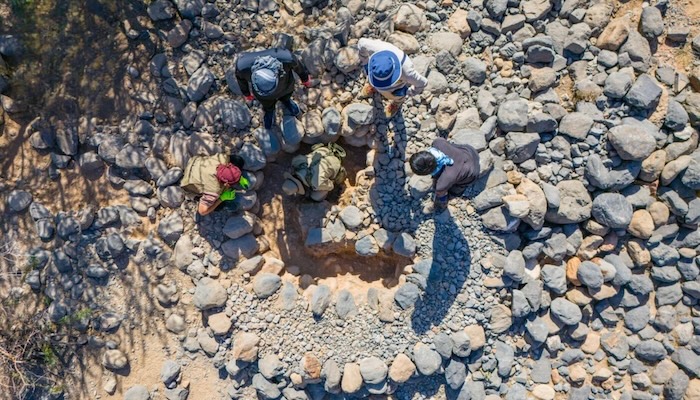

Oman’s ancient past continues to reveal its secrets, with the latest archaeological discoveries in Nizwa shedding new light on the region’s rich history and cultural connections. A recent collaborative effort between the Ministry of Heritage and Tourism and Japanese archaeological missions has unearthed significant finds at the Wadi Tanuf and Al-Ghabrah sites, promising a deeper understanding of life in ancient Oman. These findings, including intricate beads, ancient bone remains, and previously undocumented inscriptions, highlight the importance of ongoing research and international partnerships in preserving the Sultanate’s heritage.
Unearthing History: Archaeological Discoveries in Nizwa
The archaeological surveys and excavations, conducted in the Wilayat of Nizwa, focused on the Wadi Tanuf and Al-Ghabrah sites, areas long suspected of holding valuable clues to Oman’s past. The joint project, involving experts from the National Institutes for the Humanities and the Research, represents a significant investment in understanding the pre-Islamic period of the country. The discoveries made are not merely artifacts; they are fragments of stories waiting to be pieced together, offering insights into the daily lives, beliefs, and interactions of ancient Omani communities.
Wadi Tanuf: A Treasure Trove of Ancient Artifacts
Wadi Tanuf proved to be particularly fruitful for the archaeological teams. The excavation yielded a fascinating collection of beads, crafted from various materials and exhibiting diverse designs. These beads aren’t just decorative items; they provide valuable information about trade routes and artistic skills prevalent during the time. Alongside the beads, the recovery of bone remains is currently undergoing detailed analysis. This analysis will hopefully reveal details about the diet, health, and even the burial practices of the people who once inhabited the area.
Deciphering the Past: South Arabian Inscriptions and Rock Carvings
Perhaps the most exciting aspect of the archaeological discoveries in Nizwa is the documentation of inscriptions written in the ancient South Arabian script. This script, used for centuries in the region, holds the key to understanding the languages and ideologies of the people who created it. Researchers are meticulously studying these inscriptions, hoping to translate them and unlock further historical narratives.
Adding to the significance of the sites are several newly documented rock carvings. These carvings, often depicting animals, humans, and abstract symbols, offer a visual record of the beliefs and artistic expressions of past civilizations. The preservation and study of these rock art sites are crucial for understanding the cultural landscape of ancient Oman. The team’s work contributes to the broader field of Oman’s cultural heritage.
Sharing Knowledge: The Wadi Tanuf Archaeological Site Lecture
To disseminate the findings of the project, a lecture titled “The Latest Archaeological Discoveries from the Wadi Tanuf Archaeological Site” was presented. This event served as a platform for the Japanese archaeological team to share their expertise and present the key findings of their survey and excavation work. The lecture not only detailed the specific artifacts discovered but also explored the broader archaeological implications of these finds, contextualizing them within the larger history of the Arabian Peninsula.
The presentation sparked considerable interest among local scholars, heritage professionals, and the public, fostering a greater appreciation for Oman’s rich past. It also highlighted the importance of scientific methodology in archaeological research and the potential for further discoveries in the region. The lecture format allowed for a dynamic exchange of ideas and encouraged ongoing collaboration between Omani and international researchers.
Strengthening International Collaboration for Heritage Preservation
This collaborative project exemplifies the Ministry of Heritage and Tourism’s commitment to strengthening international research partnerships. By working with leading institutions like the National Institutes for the Humanities and the Research, Oman is able to leverage specialized expertise and cutting-edge technologies to advance its archaeological investigations. This approach ensures that the Sultanate’s heritage is preserved and understood with the highest level of scientific rigor.
The Ministry recognizes that preserving Oman’s archaeological sites is not just a national responsibility but a global one. The discoveries at Wadi Tanuf and Al-Ghabrah contribute to our collective understanding of human history and the interconnectedness of ancient cultures. Furthermore, the project underscores the importance of scientific documentation and field exploration in uncovering and protecting these invaluable resources. The ongoing commitment to these practices will undoubtedly lead to further exciting historical research in Oman.
The archaeological discoveries in Nizwa are a testament to the enduring legacy of Oman’s past. The collaborative spirit of this project, combined with meticulous research and a dedication to preservation, ensures that these stories will continue to be told for generations to come. We encourage those interested in learning more to follow the Ministry of Heritage and Tourism’s updates and explore the fascinating world of Omani archaeology. Consider visiting the Nizwa Fort and Museum to gain a deeper appreciation for the region’s historical significance.