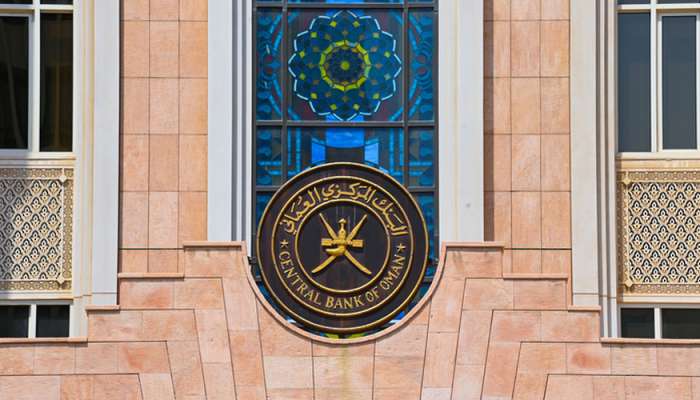

The Central Bank of Oman (CBO) successfully auctioned off OMR10.3 million worth of treasury bills this week, demonstrating continued activity and investor confidence in the Sultanate’s financial instruments. This recent allotment, detailed in a CBO announcement on Monday, highlights the government’s strategy for managing liquidity and financing expenditures. Understanding these auctions and the role of treasury bills is crucial for anyone following Oman’s economic landscape, particularly investors and financial analysts.
Oman’s Treasury Bill Auction Results: A Detailed Look
The auction saw strong participation, with allotments across three different maturity periods. This diversified approach allows banks to choose instruments aligning with their short-term investment strategies. Let’s break down the specifics of each tranche:
- 28-Day Treasury Bills: OMR0.2 million were allotted, with an average accepted price of OMR99.750 for every OMR100. The average discount rate was 3.25893% and the average yield reached 3.26710%.
- 91-Day Treasury Bills: A more substantial OMR1.1 million was allocated, with an average accepted price of OMR99.100 per OMR100. The average discount rate stood at 3.60989%, and the average yield at 3.64267%.
- 182-Day Treasury Bills: The largest portion, OMR9 million, was allotted for the 182-day maturity. These bills were priced at an average of OMR98.097 for every OMR100, with a minimum accepted price of OMR98.065. The average discount rate was 3.81712% and the average yield 3.89120%.
These figures indicate a slight increase in yield rates as the maturity period extends, a typical pattern reflecting the increased risk associated with longer-term investments. The consistent demand across all tenors suggests a healthy appetite for these treasury bills within the Omani banking sector.
The Role of Treasury Bills in Oman’s Financial System
Treasury bills are a cornerstone of Oman’s short-term debt market. Issued by the Ministry of Finance and managed by the Central Bank of Oman, they serve a dual purpose. Primarily, they provide a secure investment avenue for licensed commercial banks to deploy their surplus funds. This is beneficial for banks seeking lower-risk options compared to other potential investments.
However their significance extends beyond simple investment. Treasury bills play a pivotal role in promoting the development of the local money market.
Benefits for Commercial Banks & the Omani Economy
Here’s how these financial instruments benefit both banks and the larger Omani economy:
- Liquidity Management: Banks can easily purchase and, crucially, liquidate their holdings of treasury bills through the CBO’s repurchase (Repo) facilities. This ensures a ready source of funds when needed. The current interest rate for Repo operations is fixed at 4.50%.
- Benchmark Yield Curve: Treasury bills establish a benchmark yield curve for short-term interest rates, providing transparency and aiding price discovery within the market. This, in turn, facilitates more efficient lending and borrowing.
- Government Financing: The government utilizes treasury bills as a tool to finance its recurrent expenditures, providing a flexible and cost-effective means of borrowing.
- Discounting Facility: The CBO offers a discounting facility for Treasury Bills at a rate of 5%, providing another option for banks to access liquidity.
The ability to access these facilities – Repo and Discounting – alone underlines the appeal and security of these instruments.
Understanding Discount Rate and Yield
For those unfamiliar with the terminology, it’s important to understand the difference between the discount rate and the yield on treasury bills. The discount rate represents the percentage difference between the face value of the bill (OMR100) and the price investors pay for it. The yield, on the other hand, represents the actual rate of return an investor receives given the discounted price and the time remaining until maturity.
In this recent auction, the differing rates across maturities (3.26% vs 3.64% vs 3.89%) demonstrate this principle in practice. Longer maturities typically have higher yields to compensate investors for the greater uncertainty over a prolonged period. The slight discrepancies between average and minimum accepted prices showcase the competitive bidding process during the auction.
Implications for Investors & Future Auctions
The successful allotment of OMR10.3 million indicates continued demand for Omani government debt. This is a positive sign for the Omani economy and suggests that investors remain confident in the Sultanate’s fiscal stability. Looking ahead, tracking future treasury bill auctions will be crucial for observing trends in interest rates and investor sentiment. Analyzing the allocation amounts across different maturity periods will provide insights into banking sector liquidity preferences.
Furthermore, understanding the relationship between government securities and broader economic conditions in Oman is essential for making informed investment decisions. These auctions offer a valuable window into the health and direction of the Omani financial system and its dealings with other financial instruments. It is likely the CBO will continue to use these auctions as a regular means of managing government funds in the near-term future, offering banks consistent investment opportunities.