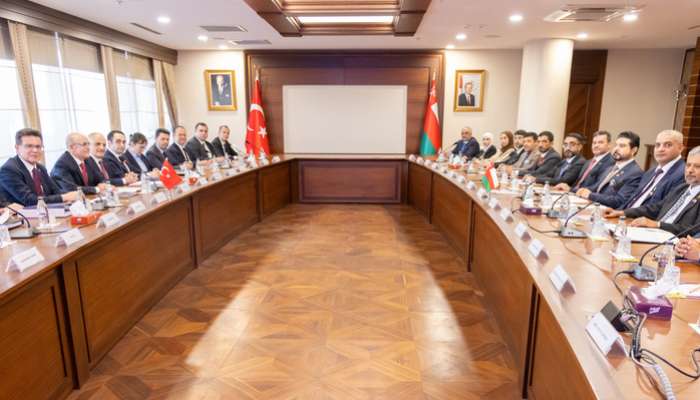

The robust relationship between the Sultanate of Oman and the Republic of Türkiye took a significant step forward recently, as high-level delegations convened in Ankara for the 13th session of the Omani-Turkish Joint Committee. The discussions centered on bolstering bilateral cooperation across a wide spectrum of sectors, aiming to convert shared interests into tangible projects and programs that will drive economic growth and development for both nations. This latest meeting underscores Oman’s commitment to diversifying its international partnerships and attracting foreign investment.
Key Outcomes of the Ankara Joint Committee Meeting
The 13th session, co-chaired by Qais bin Mohammed Al Yousef, Oman’s Minister of Commerce, Industry and Investment Promotion, and Mehmet Şimşek, Turkey’s Minister of Treasury and Finance, provided a platform for in-depth reviews of existing collaborations and the exploration of new avenues for joint ventures. The focus was intently placed on identifying practical priorities and translating them into concrete actions. A key area of discussion was enhancing trade and investment between the two countries.
Boosting Trade and Investment Ties
Delegates meticulously examined the current state of bilateral trade, seeking ways to diversify the range of goods exchanged and importantly, increase overall trade volumes. Recognizing the crucial role of the private sector, the committee emphasized activating business councils, promoting participation in relevant forums and exhibitions, and actively seeking out joint investment opportunities. Particular attention was given to leveraging the potential within emerging fields such as e-commerce, shared digital platforms, and the expansion of shipping and re-export services.
Industrial Collaboration and Technological Advancement
The meeting also saw substantial dialogue concerning cooperation within the industrial sector. This included discussions on joint manufacturing initiatives, facilitating the transfer of valuable knowledge and technology, and promoting localization efforts to strengthen domestic capabilities. A significant emphasis lay on the interplay between innovation and manufacturing, exploring collaborative opportunities within industrial zones, special economic zones, and free zones to create a more dynamic and competitive ecosystem. The role of standards and accreditation was highlighted as crucial for ensuring quality and facilitating seamless trade.
Expanding Cooperation Beyond Economics
While economic collaboration remained central, the Ankara talks extended to a diverse range of other critical areas. Cooperation in financial and banking services received due consideration, alongside strategies to support small and medium enterprises (SMEs), which are widely acknowledged as engines of economic growth. Improvements to transport and logistics infrastructure, including the development of key logistics corridors, and supply chain integration were also prioritized.
However, the discussions weren’t limited to purely economic concerns. Significant attention was also dedicated to strengthening ties in tourism, culture, and sports, fostering deeper people-to-people connections. Education and higher education featured prominently, culminating in the signing of a significant memorandum of understanding (MoU). Scientific research, innovation and improvements to health, environmental protection, urban planning, media and capacity building were also discussed.
Memorandum of Understanding in Education
The signing of the MoU in the field of education represents a key milestone in the Omani-Turkish relationship. This agreement aims to facilitate greater cooperation in educational programs, student and faculty exchanges, and the sharing of best practices. It underscores a mutual commitment to investing in human capital and fostering intellectual growth. This new partnership in educational cooperation is expected to yield long-term benefits for both countries.
Strengthening Bilateral Partnerships Through Dialogue
Alongside the formal committee sessions, Minister Al Yousef engaged in bilateral meetings with his Turkish counterparts, Ömer Bolat, Minister of Trade, and Mehmet Fatih Kacır, Minister of Industry and Technology. These discussions provided opportunities to delve deeper into specific areas of cooperation, focusing on increasing trade volumes, enhancing private sector partnerships, and establishing technical working groups to support industrial collaboration.
Further demonstrating Oman’s proactive approach, the Ministry of Commerce, Industry and Investment Promotion organized a targeted roundtable meeting with leading Turkish investors. The event served as a platform to promote investment partnerships, showcase Oman’s competitive advantages—including its strategic location, political stability, and investor-friendly regulations—and highlight promising opportunities within the priority sectors of industry, energy, tourism, and health. This direct engagement aimed to reinforce Oman’s position as a premier regional investment destination.
Positive Investment Trends – a Result of Enhanced Ties
Recent data indicates the success of these ongoing efforts. Turkish investments in Oman have shown significant growth, with a 21 percent increase in the number of Turkish companies operating within the Sultanate by the end of September. This growth is accompanied by an 18.7 percent rise in the overall volume of Turkish investments, a clear testament to burgeoning investor confidence in Oman’s stable and attractive investment climate. Focus will remain on facilitating foreign direct investment as a result of this ongoing dialogue.
The recent meetings in Ankara represent a critical step in realizing the full potential of the Omani-Turkish partnership. By fostering closer collaboration and focusing on mutually beneficial initiatives, both nations are paving the way for a future of sustained economic growth and strengthened diplomatic ties. Oman’s commitment to proactive engagement and strategic partnerships positions it favorably for continued success in attracting international investment and expanding its global economic footprint.