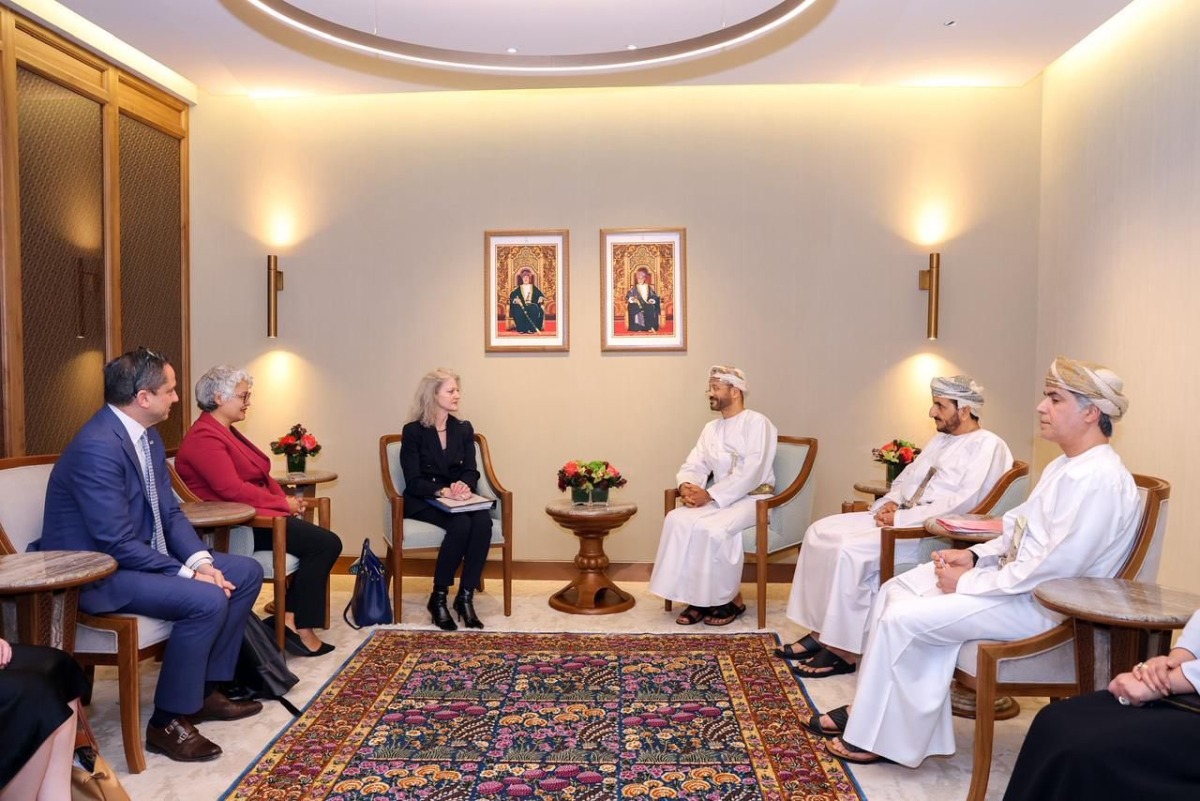

Muscat, Oman – Omani Foreign Minister Badr bin Hamad Al Busaidi met with U.S. Under Secretary of State for Political Affairs Allison Hooker on Sunday to discuss strengthening Oman-US relations and boosting American investment in the Sultanate. The meeting, held in Muscat, focused on expanding cooperation across multiple sectors and solidifying the strategic partnership between the two nations. Discussions also touched upon regional stability and shared security interests, according to a statement from the Omani Foreign Ministry.
The meeting between Al Busaidi and Hooker signals continued high-level engagement between Oman and the United States. This comes at a time of increasing geopolitical complexity in the Middle East, with both countries seeking to maintain stability and address shared challenges. The talks were held on January 28, 2024, and represent a key diplomatic moment for both administrations.
Strengthening Oman-US Relations Through Investment and Cooperation
A primary focus of the discussion was identifying opportunities to increase U.S. foreign direct investment in Oman, particularly in sectors identified as national priorities. These sectors reportedly include renewable energy, technology, and logistics, areas where Oman is actively seeking to diversify its economy away from oil and gas. The Omani government has been actively promoting itself as an attractive destination for foreign investment, citing its stable political environment and strategic location.
Economic Diversification Efforts
Oman’s Vision 2040 plan outlines ambitious goals for economic diversification and sustainable development. Increased U.S. investment is seen as crucial to achieving these objectives, providing both capital and technological expertise. The Sultanate is keen to leverage American innovation to modernize its infrastructure and build a more competitive economy.
Regional Security Discussions
Beyond economic ties, the two officials also addressed regional security concerns. The U.S. and Oman share a common interest in maintaining peace and stability in the Gulf region, and collaborate on counterterrorism efforts and maritime security. The discussions likely included updates on ongoing diplomatic initiatives related to Yemen and Iran, as well as broader efforts to de-escalate tensions in the area.
The United States maintains a significant military presence in the region, and Oman has historically been a key partner in facilitating U.S. naval operations. This partnership is underpinned by a strategic access agreement that allows the U.S. Navy to use Omani ports and facilities. The two countries also collaborate on defense training and equipment.
Meanwhile, Oman has been pursuing a policy of neutrality and mediation in regional conflicts, seeking to play a constructive role in resolving disputes through dialogue. This approach has seen Oman host secret talks between the U.S. and Iran in the past, aimed at easing tensions and finding common ground. The U.S. appreciates Oman’s independent diplomatic efforts, which complement its own regional strategy.
Additionally, the meeting provided an opportunity to discuss ongoing cooperation in areas such as education and cultural exchange. The U.S. and Oman have a long-standing tradition of academic collaboration, with many Omani students pursuing higher education in American universities. These exchanges are seen as vital for fostering mutual understanding and strengthening people-to-people ties.
In contrast to some other nations in the region, Oman has maintained relatively stable relations with both the U.S. and other global powers, including China. This balanced approach allows Oman to benefit from diverse partnerships and avoid becoming overly reliant on any single country. This strategic positioning is a key element of Oman’s foreign policy.
The outcome of the meeting is expected to lead to further technical discussions between Omani and U.S. officials to identify specific investment projects and areas for enhanced cooperation. While no concrete agreements were announced immediately following the meeting, the ministry indicated that both sides expressed a strong commitment to strengthening their bilateral ties. The timing of any potential announcements regarding new investment initiatives remains uncertain, dependent on ongoing due diligence and negotiations.
Looking ahead, observers will be watching for concrete steps taken to implement the commitments made during the meeting. The success of these efforts will be measured by the level of U.S. investment secured and the progress made in addressing shared security challenges. Further high-level visits and continued dialogue are anticipated in the coming months as both countries work to deepen their strategic partnership and explore new avenues for collaboration in areas like trade relations.