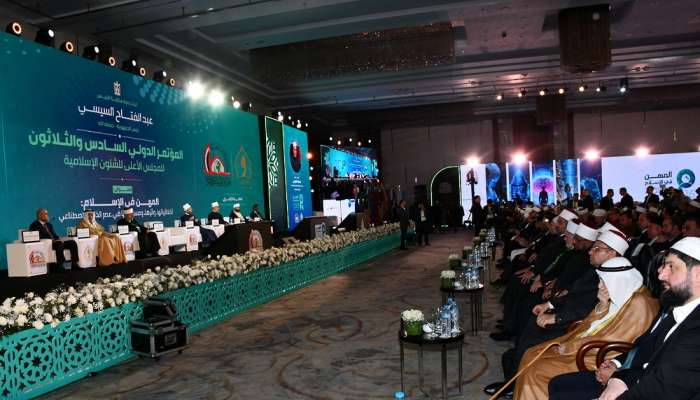

The Sultanate of Oman actively participated in the 36th International Conference of the Supreme Council for Islamic Affairs, held in Cairo, Egypt, focusing on the crucial intersection of professional ethics, technological advancement, and the future of work. Led by Minister of Endowments and Religious Affairs, Dr. Mohammed Said Al Maamari, the Omani delegation contributed to a vital global conversation about navigating the challenges and opportunities presented by Artificial Intelligence (AI) and its impact on society.
Oman Emphasizes Ethical Considerations in a Changing World
Dr. Al Maamari’s address to the conference underscored the strong fraternal relationship between Oman and Egypt, acknowledging Egypt’s longstanding role in fostering dialogue on important Islamic issues. He highlighted the timeliness of the conference, noting that it convened at a period of unprecedented technological change, shifting employment landscapes, and increasingly complex ethical dilemmas. The central theme of the conference – the ethics and future of professions – was presented as a direct response to these challenges, particularly the rise of AI.
The Impact of AI on the Nature of Work
The Minister explained that the digital revolution is fundamentally reshaping how we understand work and production. This transformation extends beyond simply introducing new tools; it’s altering the values, standards, and overall societal impact of various professions. The core concern, he stated, is ensuring that the essence of work – and the dignity of the worker – is preserved in the face of these changes. Technology should serve as a catalyst for progress, not a threat to social harmony or justice.
He emphasized that the Islamic perspective views work not merely as a means of earning a livelihood, but as a sacred “trust and responsibility” (Amanah). This foundational principle, he argued, is remarkably adaptable and can provide valuable guidance in navigating the complexities of the modern workplace. It’s a vision that transcends specific tools and contexts, remaining relevant even as technology rapidly evolves.
Beyond Technology: The Importance of Integrity and Values
Dr. Al Maamari eloquently stated that true civilization isn’t defined by technological power alone, but by the integrity with which that power is wielded. He cited examples – the ethics of a physician, the honesty of a businessperson, the impartiality of a judge, the skill of a craftsman – to illustrate that professional excellence is inextricably linked to moral character. These values are paramount, regardless of the tools employed.
The current wave of technological advancements, driven by AI, necessitates a critical re-evaluation of our work tools and, more importantly, a consideration of who will guide the future of labor. The real danger, he cautioned, doesn’t lie in the development of AI itself, but in the potential erosion of human ethical oversight. Allowing a profession to devolve into a “soulless function” risks losing the very qualities that give work meaning and purpose.
Sustainable Progress Requires Ethical Governance
True progress, according to the Minister, isn’t solely measured by speed or efficiency, but by a society’s ability to govern technological advancements with a strong ethical framework. This requires a balanced approach – embracing development while remaining firmly committed to core values. AI, despite its capabilities, should always be viewed as a tool, and moral responsibility must remain a uniquely human attribute. This focus on ethical frameworks is crucial for a sustainable future.
He called for active collaboration between religious and scientific institutions to contribute to this global discussion. These institutions, he believes, are uniquely positioned to provide responsible visions that strengthen professional conduct, adapt to contemporary changes, and inform labor policies that prioritize human dignity and social balance.
Oman’s Experience in Cultivating Workplace Values
Dr. Al Maamari highlighted the Sultanate of Oman’s own experiences in embedding values within the workplace. He presented this as a cornerstone of their national development strategy, fostering trust and achieving a harmonious balance between technological progress and the human element. Oman’s commitment to this approach serves as a valuable case study for other nations grappling with similar challenges.
He concluded by emphasizing the conference’s potential to launch a lasting intellectual and ethical movement. Its impact, he predicted, would be felt in technical societies, educational curricula, and labor policies for generations to come. He powerfully reminded attendees that a profession is not simply about what we *do* with our hands, but about the positive impact we have on the lives of others. The discussion around future of work is therefore fundamentally a discussion about humanity.
This conference represents a significant step towards ensuring that technological advancements serve humanity, rather than the other way around. The insights shared by the Omani delegation, and others, will undoubtedly contribute to a more ethical and sustainable future for all.