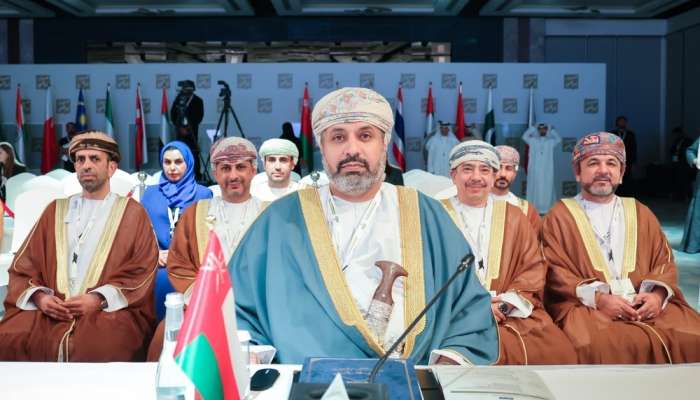

Dubai recently hosted the 8th ministerial consultative meeting of the Abu Dhabi Dialogue (ADD) track, a crucial event for shaping the future of labor mobility in the Asia-GCC corridor. The Sultanate of Oman played a central role, leading discussions as the current chairing country. This meeting, held as part of the proceedings leading up to the 2026 World Governments Summit, underscored the growing need for international cooperation in managing the complexities of a changing global workforce.
Oman Leads Discussions on Enhancing Labor Mobility
Dr. Mahad Said Ba’owain, Minister of Labour of the Sultanate of Oman, delivered a key speech emphasizing the importance of strengthened regional and international collaboration. He highlighted the necessity of sharing expertise and best practices to develop and implement effective policies for managing temporary contractual labor mobility. The core aim, he stated, is to create mutually beneficial outcomes for both workers and employers, simultaneously supporting economic development in both sending and receiving nations.
A Focus on Mutual Benefits and Economic Growth
The discussions weren’t simply about managing the flow of workers; they were about maximizing the positive impact for all involved. Oman’s leadership stressed that responsible labor mobility isn’t just a matter of policy, but a driver of sustainable economic growth. This requires a commitment to fair labor practices and ensuring that workers are protected throughout their employment journey.
Addressing Key Challenges in the Asia-GCC Corridor
The meeting brought together representatives from Asian labor-sending countries and the Gulf Cooperation Council (GCC) labor-receiving nations. A significant portion of the dialogue focused on pressing issues impacting labor migration within the Asia-GCC corridor. These included the increasingly significant impacts of climate change on labor markets, and how to facilitate the movement of skilled labor to support a just transition towards a greener economy.
The Rise of the Gig Economy and Digital Platforms
Another key area of discussion revolved around the status of expatriate labor within the rapidly expanding gig economy and on digital platforms. The nature of work is changing, and policymakers are grappling with how to ensure fair treatment and adequate protections for workers in these new employment models. This also ties into the broader conversation around expatriate workers and their rights.
Skills Development and Labor Productivity
Participants also explored the crucial role of skills development and diversity in enhancing overall labor productivity. Investing in training and upskilling programs is seen as essential for ensuring that workers have the capabilities needed to thrive in a dynamic job market. Furthermore, embracing diversity within the workforce can bring fresh perspectives and innovative solutions.
Strengthening Evidence-Based Policymaking
Prior to the ministerial meeting, senior officials convened to review the outcomes of technical work and the dialogue’s research agenda. This research, supported by international partner organizations, is designed to strengthen evidence-based policymaking and enable a proactive response to the rapid transformations occurring in labor markets. Understanding the data and trends is critical for crafting effective and sustainable solutions.
Commitment to Sustainable Development Goals
The ministerial meeting culminated in the discussion and adoption of the Eighth Joint Ministerial Declaration. This declaration reaffirms the commitment of member states to enhance the governance of labor migration, linking it directly to the Sustainable Development Goals (SDGs). It also emphasizes the importance of fostering partnership and shared responsibility between labor-sending and labor-receiving countries. This collaborative approach is seen as vital for addressing the complex challenges of foreign workers and ensuring a fair and equitable system.
The Abu Dhabi Dialogue: A Regional Framework for Cooperation
Established in 2008, the Abu Dhabi Dialogue has become a leading regional platform for dialogue and cooperation between Asian labor-sending countries and the GCC nations. It is widely recognized as a prominent framework dedicated to addressing issues related to labor mobility and the management of temporary migration for employment purposes. The ongoing success of the ADD demonstrates the power of collaborative efforts in navigating the complexities of a globalized workforce.
The outcomes of the 8th ministerial meeting signal a continued commitment to improving conditions for workers and fostering economic growth through responsible labor mobility. Further information on the Abu Dhabi Dialogue and its initiatives can be found on the official website. Continued dialogue and collaboration will be essential to address the evolving challenges and opportunities in the Asia-GCC labor market.