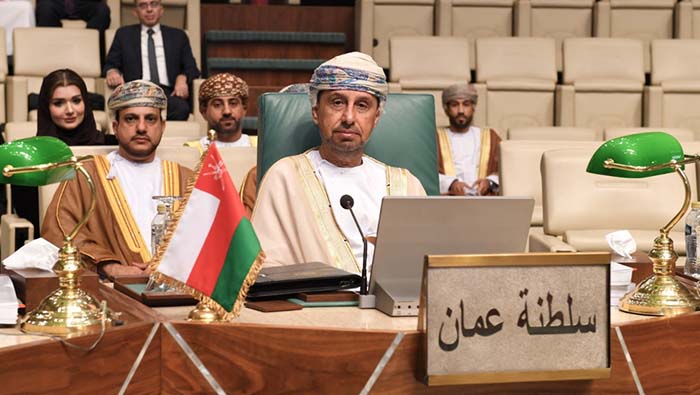

The Sultanate of Oman, represented by the Ministry of Justice and Legal Affairs, participated in the 41st Session of the Council of Arab Ministers of Justice, held at the headquarters of the General Secretariat of the Arab League in Cairo, the Arab Republic of Egypt. The Omani delegation was headed by Dr. Abdullah bin Mohammed Al Saidi, Minister of Justice and Legal Affairs.
## Key Discussions at the 41st Session
The Arab Ministers of Justice discussed several important items on the agenda during the meeting, providing a comprehensive overview of the steps taken to implement the Council’s resolutions. The discussions focused on the report of the Technical Secretariat of the Council, which highlighted the progress made in implementing the Council’s decisions. The report underscored the commitment of member states to strengthening cooperation and coordination in the field of justice.
### Implementing Council Resolutions
The Technical Secretariat’s report detailed the measures taken by member states to implement the Council’s resolutions, including the establishment of new legal frameworks and the enhancement of existing ones. The report also highlighted the challenges faced by some member states in implementing these resolutions and proposed solutions to overcome these challenges. The Arab Ministers of Justice reviewed the report and provided guidance on how to address the identified challenges.
## Enhancing Cooperation and Unifying Legislation
One of the key issues discussed during the meeting was the importance of unifying Arab legislation. The Council recognized the need for a harmonized legal framework across the Arab region to facilitate cooperation and coordination among member states. The Arab Convention Against Corruption was also discussed, with the Council emphasizing the importance of implementing the Convention’s provisions to combat corruption effectively. The draft Arab Convention on the Status of Refugees in Arab States and the draft Arab Convention on the Protection of Personal Data were also reviewed, with the Council agreeing to continue negotiations on these important issues.
### Strengthening Cooperation between Secretariats
The Council also discussed ways to enhance cooperation between the secretariats of the Councils of Arab Ministers of Justice and Interior. The meeting recognized the importance of coordination between the two secretariats to address common challenges and promote cooperation in areas such as combating terrorism and transnational crime. The Council agreed to establish a joint committee to explore ways to strengthen cooperation between the two secretariats. Meanwhile, the special account of the Council of Arab Ministers of Justice was reviewed, with the Council agreeing to take steps to enhance the account’s management and transparency.
## Proposals and Future Plans
The Council considered proposals from several Arab countries, including the People’s Democratic Republic of Algeria, the Tunisian Republic, the Kingdom of Morocco, the Kingdom of Saudi Arabia, and the Republic of Sudan. The proposals covered a range of issues, including enhancing cooperation in the field of justice, combating corruption, and protecting personal data. The Council also reviewed proposals from the General Secretariat of the Arab League, which focused on strengthening the role of the Arab League in promoting cooperation among member states. Additionally, the work programme of the Technical Secretariat of the Council between its 41st and 42nd sessions was reviewed, with the Council agreeing on a comprehensive programme that includes several key initiatives.
The 41st Session of the Council of Arab Ministers of Justice was a significant event that brought together justice ministers from across the Arab region to discuss key issues and promote cooperation. The meeting demonstrated the commitment of Arab countries to strengthening their justice systems and promoting the rule of law. As the Council looks to the future, it is clear that there is much work to be done to address the challenges facing the Arab region. However, with the cooperation and commitment of member states, the Council is well-positioned to make a positive impact and promote a more just and equitable society for all. By continuing to work together and share best practices, the Arab Ministers of Justice can drive meaningful progress and achieve their goals. The outcomes of the 41st Session of the Council of Arab Ministers of Justice will undoubtedly have a lasting impact on the region, and it is essential that all stakeholders remain engaged and committed to the process.