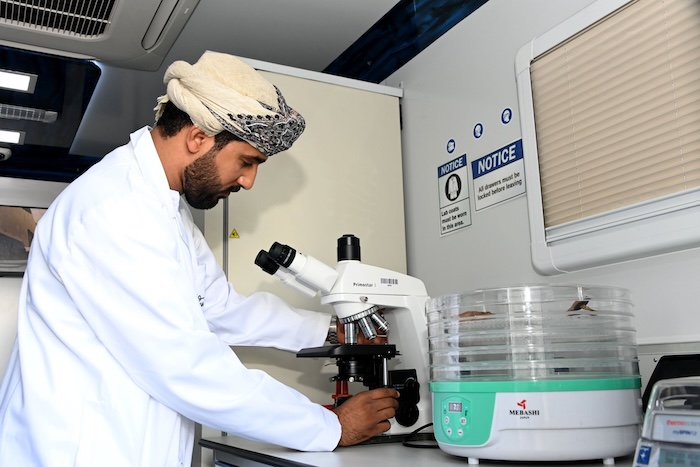

Oman is taking a significant leap forward in its commitment to preserving its unique natural heritage with the inauguration of the Sultanate’s first mobile research laboratory. This state-of-the-art facility, operated by the Oman Animal and Plant Genetic Resources Center (Mawarid), will bring advanced scientific capabilities directly to the field, bolstering efforts in genetic resources research and biodiversity conservation across the country. The initiative promises to accelerate scientific discovery and improve the management of Oman’s valuable natural assets.
Boosting Biodiversity Research with Oman’s Mobile Genetic Resources Lab
The newly launched mobile laboratory represents a pivotal investment in Oman’s scientific infrastructure. Traditionally, researchers have had to transport samples collected from remote governorates back to centralized laboratories, a process that can be time-consuming and potentially compromise sample integrity. This new facility overcomes these challenges by providing on-site analysis and preservation capabilities. Mawarid’s initiative directly addresses the need for rapid response and efficient data collection in the context of Oman’s diverse ecosystems.
The Importance of Genetic Resources in Oman
Oman boasts a remarkably rich biodiversity, encompassing a wide range of animal and plant species adapted to its varied landscapes – from rugged mountains and vast deserts to lush coastal plains. These genetic resources are not merely of ecological importance; they hold immense potential for advancements in agriculture, medicine, and other vital sectors. Preserving this genetic diversity is crucial for ensuring the long-term resilience of Oman’s ecosystems and its ability to adapt to future environmental changes.
The mobile lab will be instrumental in documenting and safeguarding these resources. It will allow scientists to quickly analyze samples for genetic markers, identify unique traits, and develop strategies for conservation and sustainable use. This is particularly important for indigenous breeds of livestock and locally adapted plant varieties, which are often vulnerable to extinction.
Extending Laboratory Services to Remote Governorates
One of the key objectives of the mobile laboratory is to extend specialized services to all of Oman’s governorates, particularly those that are geographically remote or lack adequate laboratory facilities. This will empower local researchers and communities to participate more actively in biodiversity research and conservation efforts. The lab is equipped to handle a wide range of analyses, including DNA extraction, PCR amplification, and data analysis.
The ability to conduct research in the field offers several advantages. It minimizes the time between sample collection and analysis, reducing the risk of degradation. It also allows researchers to gather valuable contextual data about the environment and the organisms they are studying. Furthermore, it fosters collaboration between scientists and local stakeholders, promoting a more holistic approach to conservation.
Accelerating Scientific Discovery and Innovation
Beyond conservation, the mobile lab is expected to accelerate scientific discovery and innovation in areas related to life sciences. By providing access to cutting-edge technology, the initiative will encourage researchers to explore new avenues of investigation and develop solutions to pressing challenges. This includes research into disease resistance in livestock, drought tolerance in plants, and the potential for discovering novel bioactive compounds.
The availability of a mobile laboratory also streamlines the research process, making it easier for scientists to obtain permits, collect samples, and conduct analyses. This increased efficiency will translate into faster turnaround times for research projects and a greater impact on national development goals. The center anticipates a surge in research applications now that logistical hurdles have been significantly reduced.
Supporting Oman’s Sustainable Development Goals
This investment in a mobile research laboratory directly supports Oman’s Vision 2040 and its commitment to sustainable development. The preservation of genetic diversity is a cornerstone of environmental sustainability, ensuring the long-term health and productivity of Oman’s ecosystems. Moreover, the initiative aligns with the country’s efforts to diversify its economy and promote innovation in key sectors.
The mobile lab will also play a role in building national capacity in science and technology. By training local researchers and technicians in the latest techniques, the initiative will contribute to the development of a skilled workforce capable of addressing Oman’s future challenges. This focus on capacity building is essential for ensuring the long-term success of the program.
Looking Ahead: The Future of Genetic Research in Oman
The inauguration of the mobile research laboratory marks a significant milestone in Oman’s scientific journey. It demonstrates the country’s commitment to investing in cutting-edge technology and empowering its researchers to explore the vast potential of its natural resources. The impact of this initiative is expected to be far-reaching, contributing to both environmental sustainability and economic growth.
Mawarid plans to expand the mobile lab’s capabilities in the coming years, adding new equipment and developing specialized protocols for different types of samples. They also intend to establish a network of collaborating institutions across the country, fostering a more integrated approach to genetic resources management. To learn more about Mawarid and their ongoing projects, visit their official website or contact them directly to explore collaboration opportunities. The future of biodiversity research in Oman is undoubtedly brighter with this pioneering initiative in place.