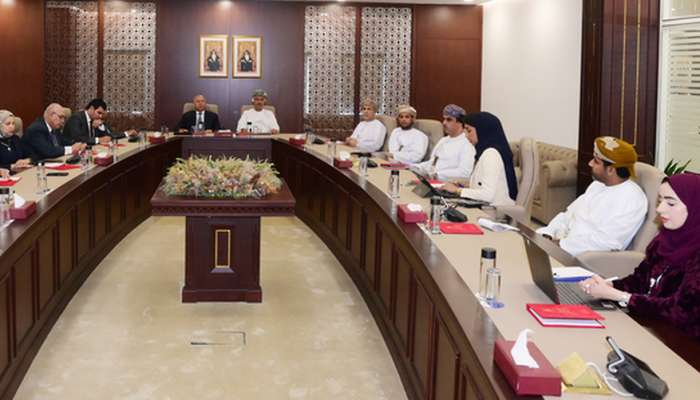

Oman and Egypt are actively strengthening their economic partnership, with a recent high-level meeting focusing on unlocking significant opportunities within their respective special economic zones. The discussions, led by Sheikh Dr. Ali bin Masoud Al Sunaidy, Chairman of the Public Authority for Special Economic Zones and Free Zones (Opaz), and Lt. Gen Eng. Kamel abdulhadi Al Wazir, Egypt’s Deputy Prime Minister, centered on boosting bilateral investment and trade through enhanced collaboration in industrial development and free zone utilization. This initiative promises to foster greater Oman-Egypt economic cooperation and regional economic integration.
Enhancing Bilateral Investment Through Economic Zones
The core of the meeting revolved around identifying and developing potential projects within the special economic zones, free zones, and industrial cities of both Oman and Egypt. This isn’t simply about attracting foreign investment; it’s about creating a synergistic relationship where each country leverages its strengths to benefit the other. Opaz and the Egyptian Ministry of Industry and Transport explored how to best utilize existing resources and production capabilities to increase the value-added of manufactured goods.
Focusing on Value Chain Integration
A key discussion point was the integration of raw material sourcing and production chains. Both nations possess unique resources and manufacturing expertise. By connecting these, they aim to reduce reliance on external suppliers and create more resilient and profitable industries. This focus on industrial cities development is crucial for diversifying both economies and creating sustainable growth.
Facilitating Trade and Streamlining Logistics
Beyond investment, the meeting addressed the practicalities of boosting trade volume between Oman and Egypt. Discussions centered on mechanisms to facilitate the smooth movement of products and industries between their economic and industrial zones. This includes streamlining customs procedures, reducing logistical bottlenecks, and potentially establishing dedicated trade corridors.
This emphasis on logistical efficiency is vital. Reducing trade barriers will make both countries more attractive to international investors looking to access regional markets. Furthermore, improved trade flows will stimulate economic activity and create new job opportunities. The development of robust free zone infrastructure is central to this goal.
Leveraging Free Zones as Regional Trade Hubs
Both Oman and Egypt recognize the pivotal role free zones play in fostering regional trade. These zones offer a range of incentives, including tax breaks, simplified regulations, and streamlined customs procedures, making them attractive locations for businesses looking to expand their operations.
The meeting highlighted the potential for these zones to act as vital hubs, connecting markets in Africa, Asia, and Europe. This strategic positioning is particularly important given the growing demand for regional trade and the increasing focus on supply chain diversification. The discussions also touched upon the importance of exchanging technical knowledge to further enhance the attractiveness of these zones to both regional and international investors.
Knowledge Sharing and Attracting Investment
The exchange of expertise is a critical component of this partnership. Oman and Egypt can learn from each other’s experiences in developing and managing successful economic zones. Sharing best practices in areas such as infrastructure development, regulatory frameworks, and investor services will be instrumental in attracting high-quality investment. This collaborative approach will also help to create a more competitive business environment in both countries.
The Importance of Continued Coordination
Sheikh Dr. Al Sunaidy and Lt. Gen Eng. Al Wazir both emphasized the need for continued coordination and collaboration to fully realize the potential of this partnership. They agreed to establish working groups to explore specific areas of cooperation and to develop concrete action plans.
Additionally, the presence of Yassir Mohammed Ahmed Shaban, the Egyptian Ambassador to Oman, alongside officials from both sides, underscored the commitment to strengthening bilateral ties. This high-level engagement signals a clear intention to move beyond discussions and into tangible action. The overall aim is to solidify Oman-Egypt economic cooperation as a cornerstone of regional economic stability and growth.
In conclusion, the recent meeting between Opaz and the Egyptian Ministry of Industry and Transport represents a significant step forward in strengthening economic ties between Oman and Egypt. By focusing on strategic collaboration in economic zones, free zones, and industrial cities, both nations are poised to unlock new opportunities for investment, trade, and sustainable economic development. The emphasis on value chain integration, logistical efficiency, and knowledge sharing will be crucial in attracting international investors and fostering long-term growth. Continued coordination and a commitment to concrete action will be essential to fully realize the potential of this promising partnership.